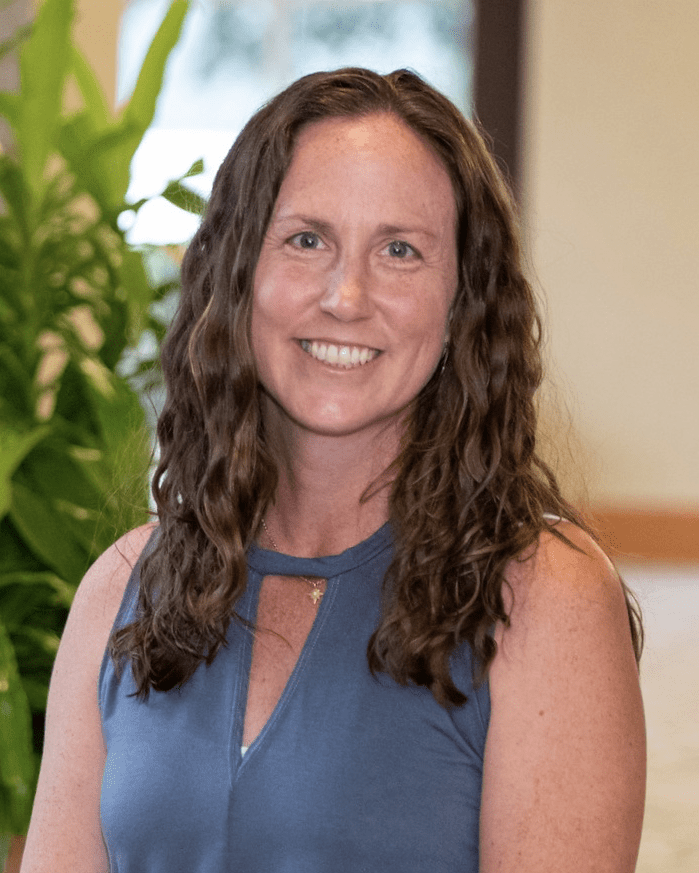
Corrine Sackett is a professor of counselor education in the College of Education and has served as faculty at Clemson since Fall 2013. Sackett brought years of experience in various settings as a licensed marriage and family therapist to academia, so her master’s-level clinical mental health and school counseling students are prepared to work in a variety of settings, such as agencies, hospitals, private practices and schools.
However, over the last two years, Sackett has turned much of her effort to Clemson University and the larger Clemson community. Sackett has led the Counselor Education Embedded Counseling Program utilized by multiple colleges on campus, and she has also served as a co-responder with CUPD officers responding to calls requiring the expertise of a mental health counselor.
We caught up with Sackett to discuss her diverse career, how she approaches teaching and how counseling approaches can differ depending on the audience.
What is your teaching philosophy?
I come from a learner-centered and constructivist approach. I work to foster collaborative relationships with students and encourage them to be reflexive and open to ambiguity, and to critically engage through discourse, assignments, experiential learning and self-reflection to make sense of the material and their experiences. I try to help students deepen their learning through giving meaningful feedback.
Years ago, I participated in the Wakonse Conference on College Teaching in Michigan, which helped me recognize my personal strengths and understand how I can utilize them in my role as a counselor educator. The themes of my Gallup strengths inventory were all in the Relationship category, indicating my strength in and focus on relationships. My strengths included Connectedness (the tendency to see people as connected and appreciate the inherent responsibility that comes with being connected to the larger picture), Individualization (the ability to recognize and approach each person as unique based on his/her/their own characteristics and needs), Empathy (intuitively sensing others’ emotions and anticipating unvoiced questions and needs), Responsibility (conscientiousness) and Harmony (finding common ground among differing views).
I learned how to capitalize on these personal strengths in the ways I engage with students. I am focused on building relationships with students, on meeting them developmentally where they are and on challenging them to think critically and systemically.

Considering you have worked with a variety of audiences in your career, is it difficult to transition from one population or concentration to another? Family therapy versus substance abuse counseling must feel like entirely different worlds.
I have worked with a variety of populations and in different settings, which has enriched my learning. I’m not sure it feels difficult so much as it is interesting. In my master’s program, I was trained from a systems perspective, which means no matter what population I’m with or setting I’m in, I work to see people relationally and contextually, so I try to stay grounded in that no matter what.
The embedded counseling program is unique because it features your role overseeing counseling provided by master’s students. How did this get its start and grow into what it is today?
After initial discussions beginning August 2023, the partnership developed through CU Grow, a yearlong professional development program for Clemson staff members. School of Architecture Student Services Director Shay Vinson developed a plan for embedded counseling as her CU Grow project in 2024, so I was tapped to help with that. The program was well-received, and other colleges came on board while I also began working with CUPD.
We are currently in discussions with other units on campus for potential further expansion. Brooke Wymer and I are providing the on-site supervision for now, with funding coming in from partnering units to pay for course release time for she and I to be able to do this. However, the sustainability plan is for counselor education doctoral-level graduate assistants to provide the on-site supervision of counselors-in-training with faculty oversight. We plan for this phase to begin in Fall 2027, when our new doctoral program is expected to start. Since the doctoral students will be learning to be supervisors, and the CITs will be learning to be counselors, this will make the Counselor Education Embedded Counseling Program an innovative, multi-tiered training model that serves the Clemson community.
What is it like combining teaching and supervision of the counselors in training? Did this feel natural to you or did it require some adjustment because of the unique nature of the program?
When I learned supervision in my doctoral program, it felt like a natural fit for me, even though it was a new skill set. Teaching, however, felt like a huge learning curve, and it took me a while to feel comfortable in that role. I was used to working with people, either one-on-one or in small groups, and doing a lot of listening. The shift to being the “expert” in the room of a much bigger group was a stretch, to say the least. But once I learned to harness my relational skills in the classroom, I was much more comfortable and effective.
Why do you love teaching?
I love being a part of the process of becoming a counselor with students. There is so much personhood involved, and I really enjoy walking alongside them, providing support and challenging them as they grow into the role.
When did you know that the field of education was for you?
Understanding the field of counseling was the right fit for me was a process. I have always experienced people — and the relationships and interactions between people — to be the most interesting and fulfilling parts of life. In undergrad, I majored in sociology and loved studying people, but then I realized through an internship experience that I needed hands-on work with people as well. My career as a counselor educator is a perfect balance for me of working with people and research!
What do you like about the College of Education Clemson University?
I can’t imagine having better students or colleagues than I have in my program area or better leaders than I have in the College of Education. I am very lucky!
What do you enjoy doing when you are not teaching?
I love being outside, walking, hiking, traveling, listening to music, reading and hanging out with family and my dog. My favorite hiking trail is the Boone Fork Trail off the Blue Ridge Parkway near Boone, North Carolina. I don’t get up there much anymore since it’s far, but I used to live up there and love it.