The beavers won.
That’s how Clemson University alum Jim Kaplan ’87 describes his long-running battle with the industrious animals that share his property in Pickens County.
For Kaplan, an engineer by training who spent decades solving complex manufacturing challenges, there’s a certain irony in that outcome. After all, beavers are often called nature’s engineers.
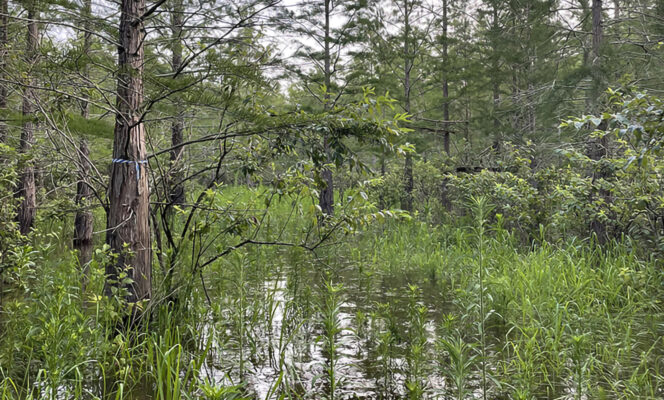
Kaplan has spent recent years improving the roughly 80-acre property for wildlife, birds, insects and pollinators.

“I’ve been trying to fix up the property and make it better suited for wildlife, birds, insects and pollinators,” said Kaplan, who was recently inducted into the Thomas Green Clemson Academy of Engineers and Scientists. “I’ve got an orchard, three ponds and streams. I let the beavers do their thing. I used to fight them, but they won that battle. We have plenty of large animals and small mammals. I want to improve the habitat for turkeys, not for hunting but just for the habitat in general.”
This spring, that effort became a hands-on learning opportunity for five Clemson students.
The opportunity grew out of a conversation between Kaplan and Greg Yarrow, a Clemson professor of wildlife ecology. Together, they turned a landowner’s conservation goals into a real-world project for students in Yarrow’s Wildlife and Fisheries Biology Selected Topics course.
Over the Spring semester, the students developed a comprehensive wildlife management plan for the property, applying classroom knowledge to a challenge that required balancing habitat needs, conservation goals and practical land management.
Yarrow said the project challenged students to think like wildlife professionals.

“Through the project, students interviewed a landowner to identify property objectives, conducted a resource inventory and developed management recommendations presented in both written and oral formats,” Yarrow said. “This hands-on experience strengthened their critical thinking, teamwork and communication skills, better preparing them to meet the growing demand of the job market for skilled professionals capable of effectively assisting landowners.”
The students began by walking the property with Kaplan, listening as he described what he hoped the land could become.
From there, the team evaluated wetlands, ponds, invasive species, pollinator habitat, food plots and wildlife corridors before developing recommendations for long-term habitat management.
The team included Madison Tankersley, a junior fisheries and wildlife biology major from Blythewood; Reid McKeller, a senior wildlife and fisheries biology major from Ninety-Six; Wyatt Geitner, a junior forest resources management major from Aiken; Oliver Zerrillo, a junior forest resources management major from Charlotte with a minor in wildlife and fisheries biology; and Lauren Lusk, a junior wildlife and fisheries biology major with a minor in sustainability.
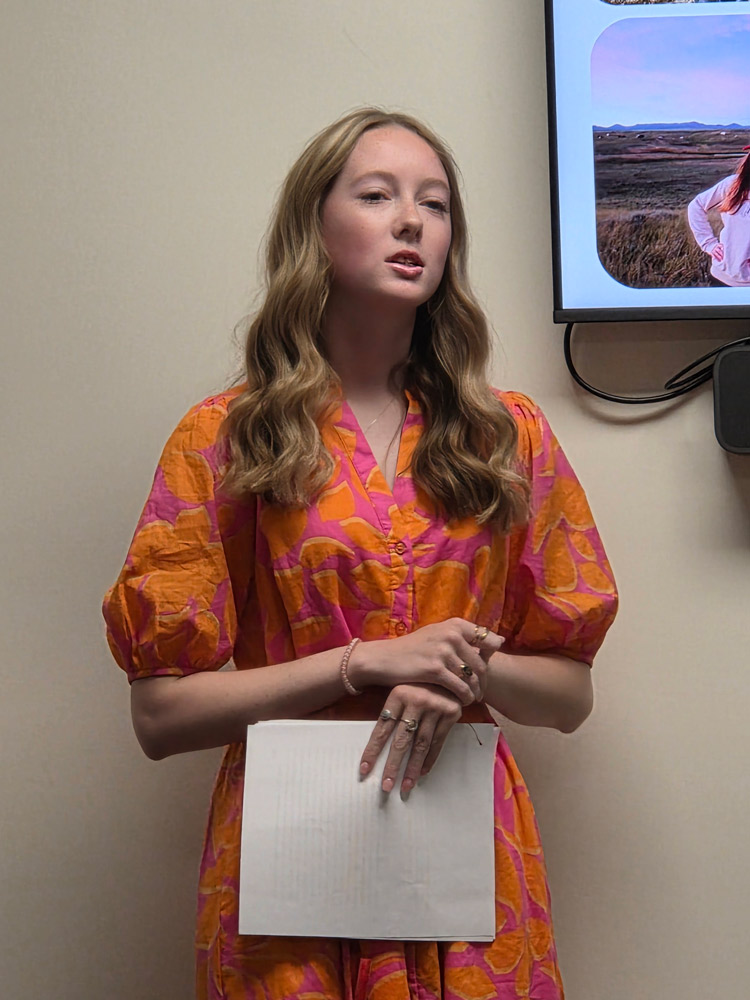
For Tankersley, the project offered an opportunity to put coursework into practice while working alongside a landowner committed to improving wildlife habitat.
“I learned a lot about wildlife management,” Tankersley said. “I think we all learned a lot about each other and working within a team. It was also cool to see the connection between Clemson landowners and how they give back to the students. Mr. Kaplan loves Clemson. You can tell it by the way he talks about Clemson. He was so excited for us to use our expertise and what we’re studying here to branch out and help him.
“I will hopefully be working in a wildlife area where I will be writing these plans on a daily basis. To get that experience before graduation, it sets you apart from a lot of other graduates who might not have this hands-on experience.”
The students quickly discovered that managing habitat is rarely simple.
Some wildlife needs overlapped. Others conflicted. Recommendations that benefited turkeys did not always align with strategies for deer or songbirds. Managing wetlands while preserving infrastructure required another layer of planning.
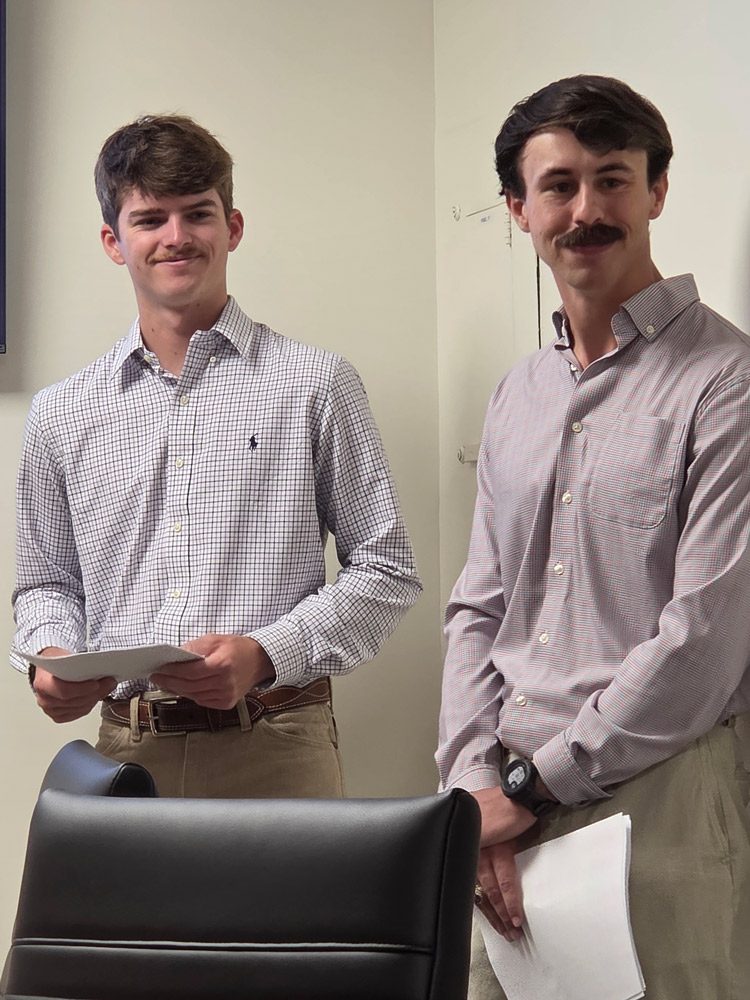
“I think deciding what species we wanted to manage for was a difficult part just because a lot of them have overlap where they wouldn’t coincide very well together,” Geitner said. “Also, Mr. Kaplan had a wide range of wildlife species he wanted to manage for. Having to manage for wild turkey while keeping deer populations down was a tricky thing we had to work around.”
McKeller focused on food plots, wetlands and beaver pond management.
“I expanded my knowledge of food plot management, wetland management for wood ducks and beaver pond management,” he said. “Mr. Kaplan has several beaver ponds throughout his property that he loves. We really put an emphasis on those. I learned how to work with the beavers and install some beaver pond dam levelers to help mitigate the beaver damage and keep the wetlands to where we can manage them and promote the species that we’d like to help benefit the wood ducks.”
The students’ recommendations included a 3- to 4-acre food plot with winter wheat and clover, a pollinator field planted with native wildflowers and grasses, a Clemson-developed beaver pond dam leveler, bluebird boxes, expanded natural habitat around existing fields, and park benches and trail cameras to enjoy the wildlife on the property better.
The plan also called for management practices that would benefit pollinators, songbirds, wild turkeys, wood ducks and other wildlife species across the property. Additional recommendations focused on enhancing wetlands and increasing aquatic vegetation to support native amphibians and reptiles.
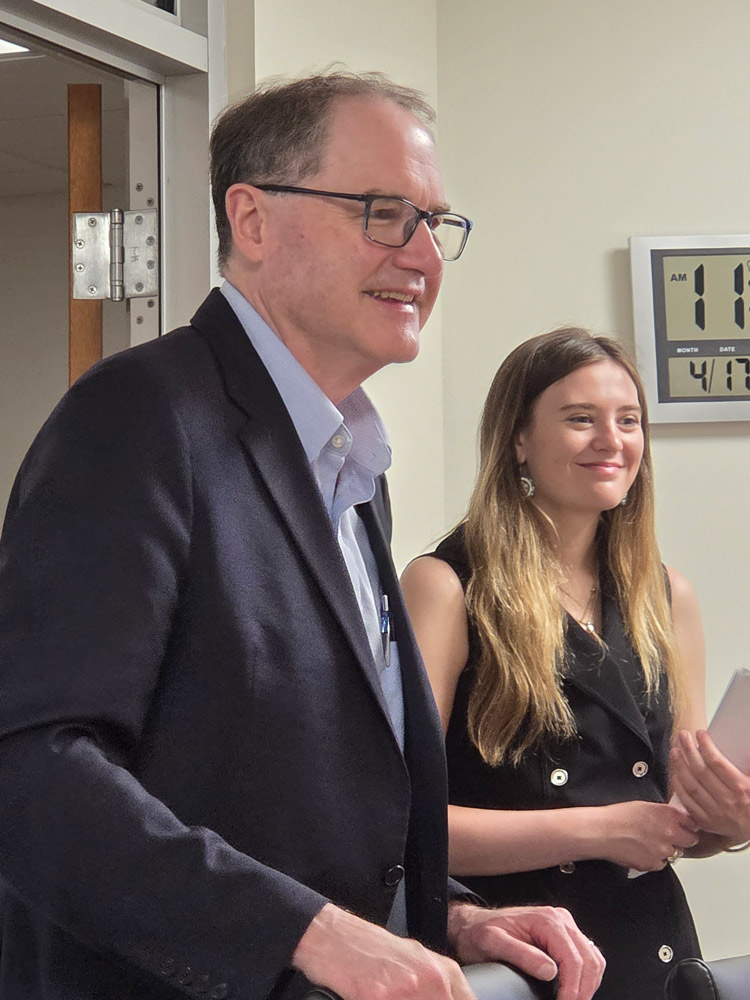
Kaplan plans to implement many of the recommendations, including improvements to wetlands, pollinator habitat and food plots and hopes the students return to see the results firsthand.
“I’d love for you guys to come back in the fall when it’s all done,” he told the group after their presentation.