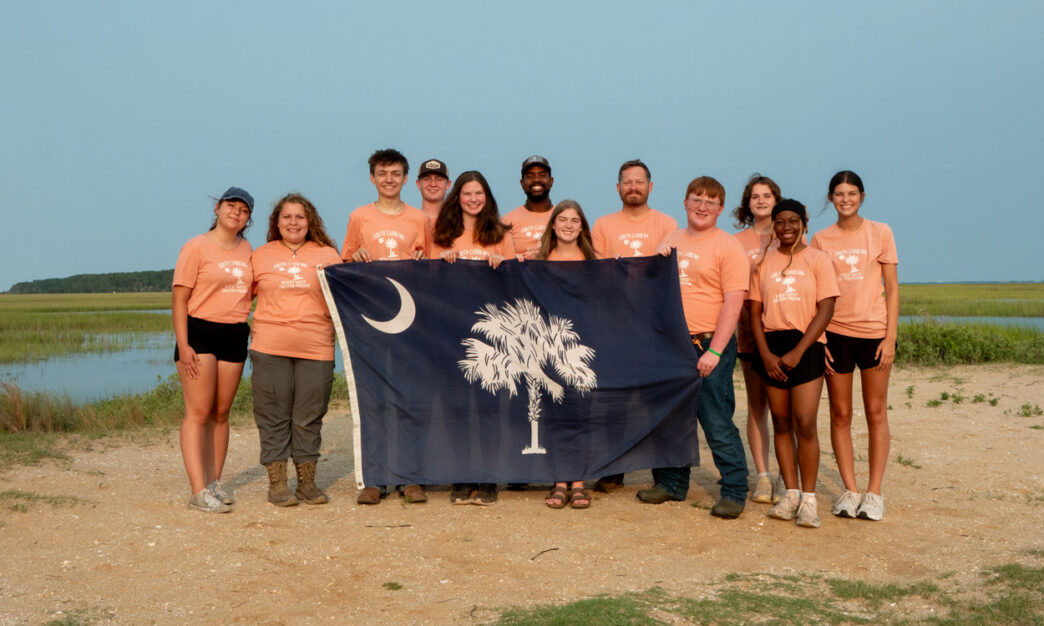
When Clemson Cooperative Extension Service brought back the statewide competition for the Wildlife Habitat Education Program (WHEP) in 2019, who knew the dynasty that it would create on the national level?
WHEP is a national hands-on environmental education program dedicated to teaching youth across the country about wildlife and fisheries habitat conservation and management. Youth are given an opportunity to learn and test their wildlife knowledge in a friendly competition.
Winners of the state competition go on to participate in the National WHEP competition, which features a Future Farmers of America division and a 4-H division.

For the first time in 28 years, the national event was held in South Carolina. Taking advantage of the home state, Pendleton High School became the sixth consecutive South Carolina team to win the team national championship in the FFA division. Pendleton’s Cooper Lindley also placed first in the FFA individual competition.
“Since we have brought back the WHEP state competition, we’ve won the national contest every single year,” said Mallory Maher, program coordinator of the Clemson Cooperative Extension Service’s South Carolina Master Naturalist Program. “That is a huge achievement. I think as far as the program, when it comes to our state, it shows that we are preparing our teachers to be able to effectively teach the content.”
Since 2019, Maher and the state committee have worked diligently, not only restoring the state competition, but also modeling it after the national contest. While hosting workshops and training sessions, they focused on the teachers’ wants and needs. The results have been fruitful with South Carolina now claiming seven national championships (six in FFA and one in 4-H), along with two third-place finishes (4-H).
“You have a lot of youth interested in natural resources and wildlife programs,” Maher said. “WHEP is very hands-on. It’s applicable to what someone might be doing in a career. I think that resonates not only with the students who participate, but also the teachers, volunteers and agents that send teams to our state contests. They recognize its value.”

Joining Lindley on the Pendleton team were Elijah Glenn, McKinley Arthur-Banning and Sara Bridgeman. In the 4-H division, the Governor’s School for Agriculture finished in fifth place. The team consisted of Violet Hogan, Adaline Epting, Lena Richardson and Nadia Felder.
“WHEP has been one of the most beneficial competitions I’ve competed in,” Lindley said. “It opened my eyes to wildlife issues I wasn’t aware of and it showed me how important proper habitat management is. Scoring as the top individual in the nation has also solidified my desire to become an agricultural education teacher.”
Eighteen teams from 15 states competed in this year’s event. The teams stayed at the South Carolina FFA Leadership Center in North Myrtle Beach on the marsh of Cherry Grove. The competition was held at the S.C. Department of Natural Resources’ Lewis Ocean Bay Heritage Preserve.
The contest consisted of a wildlife challenge in which participants had to identify various wildlife species. The team was also shown a plot of land and had to develop a written wildlife management plan and later give individual oral reasons for that plan.
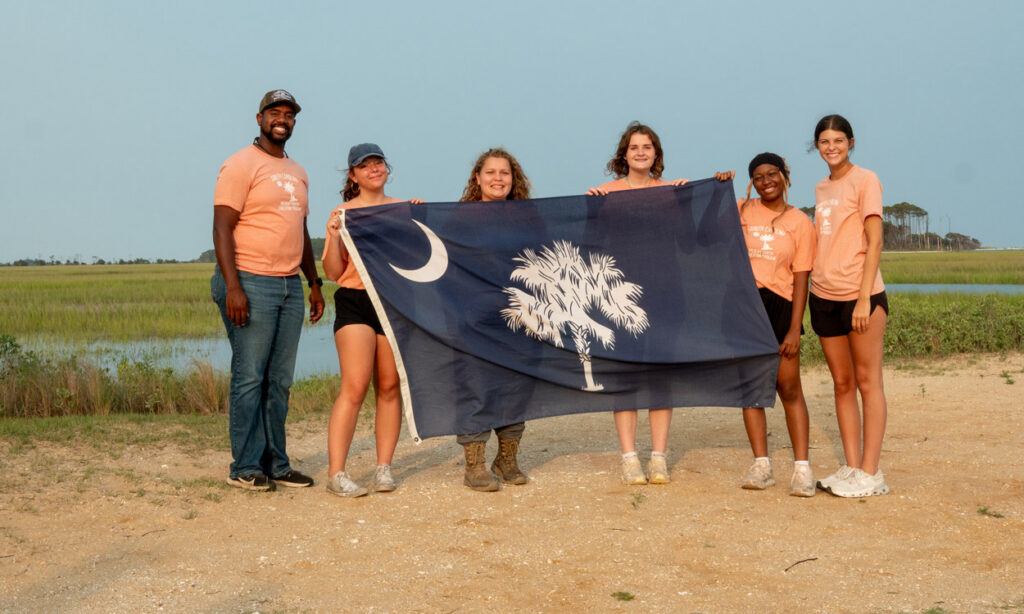
“My favorite part about WHEP nationals was writing the wildlife management plan because we got to work together outside and learn about different wildlife species, habitats and practices,” Arthur-Banning said.
As the national WHEP committee chair, Maher was instrumental in bringing the competition to South Carolina. In doing so, she wanted to ensure she showcased the many partners and collaborators who frequently work with Clemson Extension.
“We are lucky to have tremendous partners throughout the state,” Maher said. “Although we are a small state, we have a huge impact and that is because our state, federal and private partners all work together so nicely. I believe that part of my role working with Extension and at a land grant university is to bring key partners and collaborators together to educate the public in South Carolina and beyond. WHEP provided that perfect opportunity to showcase those efforts.”

Before the contest, the youth participated in Education Day. Maher wanted the day to focus on experiences that provided lifelong memories. The students went on a dolphin cruise, which for some participants was their first time on a boat or their first time seeing the ocean and dolphins in the wild.
They explored the marsh with North Inlet-Winyah Bay National Estuarine Research Reserve and went crabbing and saltwater fishing with representatives from the South Carolina Department of Natural Resources. Some youth had a chance to tag a blue crab.

“I think when they look back on their experience at WHEP, they’ll always remember their time in South Carolina,” Maher said.
Before the participants left, Maher challenged them to share what they learned with others so they can recognize the challenges that wildlife and wildlife biologists will face in the future, such as increased urban sprawl and landuse change.
“They are the future of wildlife management and conservation,” Maher said, “and I am so proud to be a part of this program to play a role in bringing this contest back to South Carolina.

“I recognize that not all who participate in WHEP may move on to major in a wildlife/natural resources field or become a wildlife biologist. However, I know they do not leave our contest without recognizing the role that we play in conservation and how wildlife management impacts many of the game and nongame species we enjoy.”