Weather pattern changes, pests and diseases threaten coffee and cacao crops while also straining the global food system. To help farmers adapt at home and abroad, Clemson University and the University of Hawaii at Manoa are uniting in a research initiative to identify stronger crop varieties and farming practices.
The Feed the Future Innovation Lab for Coffee and Cacao (CCIL) is led by the University of Hawaii at Manoa and Clemson. This multi-year initiative, with an initial obligation of $8 million, funded by the U.S. Department of State, brings together university, industry and agricultural partners to develop improved crop varieties, test farming practices and strengthen production systems.
The initiative will work in Latin America, Africa and Asia to improve productivity, profitability and resilience of coffee and cacao farming systems. Knowledge gained from this research will also benefit South Carolina.
Why this matters now
Rising temperatures, shifting rainfall patterns, and increased pest and disease pressures can reduce yields and threaten farm incomes, particularly for smallholder farmers. Scientists will evaluate crop varieties and farming practices to help producers maintain harvests, improve productivity and reach higher-value markets.
The project draws on Clemson expertise in plant breeding, phenomics, soil fertility and plant nutrition, connecting crop-improvement research with field testing in coffee- and cacao-producing regions.

“The stability of coffee supplies has a direct impact on American businesses and workers,” said Jagger Harvey, director of Global Research Initiatives in the Clemson College of Agriculture, Forestry and Life Sciences. “By helping farmers overcome production challenges, we can strengthen global supply chains while supporting industries and jobs here at home.”
According to the National Coffee Association (NCA), about two-thirds of American adults drink coffee every day. The coffee industry supports more than 2.2 million U.S. jobs and adds more than $343 billion to the U.S. economy.
“This investment in agricultural research and innovation will play a critical role in securing resilient supplies of America’s favorite beverage,” said William “Bill” Murray, NCA president and chief executive officer.
The typical U.S. resident eats up to eight pounds of chocolate a year. Information from the National Confectioners’ Association shows that chocolate generates $28.4 billion in sales and adds 700,000 jobs to the U.S. economy.
“Coffee and chocolate are two of the joys in life,” said Suzanne Shriner, a coffee farmer and Synergistic Hawaii Agriculture Council administrator. “I am excited for the benefits this funding brings to American growers and consumers.”
Hawaii is the only U.S. state that commercially grows both coffee and cacao.

Benefits for South Carolina

Bhupinder Farmaha, Clemson Extension soil fertility specialist at the Edisto Research and Education Center near Blackville, will lead the project’s soil fertility work. His team will analyze soil and plant samples to develop fertilizer recommendations for farmers.
Through partnerships on multiple continents, the team will strengthen field and laboratory research, support Extension and outreach programs, and build local technical expertise.
“This work will expand Clemson University’s international engagement and advance agricultural innovation and capacity building in emerging regions,” Farmaha said.

Clemson crop ecophysiologist Sruthi Narayanan in the Clemson Plant and Environmental Sciences Department will lead plant nutrition research. Working with the soils consortium, her team will study how balanced nutrition affects coffee quality.
“The goal is to develop evidence-based nutrient recommendations that support both productive crops and better-tasting coffee,” Narayanan said.
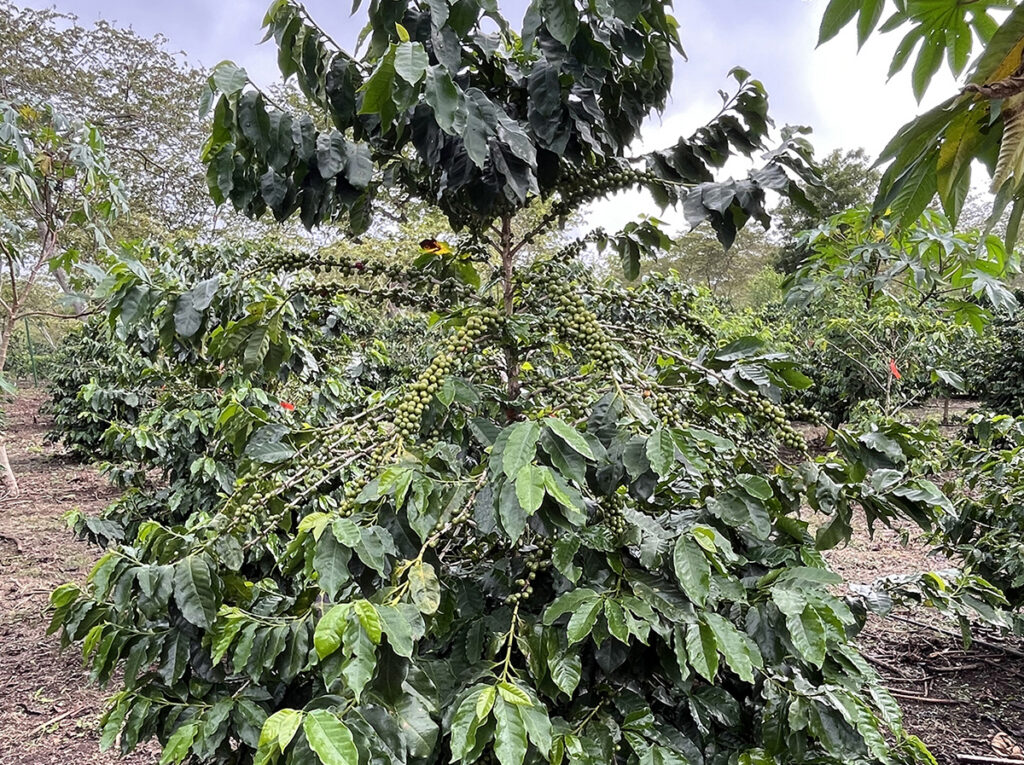
At Clemson’s Pee Dee Research and Education Center near Florence, Trevor Rife’s team will use artificial intelligence (AI) and advanced imaging to measure plant traits.

The team will develop AI models that use mobile-phone images to measure coffee tree yield and other quality traits.
Field technicians in Central America and Kenya will photograph coffee trees and label thousands of images to train AI models to count coffee cherries and estimate yields.
“Faster, more consistent measurements can help breeders identify and advance the strongest candidates in research programs,” Rife said.
The new methods will be adapted for crops grown in South Carolina, including cotton and peaches.

Connecting global research
South Carolina has a vibrant specialty coffee roasting and processing industry, including independent roasters and a major processing facility.

Matthew Holt, dean of the Clemson College of Agriculture, Forestry and Life Sciences, said the project will give faculty and students opportunities to study crop resilience and supply challenges.
“By combining Clemson’s strengths in crop science and soil fertility with the University of Hawaii at Manoa’s knowledge of coffee and cacao production, we can turn research into practical guidance for farmers,” Holt said.
South Carolina Rep. William Timmons, who represents the state’s 4th Congressional District, was instrumental in paving the way for collaboration between Clemson University and the University of Hawaii at Manoa.

Timmons worked with Hawaii Rep. Jill Tokuda to launch the Congressional Coffee Caucus. This bipartisan forum highlights coffee’s positive impact on the U.S. economy and strengthens the resilience of the crop’s global supply chain.
“By leveraging the U.S. land-grant system and working with a world-class group of research institutions and industry partners, the CCIL will connect innovative research to farms and supply chains,” Timmons said. “This will boost productivity and profitability for small farmers, improve processing technologies and ensure quality products for U.S. consumers.”
In addition to Clemson and the University of Hawaii at Manoa, the consortium features scientists from Michigan State University; The Ohio State University; Pennsylvania State University; University of California, Davis; Coffee Quality Institute; Mars, Incorporated; PlantVillage+; Synergistic Hawaii Agriculture Council; and World Coffee Research.
-END-
Related articles:
UH Mānoa, Clemson University, to lead federal program to boost U.S., global coffee, cacao production
State Department announces Feed the Future Innovation Labs to support agriculture research