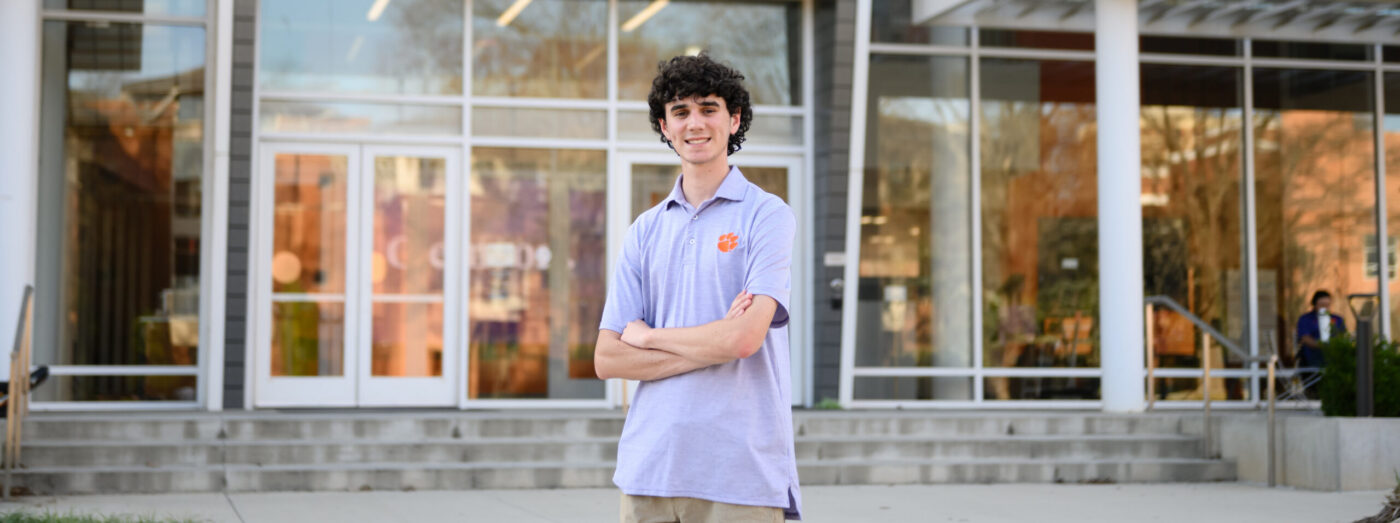

Matt Laufer ’27 arrived at Clemson University prepared to study plants. However, through his research and academic experiences, Matt recognized that he wanted to pair his interest in the sciences with a people-oriented career. That led him in an unexpected new direction to a predental track.
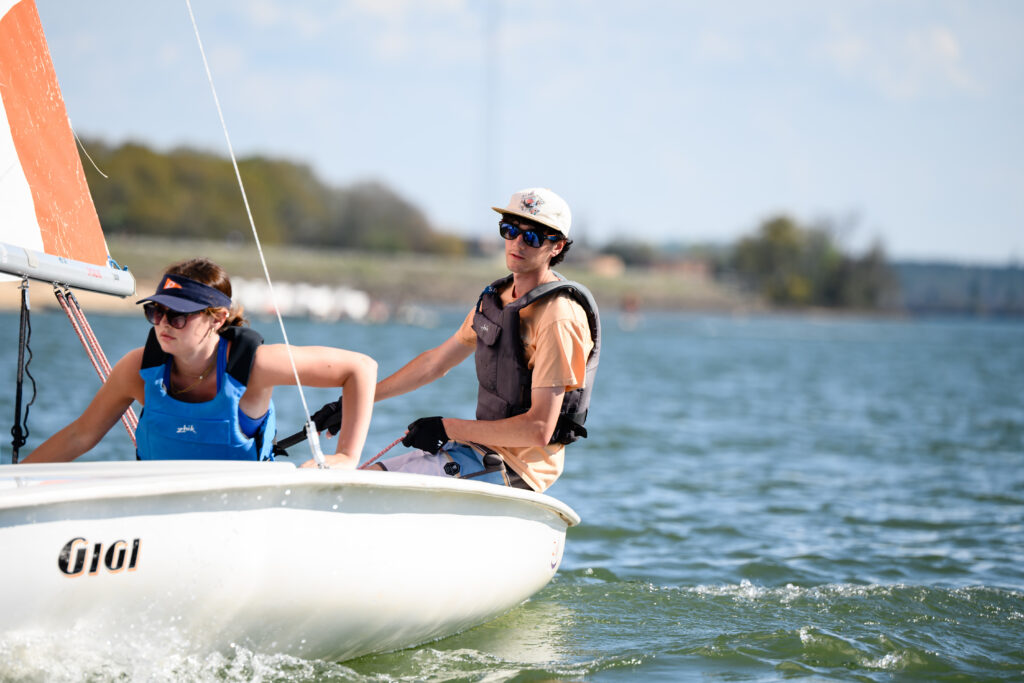
A native of Brielle, New Jersey, Matt attended a biotechnology-focused high school that drew him to environmental science and agriculture. On campus tours of schools throughout the Southeast, Clemson stood out for its research facilities and outdoor recreation on Lake Hartwell. For Matt, a lifelong sailing enthusiast, being near the water was a bonus of attending Clemson.
“Clemson has a lake, so I was like, ‘I’m going here,’” Matt says. “I did a regular tour here, and then I reached out to one of the agriculture recruiters. I got a tour of the greenhouse. I really enjoyed the campus because I can walk everywhere.”
Digging into plant research
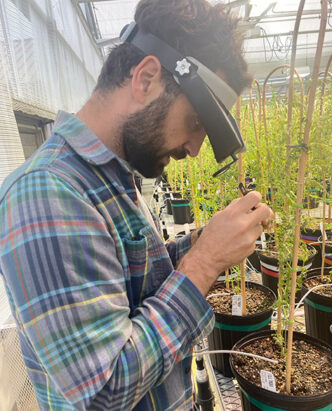
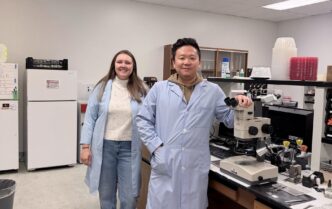
Matt majored in plant and environmental sciences with a concentration in agricultural biotechnology, which applies modern molecular science to traditional agricultural practices affecting farmers and consumers. He dove into plant research in his first year, joining the cotton genetics lab of Christopher Saski, professor of systems biology in the Department of Plant and Environmental Sciences. Matt has worked to improve fiber quality and develop germplasm — living genetic resources — to increase the oil content and disease resistance in upland cotton, maximizing the crop’s value, resilience and sustainability.
“This lab is known for finding different ways to add genes to plants. It started as work on cotton, but we’ve recently branched out to peaches and cucumbers,” Matt says. “It’s all about finding reliable methods for genetic work on plants so that in the future, other researchers could build on what we’ve done and make new additions.”
Deciding to change course
As Matt gained real-world experience in a research laboratory setting and progressed through his plant and environmental sciences coursework, he came to better understand what interested and motivated him. Those realizations caused him to reevaluate his career trajectory.
“I took a bunch of science classes and started to notice, ‘Oh, I like this aspect of this class and that aspect of that one,’” Matt says. “I like science and working with my hands and talking to people instead of sitting behind a desk every day. So, I started thinking about how to combine all those things into a career. Dentistry ended up being something I could see myself doing.”
For Matt, pivoting to predental aligned with his strengths in the sciences and his drive to solve problems and help people. And he didn’t have to change his major or start over academically. In fact, Matt discovered significant overlap between his required major and concentration courses and the recommended prerequisites for dental school: general biology, general chemistry, biochemistry, microbiology and genetics. He has taken other prerequisite courses, such as human anatomy and physiology and organic chemistry, and added a minor in biological sciences to further prepare for his next steps.
“I still enjoy plant and environmental science,” Matt says. “I can still apply what I’ve learned in my science classes, but the predental track courses also set me up for what I want to be in my future career.”
Looking ahead to patient care
Through the Predental Club, Matt has connected with peers about preparing for the Dental Admissions Test, the application process and schools to consider. He’s also become familiar with the specialized skills he’ll need to develop for a successful career in dentistry.
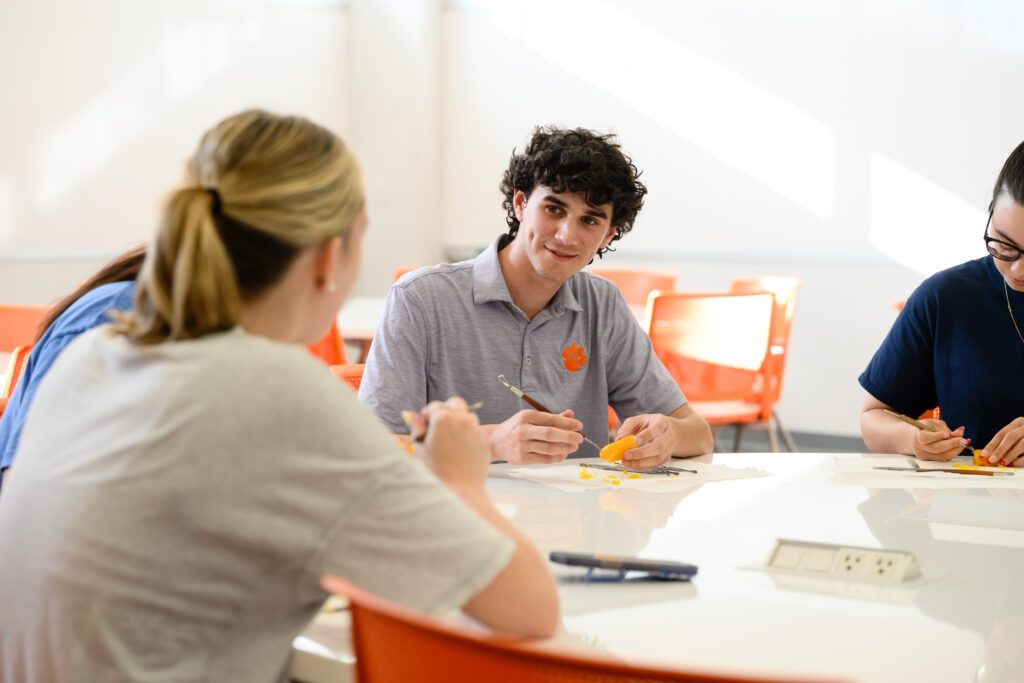
“In some meetings, we practice hands-on skills, like working on manual dexterity with bars of soap and dental tools,” Matt says. “It gets me thinking about elements of the job that I wouldn’t have otherwise been thinking about.”
At Clemson, Matt found the freedom to explore his interests and discover what truly inspires him. From there, he gained clarity on what a fulfilling career looks like for him. That spirit of curiosity and determination will guide him as he continues his education and supports the health of his future patients.