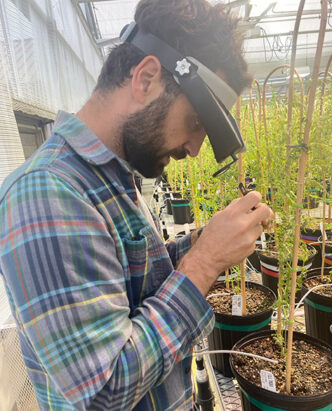

Mark Dempsey came to Clemson University with the goal of helping make lentils a viable crop for farmers in the Southeast.
When he graduates in December with a doctorate in plant breeding and genetics, he will take with him research experience that combines field trials and genetic analysis, and a deeper understanding of how plant breeding can address farmers’ needs.
Dempsey’s work focuses on identifying lentil varieties suited to growing conditions in the Southeastern U.S., particularly under organic management. Lentils are not commercially produced on a large scale in the region, but he believes they have the potential to provide farmers with another crop option while contributing to a more sustainable food system.
“I chose this topic area because I believe pulse crops should play an important role in feeding the world while making efficient use of the land and other resources used to grow them,” Dempsey said. “Because pulse crops are nutritious and protein-rich, they are sure to be an important part of meeting the challenge of feeding a growing population.”
Pulse crops include lentils, dry beans, chickpeas and peas. Dempsey hopes that adapting lentils to the Southeast will help increase regional and global production.
His path to plant breeding began with more than a decade of work in sustainable agriculture. Before coming to Clemson, he worked in agricultural research and provided technical assistance to farmers, focusing on organic agriculture, soil health, cover crops, weed management and natural resource conservation.
Working directly with farmers shaped the questions Dempsey pursued during his education.
“Through that work, I developed an appreciation for the complexity of agricultural production and the many challenges farmers face,” he said. “I’ve also seen how research can help address those challenges, particularly when it’s supported by the practical realities of farming.”
Teaming with Thavarajah
Dempsey’s interest in pulse crops grew from their potential to support sustainable agriculture. But many were not well suited to production in the Southeast, leading him to consider how plant breeding and genetics could help.
While managing the Carolina Farm Stewardship Association’s Lomax Research and Education Farm, he met Clemson scientist Dil Thavarajah. Thavarajah had included the farm as a field location for an upcoming lentil research project. After talking with her about the work, Dempsey applied to join the project as a doctoral student.
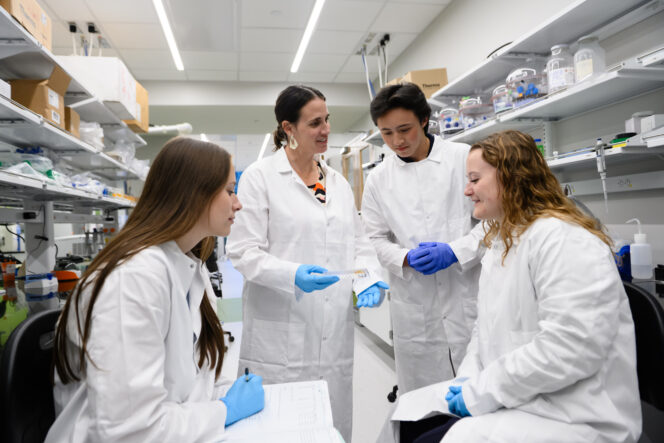
He came to Clemson in part to work with Thavarajah, whose breeding program focuses on organic production and biofortification of pulse crops. Biofortification aims to improve the nutritional value of crops.
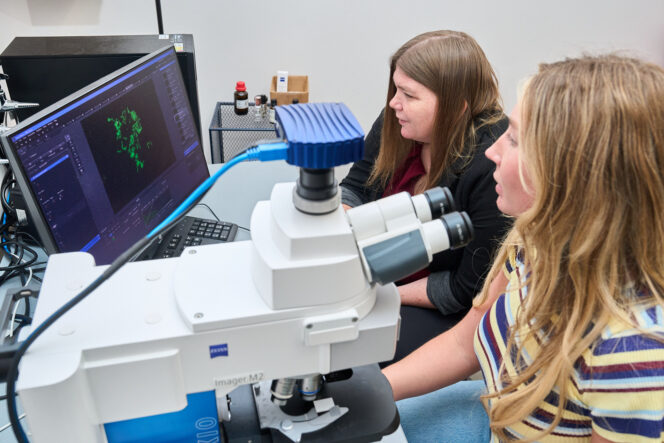
At Clemson, Dempsey conducted field trials and used genetic tools to identify traits to support future breeding work. Managing a project that combines field and computational research helped build on his crop management experience while developing new skills in plant breeding.
He learned how breeders evaluate genetic diversity, identify desirable traits and use genomic tools to better understand the genetic basis of those traits. Thavarajah also provided the support and resources Dempsey needed during his educational journey.
“I’ve gained experience implementing large-scale field trials, but perhaps most importantly, I have learned how to use genetic data to better understand the traits that influence plant adaptation,” he said.
After graduation, Dempsey hopes to continue working in plant breeding and research, developing pulse crops that make agriculture more productive and resilient while providing nutritious food.
He wants his work to remain grounded in the experiences that first drew him to agricultural research: listening to farmers and helping them find practical solutions.
“I’m also interested in crop improvement that responds to farmers’ needs and expands the range of crops that can be grown profitably in a region,” he said.
Connecting plant breeding with farmers’ needs
As a doctoral researcher, Dempsey contributed to Thavarajah’s pulse quality and nutritional breeding program by investigating whether lentils could become a viable crop for farmers in the Southeast, particularly under organic management.

He combined field trials with genetic analysis to identify traits that could inform future breeding efforts. His previous work with farmers brought practical experience in organic agriculture, soil health and crop management to the research.
Dempsey and Thavarajah published their findings in a 2026 Crop Science paper examining lentil genotypes potentially suited to organic production in the Southeast. Dempsey was the lead author and contributed to the study’s design, analysis and writing. Thavarajah, the corresponding author, contributed supervision, funding acquisition and project administration, among other roles.
“Mark brought an understanding of farmers’ needs to our pulse crop program,” Thavarajah said. “His experience in sustainable and organic agriculture helped connect the questions we ask in plant breeding with the practical challenges farmers face.”
Thavarajah said Dempsey’s research provides a foundation for future work to evaluate and improve lentils for the region.
“I’m especially proud of the way Mark brought his experience working with farmers into his research,” she said. “He understands that developing a crop for a new region begins with asking questions that matter to the people who may one day grow it.”