Every cell in the human body carries a set of instructions. Written in DNA, those instructions determine how cells function, grow and divide. But what happens when those instructions become damaged?
For Clemson University geneticist Jennifer Mason, that question is at the heart of her research — and the answers she finds could help scientists discover new ways to treat cancer.
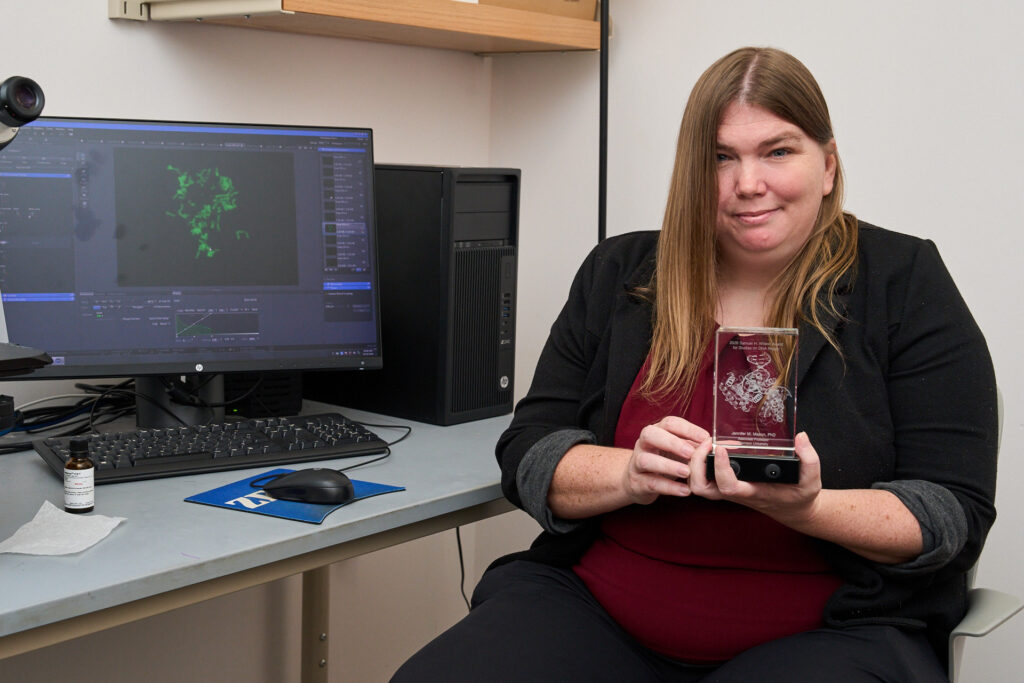
Mason, an associate professor in the Clemson Department of Genetics and Biochemistry and a member of the Clemson Institute of Human Genetics, recently received the Samuel H. Wilson Award from the Environmental Mutagenesis and Genomics Society (EMGS), recognizing her contributions to research, teaching and mentorship.
Named in memory of a pioneer in DNA repair research, the award supports emerging scientists and provides opportunities to share their work with leaders in the field.
Mason said receiving the recognition from fellow scientists was particularly meaningful.
“I was kind of shocked and humbled and honored,” Mason said. “I was walking around on cloud nine all day.”
The award provides travel support and an opportunity to deliver an oral presentation at the society’s annual conference, increasing her visibility among researchers in academia, industry and government.
For Mason, having her name associated with Wilson’s legacy also carries significance as she pursues future research funding and collaborations.
Instructions gone wrong
To understand Mason’s research, imagine DNA as an instruction manual that tells every cell in the body how to operate.
Those instructions are constantly threatened by damage from everyday exposures, including sunlight and processes occurring naturally within cells. When damage goes unrepaired or is repaired incorrectly, it can alter the genetic instructions and potentially contribute to disease.
“DNA repair is the first line of defense,” Mason said.
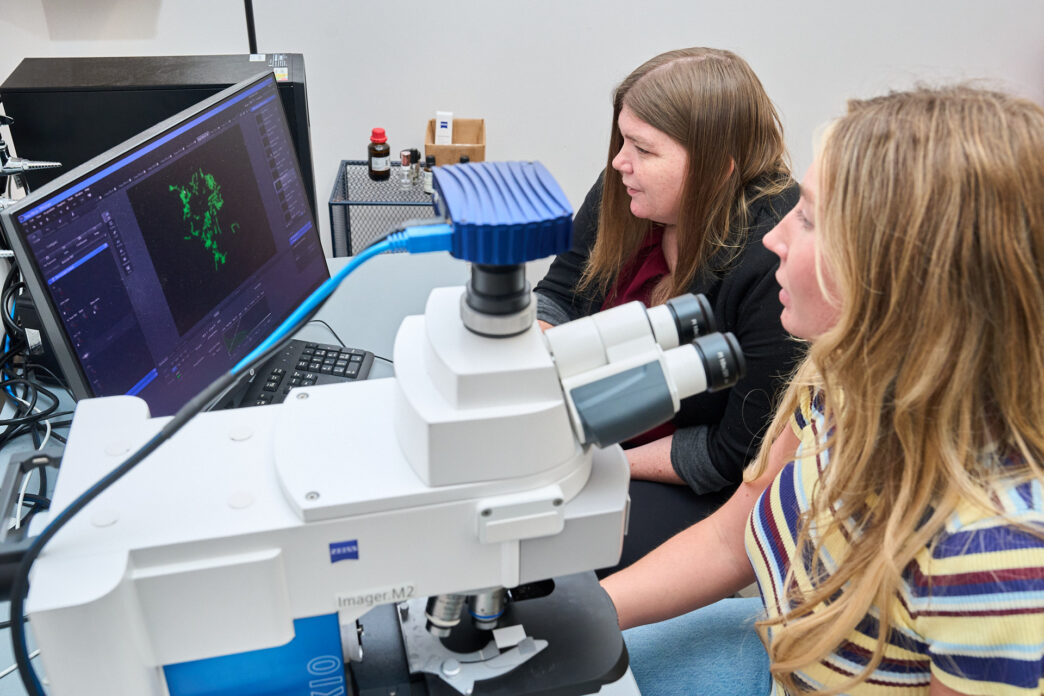
Her laboratory focuses specifically on what happens when DNA is damaged during replication, the process in which a cell copies its genetic material before dividing into two new cells. Replication is a particularly vulnerable moment because mistakes can be passed along to future generations of cells. A mistake in a cell that is not dividing may affect only that cell. But when a cell replicates damaged DNA, the consequences can multiply.
Understanding how cells respond to these threats is critical because accumulated genetic mutations are a defining characteristic of cancer.
Turning cancer against itself
While DNA damage can contribute to cancer’s development, Mason’s research explores how that same vulnerability might be used against cancer cells.
When DNA damage interferes with replication, cells experience what scientists call replication stress. Cancer cells often experience unusually high levels of replication stress because they divide rapidly. Although they have mechanisms to tolerate that stress, many are already operating close to their limits.
Mason’s research investigates whether disrupting the pathways that help cancer cells survive could push them beyond those limits. The idea is to exploit a weakness cancer cells already have rather than affecting healthy and cancerous cells equally.
By identifying which DNA repair pathways cancer cells depend on most, scientists may eventually develop treatments that selectively target those vulnerabilities while limiting damage to healthy cells.
One existing example of this approach involves PARP inhibitors — drugs that block poly (ADP-ribose) polymerase, an enzyme involved in DNA repair. PARP inhibitors are used to treat certain cancers with BRCA gene mutations.
BRCA mutations can impair a cell’s ability to repair DNA. Blocking an additional repair pathway with a PARP inhibitor can make it much harder for those cancer cells to survive.
Mason’s laboratory studies similar genetic interactions, looking for combinations of defects that cause cancer cells to die.
Her research remains largely in the basic and preclinical stages, where scientists work to understand the molecular mechanisms behind these interactions before they can be translated into potential therapies. As several projects in her laboratory advance, Mason hopes to expand collaborations that could move some of those discoveries closer to clinical applications.
A career built on curiosity
Despite dedicating her career to DNA repair, Mason did not initially plan to enter the field.
When she began graduate school at the University of Michigan, she knew she was interested in science but had not settled on a particular research area.
A graduate adviser encouraged her to explore the laboratory of a new assistant professor, JoAnn Sekiguchi. After completing a research rotation, Mason discovered the field that would shape her career. She later worked with Doug Bishop, a leading DNA repair researcher at the University of Chicago, before joining Clemson.
What continues to excite Mason is the constantly evolving nature of scientific discovery.
Her laboratory’s work now connects DNA repair to cancer, neurodevelopmental disorders and kidney disease, requiring her and her students to explore new techniques and collaborate across disciplines. That variety, she said, is one of the reasons she has remained passionate about the field.
Next generation of scientists
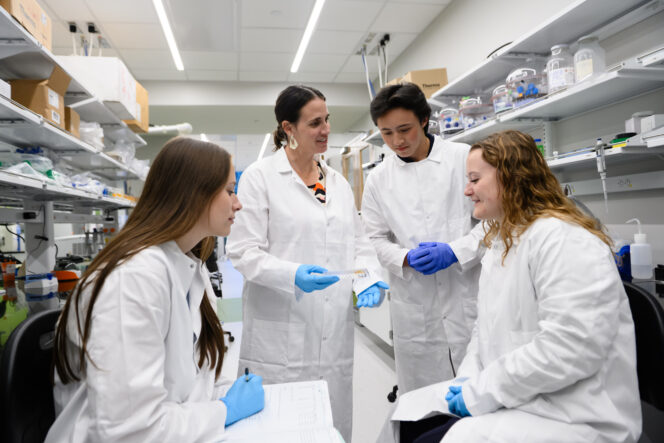
Although the Samuel H. Wilson Award recognizes Mason’s scientific accomplishments, its emphasis on teaching and mentorship reflects what she considers one of the most rewarding parts of her career.
“Seeing their progression is my favorite part,” Mason said.
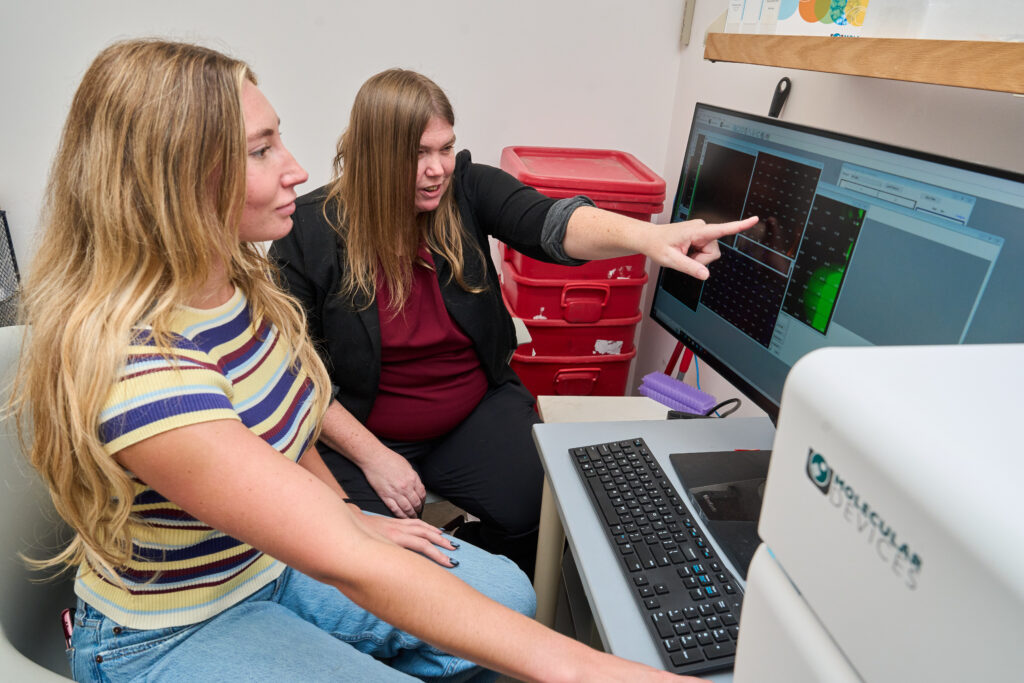
DNA repair research can be overwhelming for students entering the laboratory for the first time. Understanding the molecular processes involved often requires studying events occurring at individual sites of DNA replication.
But Mason finds particular satisfaction in watching students move from uncertainty to understanding. Seeing a student grasp a difficult concept, develop confidence in their research and eventually become an independent scientist is what motivates her as a mentor.
The award’s emphasis on supporting early-career researchers also reflects the values Mason appreciates about EMGS.Through conference presentations, leadership opportunities and collaborative programs, the society encourages graduate students, postdoctoral researchers and early-career faculty to contribute to the scientific community.
Looking ahead, Mason hopes to secure additional funding to sustain her laboratory’s growing research efforts while pursuing new collaborations that could bring promising discoveries closer to clinical use.
For students considering careers in genetics, biochemistry or other scientific fields, she emphasizes that success does not require having all the answers.
Instead, it requires being willing to find them.
Her advice is to remain curious, resilient and proactive about learning, even when experiments fail or the next step is unclear. She says the uncertainty that makes scientific research challenging also makes discovery possible.