How can South Carolina farmers manage nitrogen more efficiently? What can birds reveal about isolated wetlands? How does prescribed fire affect longleaf pine forests?
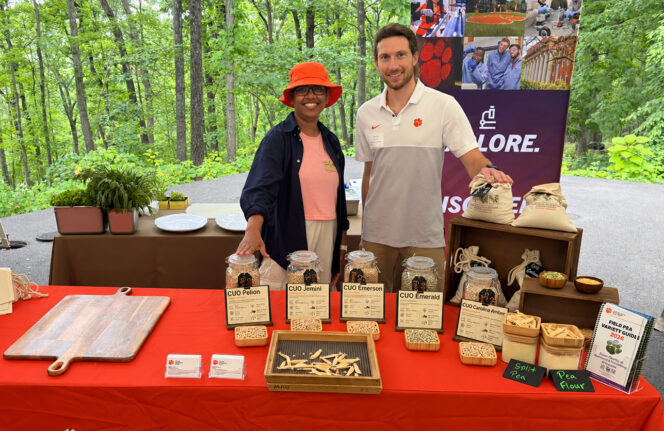
Graduate students explored questions like these at the fifth annual College of Agriculture, Forestry and Life Sciences (CAFLS) Graduate Research Symposium, hosted at Clemson’s Sandhill Research and Education Center in Columbia.
The location connected students’ projects to a century of research focused on South Carolina’s needs. Sandhill was established in 1926 as an experiment station addressing agricultural challenges in the Sandhills region. Today, as it celebrates its centennial, the center advances agricultural research, environmental stewardship and community engagement, working with farmers, landowners and industry partners. The students’ work continued that tradition, examining questions in crop production, forest and wetland health, food and human health.
In her welcome message, Sandhill director Kathy Coleman described the center’s history as making it “an especially fitting place to showcase graduate research.” She noted that the research presented at the symposium continued a tradition of asking questions, testing ideas and pursuing discoveries that can make a difference.
Students presented their research through master’s and doctoral poster sessions, a Three Minute Thesis (3MT) competition, and a photo contest, which was added to the program this year. Each format gave them practice communicating their work, receiving feedback and building professional relationships.
“The symposium is designed to help our graduate students grow as researchers and communicators. They present their work in different formats, get feedback and build professional relationships, while learning to show the context and impact of their research,” said Carlyle Brewster, interim associate dean for research and director of the Clemson University Experiment Station.
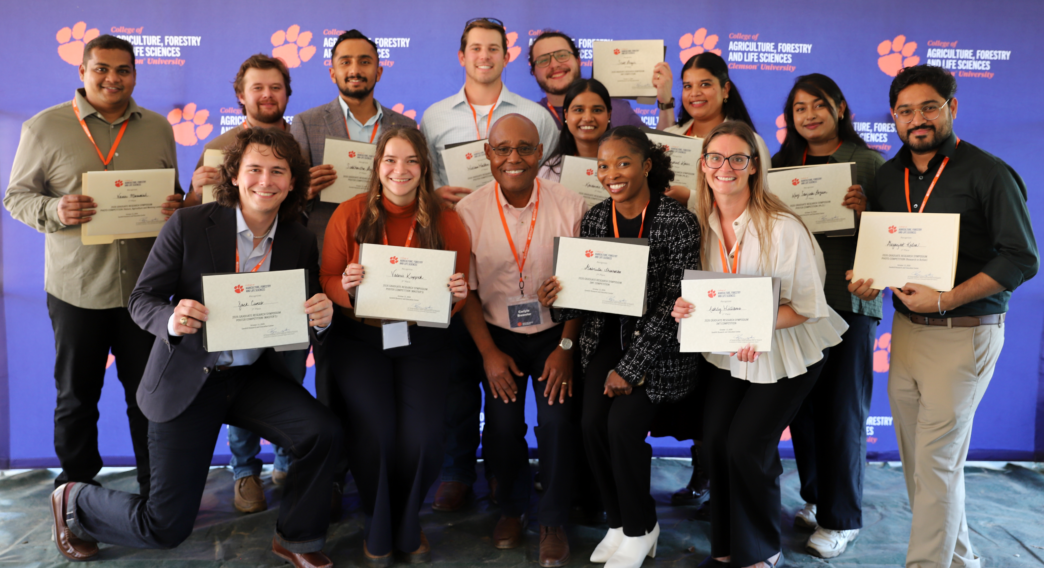
With nearly 100 students presenting, competition for top honors was fierce. Awards recognized students in the poster, 3MT and photo contests.
Award recipients
Master’s posters
- First place: Jack Cuneo, Plant and Environmental Sciences, advised by Debabrata Sahoo, “Utilizing mini-disk infiltration to determine the soil water repellency index for bioretention cells in three distinct regions of South Carolina.”
- Second place: James Owens, Plant and Environmental, advised by Michael Plumblee, “Late-season nitrogen applications in corn: analyzing the effects of late-season applications of nitrogen at different rates in South Carolina corn production.”
- Third place (tie): Valerie Kuppek, Forestry and Environmental Conservation, advised by Troy Farmer, “Evaluating American shad passage and reproductive success within an impounded river system.”
- Third place (tie): Virginia Justice, Plant and Environmental Sciences, advised by Michael Plumblee, “Defining Agronomic Management Practices that Produce High-Yielding Soybean in South Carolina.”
Ph.D. posters
- First place: Walker Spivey, Plant and Environmental Sciences, advised by Jenna Hershberger, “Optimizing nitrogen management and planting density for Carolina Strongback-grafted watermelon.”
- Second place (tie): Kazi Sanjida Begum, Plant and Environmental Sciences, advised by Bhupinder Farmaha, “Corn yield response to nitrogen application Timing in South Carolina”
- Second place (tie): Siddhartha Regmi, Forestry and Environmental Conservation, advised by Thomas O’Halloran, “Impact of crown scorch severity on transpiration and evapotranspiration in longleaf pine forests following a prescribed fire.”
- Third place (tie): Karamvir Kaur, Plant and Environmental Sciences, advised by Bhupinder Farmaha, “Corn Yield and Economic Response to Integrated Broiler Litter and Urea Nitrogen Management.”
- Third place (tie): Simranpreet Kaur, Plant and Environmental Sciences, advised by Bhupinder Farmaha, “Site-specific soybean yield response to broiler litter application across South Carolina.”
Three Minute Thesis
- First place: Ashley Williams, Food, Nutrition and Packaging Sciences, advised by Geetha Thangiah, “Exercise beyond the surface: exploring DNA methylation and body composition in adolescents.”
- Second place (tie): Gabriella Iheanacho, Animal and Veterinary Sciences, advised by Susan Duckett, “5-Hydroxytryptophan Alleviates Toxic Fescue-Induced Disruption of Fetal Muscle Development and Associated Gene Expression Pathways During Late Gestation”
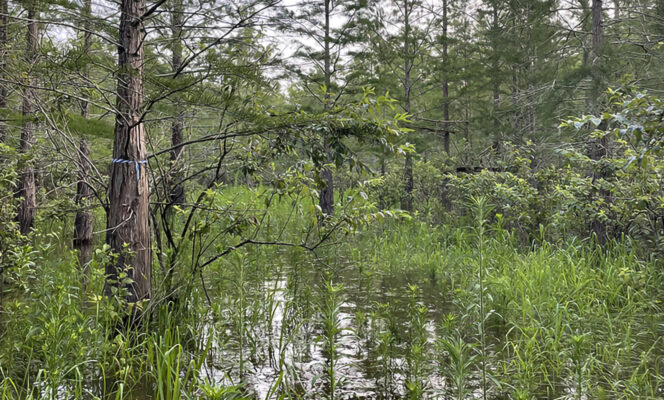
- Second place (tie): Scott Binger, Forestry and Environmental Conservation, advised by James Anderson, “Carolina Bays Are for the Birds: How Wetland-Associated Birds Indicate Habitat Quality in Isolated Wetlands.”
Photo contest
New this year, the photo contest recognized research, the people behind it and the landscapes connected to it.
- Research In Action: Gaganjeet Kalra, advised by Sachin Rustgi, “Breeding to Reduce Immunogenic Gluten.”
- Science Through Lens: Kazi Sanjida Begum, advised by Bhupinder Farmaha, “Six Months to Gold.”
- People Behind the Science: Simranpreet Kaur, advised by Bhupinder Farmaha, “The Work Behind the Numbers.”
- Nature, Agriculture & Working Lands: Naveen Marasaiah, advised by Puneet Dwivedi, “The Unseen Resident.”
- People’s Choice: Noah Willsea, advised by Juan Carlos Melgar, “Peach Owl.”

Breeding to Reduce Immunogenic Gluten
With steady hands and forceps, I remove immature anthers from a wheat spike before they release pollen. This process, called emasculation, prevents self-pollination and prepares the flower for controlled pollination with a selected parent. Each successful cross combines useful traits from two wheat lines, creating new genetic variation. My research uses these crosses to develop wheat lines with reduced levels of immunogenic gluten proteins while maintaining desirable agronomic and end-use qualities. This small action is an early but essential step toward understanding how wheat genetics can support the development of nutritious, productive, and potentially safer wheat varieties for consumers.
Six Months to Gold
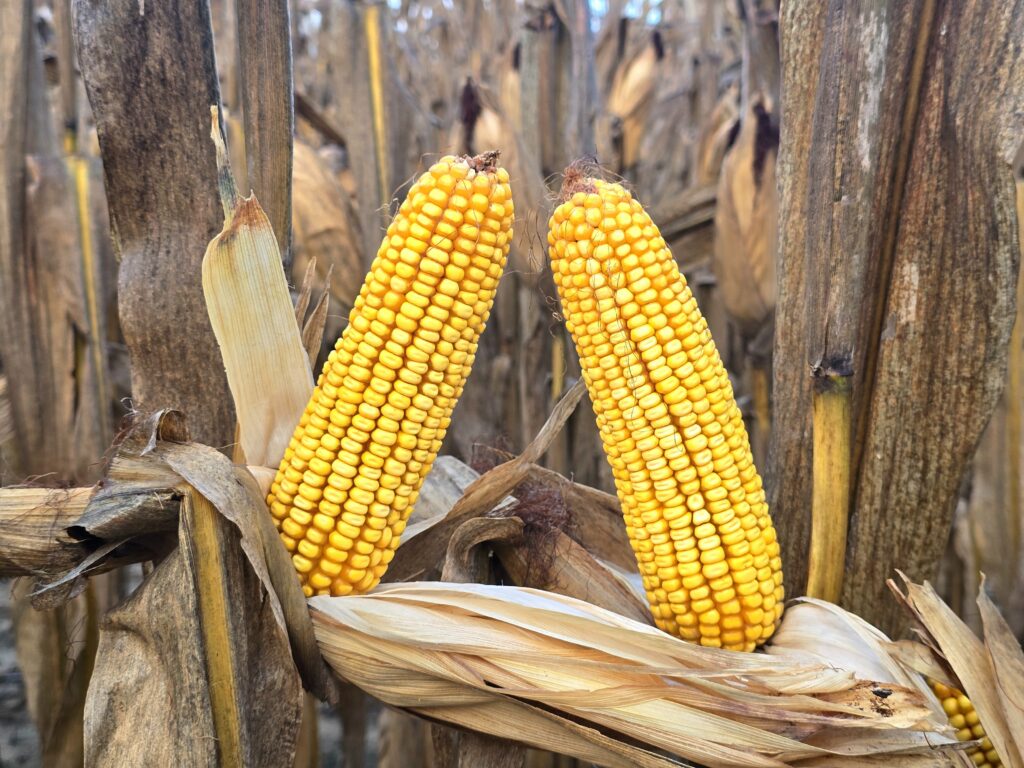
After six months of careful management, observation, and hard work, these golden corn ears mark the most rewarding moment of the growing season, harvest. Behind every kernel lies the science of crop production: genetics, soil fertility, plant nutrition, water, sunlight, and management working together. Captured during my own harvest, this moment reminds me that agriculture is where scientific knowledge takes root in the soil and ultimately becomes a harvest in our hands.

The Work Behind the Numbers
Behind every research result are graduate researchers spending hours in the field, collecting samples under real-world conditions. Surrounded by a dense soybean canopy, I collect plant tissue from nutrient-management treatment plots on a South Carolina farmer’s field. These samples help us understand how soybean responds to different nutrient sources and management practices. What eventually appears as data, graphs, and research findings begins with people doing the hands-on work behind the science, plant by plant, plot by plot, and farm by farm.
The Unseen Resident
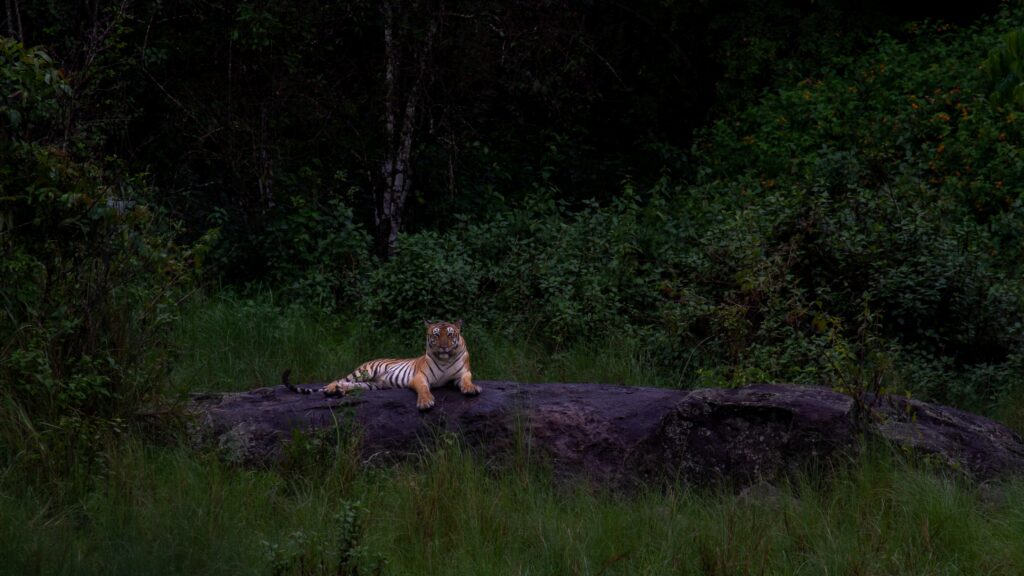
Most days, we knew her through signs rather than sightings. Her pugmarks, camera-trap images, distant growls, and alarm calls from langurs, deer, junglefowl and others revealed her presence. One monsoon day, deep inside Biligiri Ranganathaswamy Temple (BRT) Tiger Reserve, we were collecting vegetation plot data to know how invasive plants reshape forest habitats. After the rain, while returning with Soliga trackers assisting our fieldwork, we found her sleeping openly on a rock. We watched quietly for several minutes until she awoke, lifted her head, and looked directly at us. The unseen resident was finally in full view.
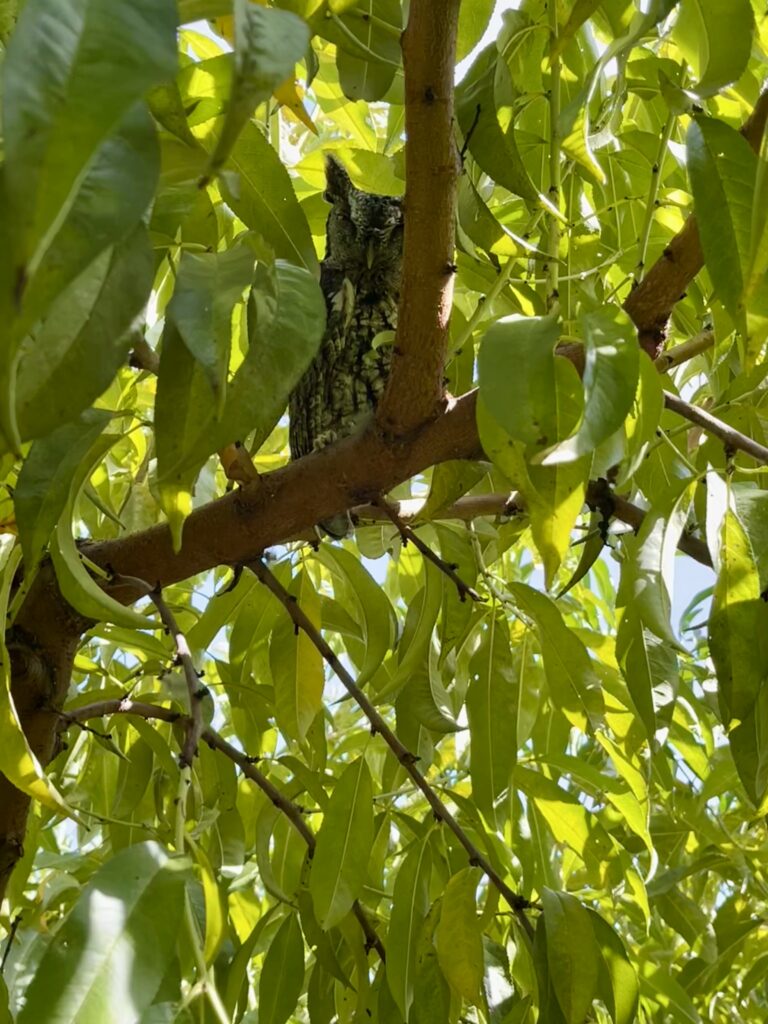
Peach Owl
This was an Eastern Screech Owl that we found in one of our peach research orchards last year. She blended in quite well until we noticed her, then she posed for a great picture!