Editor’s Note: The monthly “Elevate Well-Being” blog series shares thoughts and reflections of Clemson Well-Being Council members and University faculty, staff and students. Our latest blog is courtesy Patricia Layton, professor emerita in the Department of Forestry and Environmental Conservation, and strategic advisor to the Wood Utilization + Design Institute and Office of the President.
Even during my childhood, I knew when I needed comfort and to feel better, it began outside. Whether sitting on my swing or being at the lake, I always felt better. As I entered my late teens and the young adult phase of life, my “personal wellness” became even more critical, but I did not always recognize the steps I needed to take. In my late 20s, I finally learned that burning the candle at both ends was not the way to a happy life nor to completing my Ph.D. I recognized the need to listen to my body, which was telling me I needed to change. A few questions I had to explore were “Who is forcing you to do this, and why are you not taking time off for yourself?”
I learned the answer to those questions was the same: ME. I made some changes in my life. I returned to that time outside and learned to listen to my body. As I grew older and life became challenging as a professional and working mom, going outdoors became even more critical. Taking my “coffee break” outside, no matter the weather, allowed me to renew and recharge. It works even better when seeing or hearing water and trees nearby. Clemson, where I have worked for the last 25 years, is blessed to have all this available year-round and close by, wherever you walk out the door. Well-being and outdoors are essential and are recognized by our administrators and leaders as critical paths for our faculty, staff, students and visitors.
On April 25, 2025, in honor of Arbor Day, Clemson University became the first organization to earn the Sustainable Forestry Initiative’s (SFI) full Urban and Community Forest Sustainability Standard certification. Clemson’s urban forests are key to our identity as a campus, the homeplace of our Clemson Family. This certification underscored Clemson’s commitment to being a place of natural beauty and welcoming to all (including plants and animals) who are here.
Why should our urban and community forest certification be important to us? Because of the recognition that wellness is one of the most significant outcomes of managing an urban and community forest.
Studies show that trees and nature benefit our mental and physical health. Spending time around trees reduces stress and anxiety, lowers blood pressure and improves mood. Urban nature has been shown to reduce cardiovascular disease, mental illness, ADHD, diabetes, respiratory illness and asthma; support immune function and family dynamics; increase healthy birth weight and opportunities for physical activity; and much more. Have you tried forest bathing yet?
This science underscores the mindfulness or serenity I feel when I walk outdoors, sit quietly and use all my senses to still my thoughts and find the joy and renewed energy to continue my day. When I see the trees, listen to the sounds of nature, smell the seasons (they all smell differently), touch the grass or feel the sun or rain on my face, the presence of other people and stress dims, and I can reconnect with myself and my purpose.
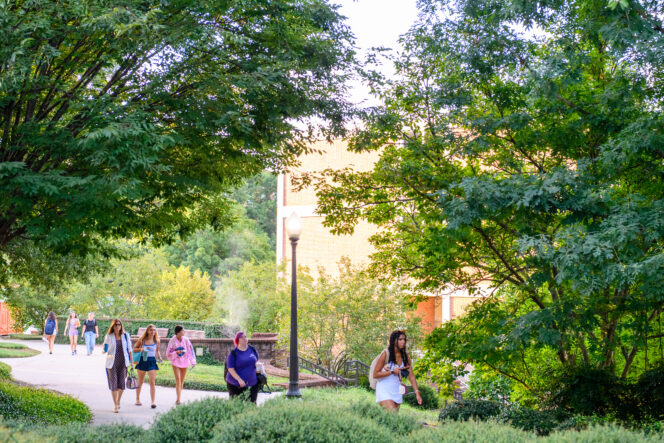
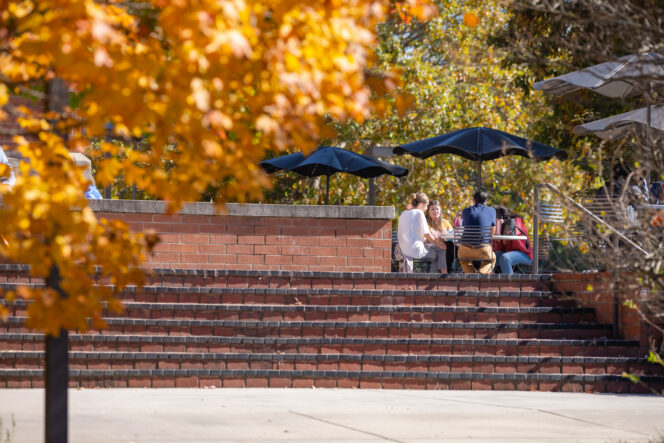
The wonderful thing about Clemson is we have a beautiful campus where you can enjoy a walk or a place to sit outside. While main campus has always been lovely, over the last few decades, our campus has focused on providing us with those beautiful places in nature that we can all enjoy, even in the heart of campus. You don’t have to go to the SC Botanical Garden, the Clemson University Forest or the Andy Quattlebaum Outdoor Education Center (all of which I recommend) to find a 10-15 respite from the day-to-day stresses of work and life. Walk out any door on campus, and there is most likely a wall or a chair to sit on, with trees and flowers somewhere in your view.
Daily, find a few minutes to leave behind your phone and desk. Join me outside to sit, listen, look and smell. Let your eyes flick around to see all the details from the color of a leaf to the clouds overhead. I encourage you to count the many ways the outdoors grounds your well-being. When we embrace nature, disconnect and take a moment outdoors — even for five minutes — you will find your trials and troubles flow away.