Community Risk Reduction (CRR) Week, this year January 19-25, seeks to create awareness of CRR and demonstrate its importance within the fire service. The week is recognized annually beginning on Martin Luther King Jr. Day of Service and continuing through the following Sunday.
What is CRR?
Community Risk Reduction, or CRR, is a proactive approach to preventing emergencies before they happen. Much like a kid putting on a helmet before riding their bike, rather than after they’ve gotten hurt, CRR works to help keep people safe before an incident occurs.
While emergency response is a crucial part of any fire department’s mission, including the Clemson University Fire & EMS Department (CUFD), CRR aims to reduce the risks that lead to fires, injuries and medical emergencies in the first place.
What are the goals of CRR?
CRR aims to impact both the Clemson community and CUFD personnel. Its goals are to:
- Reduce preventable emergencies
- Lower call volume and repeat calls
- Decrease firefighter and responder risk
- Reduce property damage and injuries
- Make responses safer and more manageable when incidents do occur
How does CRR achieve these goals?
In short, data. Data is what enables CRR to be proactive and strategic and focus on reducing the likelihood of incidents. Collecting and analyzing information from incidents, inspections, EMS responses, fire reports and community observations allows departments to understand where risk actually exists.
Armed with this data, departments can:
- Prioritize risks based on frequency, severity and preventability
- Design programs that are targeted and measurable, that can reduce risk and change behavior
- Evaluate programs for effectiveness
- Ensure consistent messaging across departments and partners
- Assess the local relevance of national and regional trends
What does CRR look like at Clemson?
At Clemson, CRR is responsible for community-level risk analysis and the development of prevention strategies. This includes monitoring nationwide trends, such as an increase in fires from lithium-ion batteries, which are used in a range of electronic devices, including e-scooters, e-bikes, smartphones, and more.
Combining national trend data with observations from local incidents enables CRR to create practical guidance for the community. In this case, it allowed CUFD to expand messaging around proper charging and dangers associated with different types of lithium-ion batteries.
CRR prevention activities at Clemson include:
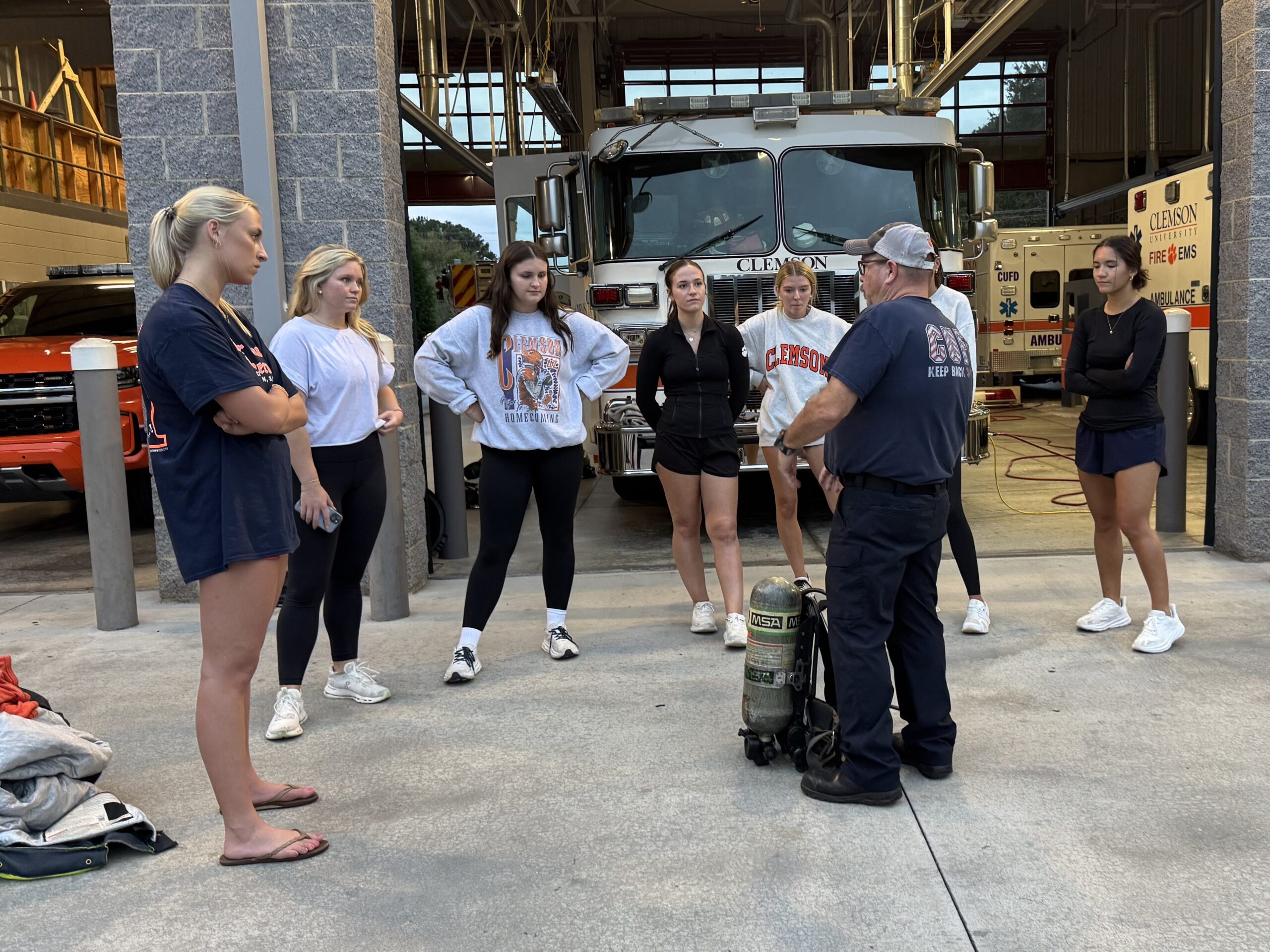
- Fire and life safety education for students, faculty, staff and community members
- Youth safety programs and babysitting classes
- Smoke alarm and home safety messaging
- Seasonal safety campaigns, including cooking, heating and lithium-ion batteries
- CPR/AED and Stop the Bleed education
- Outreach and community engagement at local events
- Collaboration with campus partners, such as Housing, Student Affairs, Athletics and other local agencies
How can I do my part?
- Ensure your residence has working smoke alarms and test them monthly
- Take a CPR class and understand how to use an AED
- Request a Stop the Bleed class for your group, department or student organization
- Share relevant safety messaging with friends and family
- Be Fiercely Responsible by engaging in bystander intervention and encouraging others to make responsible choices
- Follow Clemson University Fire & EMS on Instagram or Facebook for more safety tips
Visit the Clemson University Fire & EMS website for more information.