For many college students, hands-on learning means conducting an experiment in a lab or doing a group project.
But for four Clemson University undergraduate students, it meant traveling to Norway to send their own scientific instrument into space on a NASA-sponsored sounding rocket mission.
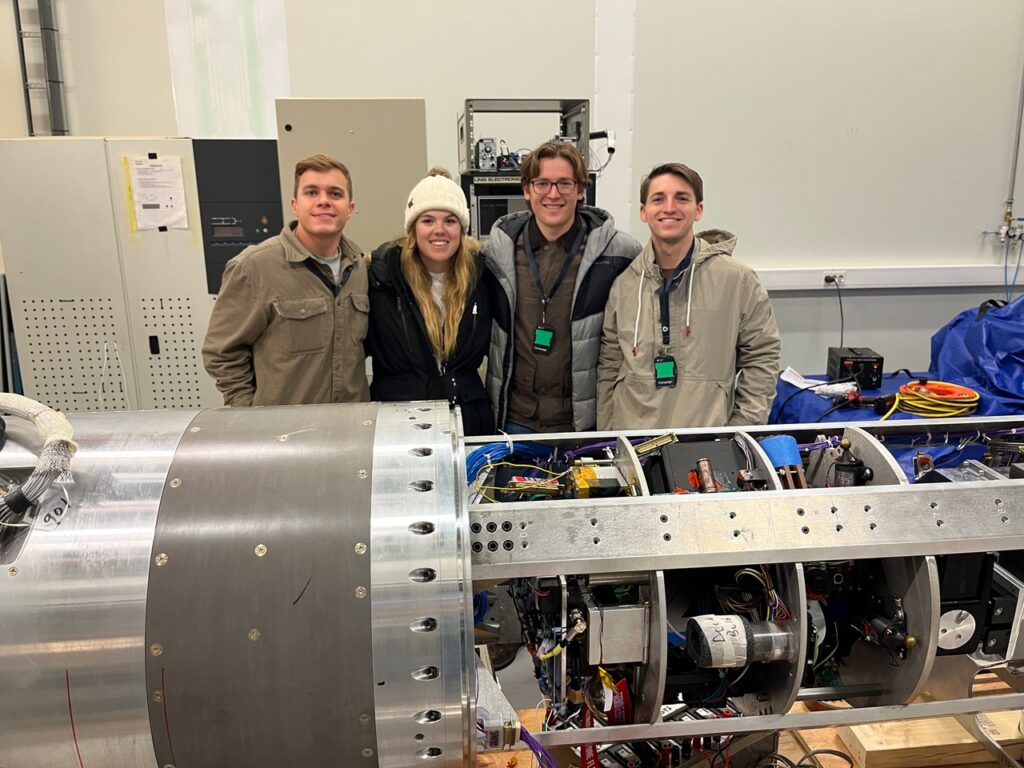
Through NASA’s RockSat program and a special international partnership mission known as Grand cHallenge mesOsphere Student rockeT (GHOST), Clemson students designed, built and tested a scientific payload that was integrated onto a rocket launched from the Andøya Space Center in Norway.
The mission, part of an international collaboration between the United States (including institutions from Puerto Rico) and Norway, allowed undergraduates to work through the same rigorous review and testing process as professional aerospace engineers.
“At Clemson, we want to provide unique undergraduate learning experiences that you can’t get anywhere else,” said Stephen Kaeppler, an associate professor in the Department of Physics and Astronomy who advised the students. “I certainly didn’t have an experience like this when I was an undergrad.”
The student’s Norway experience grew from Kaeppler’s lab and Clemson’s Creative Inquiry + Undergraduate Research (CI) program, which combines engaged learning, cross-disciplinary interactions and undergraduate research that is unique to the University. CI paid for the students’ trip to Norway, while a National Science Foundation CAREER Award and the South Carolina Space Grant Consortium funded materials and domestic travel.
From a scientific perspective, the experiments the students flew were well-developed techniques that have been flown previously, Kaeppler said. From an engineering and student learning perspective, the primary goal was for the students to learn to develop experiments that could fly on a space-based platform, such as a sounding rocket.
“This is as authentic as it gets. They came up with the concept, designed the instrument, fabricated it, tested it and defended it in front of review panels. They went through the same review process that professional engineers do.”
Stephen Kaeppler
Senior mechanical engineering major and Goldwater Scholar Regan O’Neill first connected with Kaeppler’s lab through a CI course titled “Space Flight Mission Design,” where students go through a miniature version of the NASA design process with small model rockets. The course led to a spot in the lab and a role on multiple missions, including the Norway project, where she took the lead designing the deployment system for the Clemson payload.
James Davis, a senior physics major, took Kaeppler’s electronics course as a sophomore before joining the same CI course. He worked on a summer research project in which he used a low-cost software-defined radio to collect signals for ionospheric measurements. This led him to join the GHOST mission.
“I learned that I really liked electronics,” he said.
Langmuir probe
For the GHOST mission, the students designed a Langmuir probe to make direct measurements of electron density profiles of the ionosphere and a radio receiver experiment to make similar measurements. The radio receiver was designed to pick up signals from a timing station in Moscow, about a thousand miles away. By analyzing how those signals changed as they passed through the ionosphere, the team hoped to better understand how the ionosphere behaves — and to master the engineering challenge of building space-ready instruments.
“I definitely wasn’t ready for how much time it would take,” said Davis, who said roughly 16 students contributed to the project in some way over the course of a year. “But once you’re in it, you realize how cool it is.”
Before going to Norway, the students had to test and re-test their instrument to make sure it met strict requirements for size, weight, power and reliability. In summer 2025, they took the payload to NASA’s Wallops Flight Facility in Virginia for integration and testing to verify it would survive launch.
When the Clemson team flew to Norway in November for the mission, it marked several firsts for the group. It was O’Neill’s first time that far north, Davis’ and Andrew Hodges’ first trip abroad, and Matthew Hall’s first time ever on an airplane.
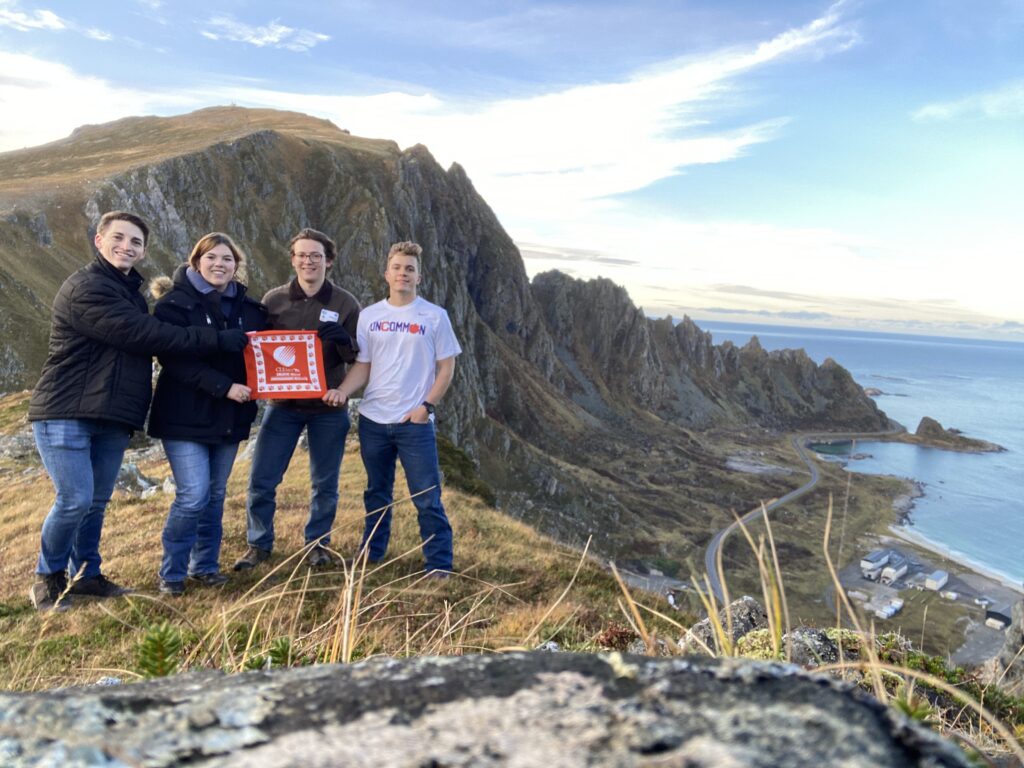
They stayed in the barracks at the Andøya Space Center, sharing hallways and cafeteria tables with NASA staff and local technicians. The students worked side-by-side with NASA engineers, seeing firsthand the collaboration and specialization required to launch a rocket into space.
“When you see a rocket go up, you don’t see all the people behind it who made it happen,” Davis said. “Everyone has a specialized role. It’s impressive.”
While in Norway, the Clemson team did face a setback: an unexpected issue when overheating voltage regulators compromised part of their experiment. The students spent long days in the hangar trying to work around the issue.
“It was sad that it didn’t go exactly as planned, but that’s science,” Davis said.
O’Neill said the project showed her the gap between classroom exercise and real hardware.
“It’s one thing to learn all the theory of how to make these things, and it’s very different when you’re actually trying to do it,” she said.
Weather challenge
Even more challenging were the upper atmospheric winds that repeatedly scrubbed the launch during their two-week stay. The payload actually launched after the Clemson students went home.
“On the ground, the weather looked fine,” O’Neill said. “But higher up, it wasn’t safe. If the winds blow in a certain direction, the rocket could land near a town. That’s not something you risk. It was disappointing, but it was definitely worth it.”
Beyond the rocket, the students experienced Norway’s culture and witnessed a powerful aurora during a geomagnetic storm. They went up the mountain behind their barracks to see the entire sky glowing green.
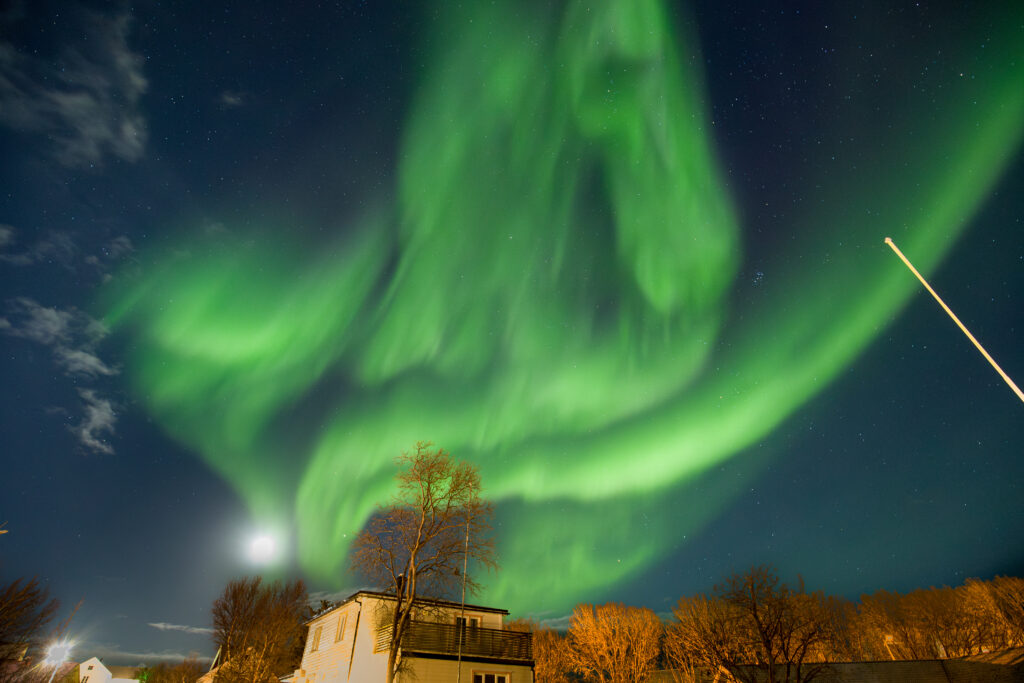
“I can’t even describe it. It was insane. It was so beautiful,” O’Neill said. “We just stood on this cliff for hours and watched it. Well, the boys stood there for hours. I was freezing and ran to the car after about 45 minutes and looked at it through the window. They kept calling me ‘weak link’ because I was so cold. I’m a South Carolinian. The snow, I’m not made for that.”
Now back at Clemson, the team is preparing for another NASA launch in Virginia this summer.
“We’ve already made things significantly better,” Davis said.