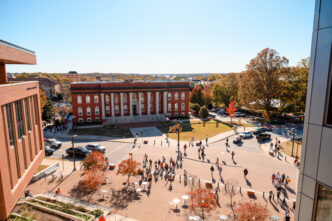
A decade ago, Clemson’s west side of main campus was forever changed by a project and partnership built around how students live, learn, eat and connect.
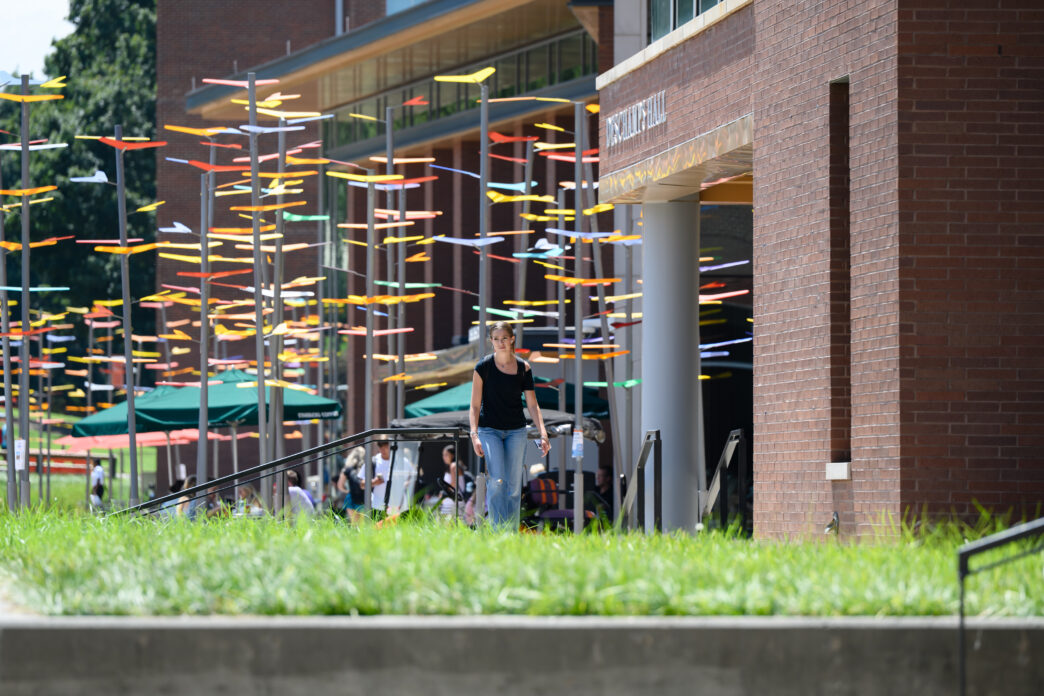
Known at the time as the Core Campus construction project, it added 688 beds across Gressette, Cribb and DesChamps halls, alongside new dining space in The Dish at McAlister, as well as new academic and gathering spaces. (The buildings were simply known as A, B, C and D until the Board of Trustees named them in a special ceremony alongside the families of honorable University trustees in Spring 2019). Its influence reaches beyond the buildings themselves. Gressette introduced Clemson’s first wet-core bathrooms, a semi-private model now used in nearly 2,200 beds across campus, while expanded lounges and study areas created more places for students to gather close to home.
For the Clemson University Honors College, Cribb and DesChamps helped turn a living-learning community into a true residential college. “The space has totally transformed our work and what we’re able to promise to students and their families,” says Sarah Winslow, dean of the Honors College. “There’s a real opportunity to have everything you need right here. You can build community, because in addition to the residential space, we have gathering and academic areas that belong to all Clemson Honors students.”

Senior Associate Vice President for Student Affairs Kathy Bush Hobgood remembers seeing that vision come alive late one evening shortly after opening in Fall 2016. Approaching from Fort Hill Street, she stopped in her tracks and took in the illuminated stairs, active lounges and students talking, studying and laughing throughout the new precinct. She recalls, “It was such an amazing moment to take in the impact of what so many had worked so hard to create.”
A decade later, that sense of activation remains the unique space’s legacy: a quieter part of campus transformed into a daily crossroads for Clemson students living, learning and building community in the heart of Clemson’s campus.
Housing, feeding and caring for Clemson students
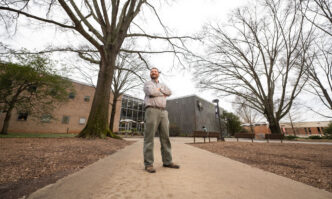
Sometime in 2008 or early 2009, University officials started looking closely at a geographic footprint of main campus known as Johnstone Meadows. Specifically, as on-campus housing needs were increasing, what did the future of the space hold?
Hobgood was part of those meetings, led by Associate Vice President for Student Affairs at the time, Verna Howell, and carried forward by Executive Director of Housing, Doug Hallenbeck. Hobgood now serves as a member of the Student Affairs leadership team under the direction of Hallenbeck, who is in his third year as vice president.
While discussions were shelved temporarily during the country’s economic recession, the group was busy at work behind the scenes building out an ambitious housing master plan. West Campus emerged first, followed two years later by Douthit Hills.
“Clemson House was nearing the end of its useful life as a facility and the remaining sections of Johnstone Hall and Harcombe Dining Hall needed to be replaced,” says Hobgood, director of residential life at the time and later the University’s executive director of housing and dining from 2014-19.
Hobgood says the project was critical as they began to modernize Clemson’s housing inventory. With more options for co-ed living and community privacy, paired with increased study and social space, West Campus changed the way Clemson sets design goals for its residential communities.

Also emerging from the 2016 opening was the creation of one of the iconic dining destinations on campus. The Dish at McAlister represented a true, modern dining hall experience, with food cooked directly in front of guests and stations for different types of cuisine. Along with adjoining retail locations, McAlister offers space for about 925 seats. This past academic year, McAlister saw more than 1.2 million meal plan transactions. Paw Points purchases at two of Clemson’s most popular retailers that call McAlister home combined to reach more than $1.3 million.
“This space has had so many demonstrable successes,” Hobgood says.
Elevating the prestige of Clemson’s Honors College to a new level
As the project set in motion, the Honors College was a key partner in visioning and planning for the new space. Prior to construction, Holmes Hall was primarily responsible for housing students in the Honors College. It featured a renovated basement area with space for studying, socializing and academic and collaborative engagement. But the college, led by Executive Director Bill Lasser at the time, was also in need of cohesion — the project would bring staff together from three separate locations into the same footprint.
Winslow joined the Clemson Family in 2006 as a faculty member in what was then the Department of Sociology and Anthropology. Seeking a deeper connection to students, she applied for a faculty-in-residence position in Holmes’ Living-Learning Community seven years later. It was her first intentional connection to the Honors College, but it wouldn’t be her last.
“Living among the students in a residential space made me a better faculty member, even outside of my Honors courses,” she reflects. “It also spun off a relationship with the National Scholars Program, and I was fortunate to be named a faculty fellow within that program a year later.”
Winslow served as interim director of National Scholars and eventually landed the full-time role in 2015. One of her earliest memories was road tripping to Atlanta in a mini-van with Lasser, Hobgood and Suzanne Price (of University Housing) to check out potential furnishings for the West Campus project.
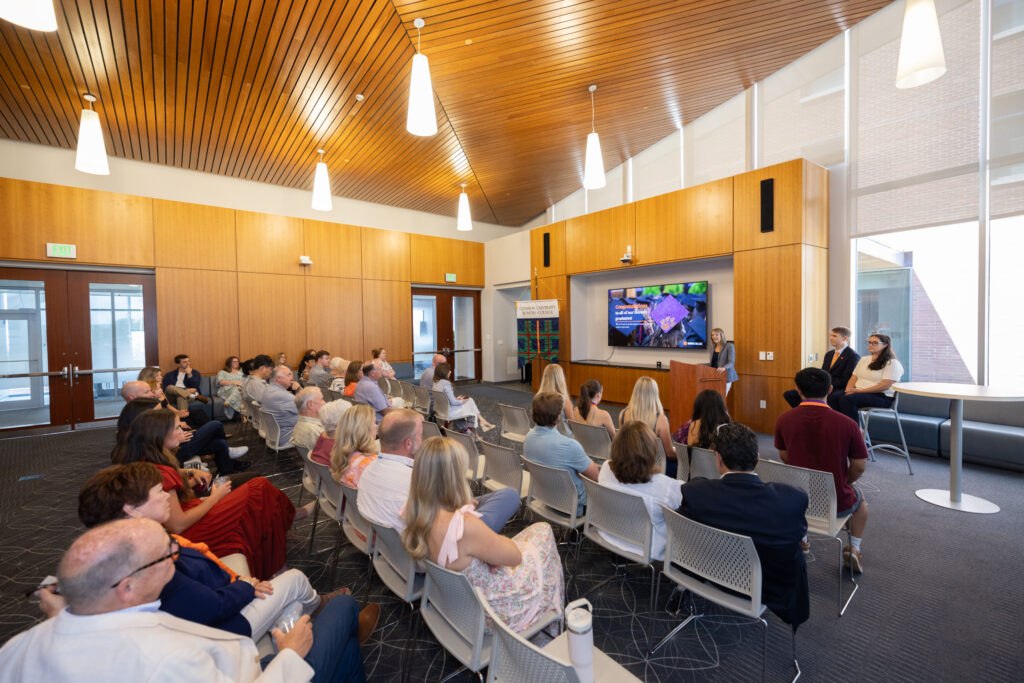
Cribb and DesChamps became home to the Honors Residential College, a game-changer for Clemson’s growing academic reputation. With 400 beds for primarily first-year students, the residence halls feature a first floor that includes a large gathering space, three study rooms, two classrooms and offices for the Honors College, Office of Major Fellowship and Honors Scholarship Programs.
Three of the spaces were named recently through private gifts, courtesy members of the college’s Fiercely Forward Capital Campaign Cabinet:
- Stalnaker Family Study Rooms – David ’84, Eva and Gunter Ben “GB” Stalnaker ’28
- James Family Classroom – Asha P. and William C. James III ‘93
- Warner Family Classroom – Jim ’95 and Shannon Conner Warner ’95
In all, it’s helped the Clemson University Honors College stand out among its peers. Applications for the college have increased at an even higher rate than the overall University number. Winslow, who was named inaugural dean of the college in November 2022, is quick to credit the partnership with Clemson Home as “transformational.”
“We are constantly asked the question, ‘Why Clemson Honors?'”
Winslow says having a residential college intentionally built for high-performing students is baked into their pitch.
“It’s a differentiator in so many ways.”