For consulting teams using artificial intelligence, the first question remains a familiar one: What business problem needs solving?
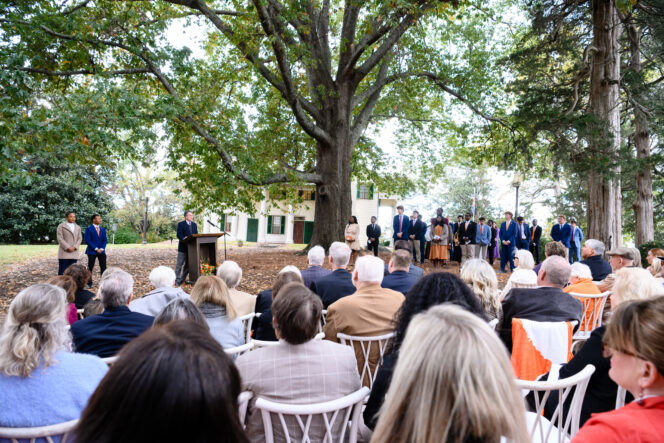
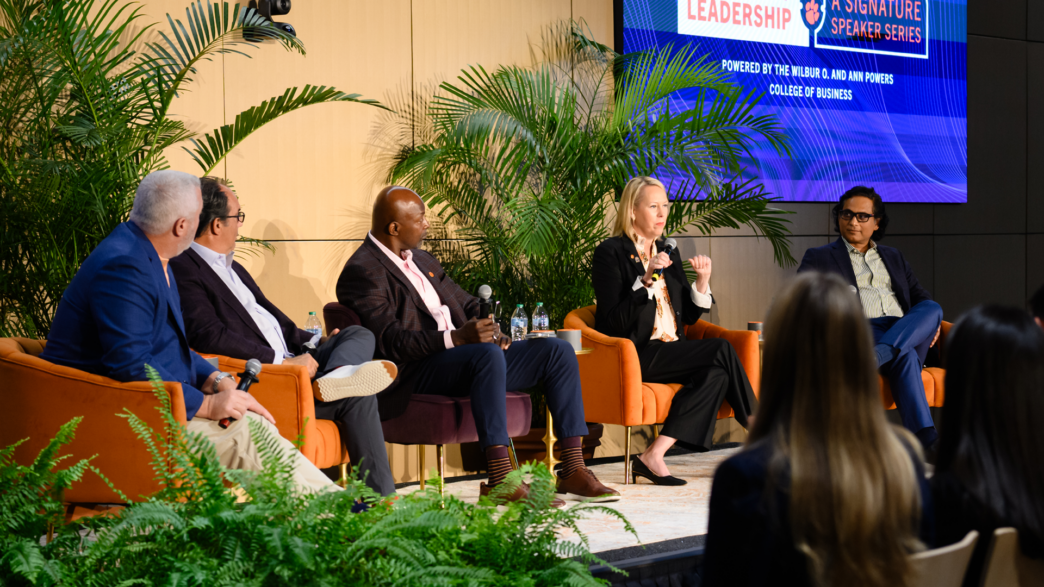
That was a recurring message during the October 16 edition of The Power of Leadership: A Signature Speaker Series, hosted by the Wilbur O. and Ann Powers College of Business. Panelists from Deloitte, KPMG, GXO Logistics and venture investing discussed how AI is changing consulting and what students can do to prepare.
The Power of Leadership: A Signature Speaker Series brings accomplished business leaders to Clemson, so that students can learn directly from industry leaders on how to think, make decisions, respond to change and earn trust. During the event, Dean Wendy York described consulting as work that requires asking the right questions, clarifying uncertainty and helping organizations move from insight to action. She also connected the discussion to the College’s emphasis on experiential learning. Dirk Roskam, Ph.D., visiting professor and Matt Hersel, Ph.D., Management Consulting Signature Program director, introduced the panelists.
The panelists were:
- Jesse Hatcher, principal at Deloitte, panel moderator
- Daniel Csoka, principal and leader in Deloitte’s Center for Process Bionics
- Shrikant Vaidyanathan, principal in KPMG Advisory
- Karen Bomber, chief commercial officer at GXO Logistics
- Chris Hornbecker, founder and investor at Stronghorn Venture Capital
Watch the full event recording.
Start with the problem
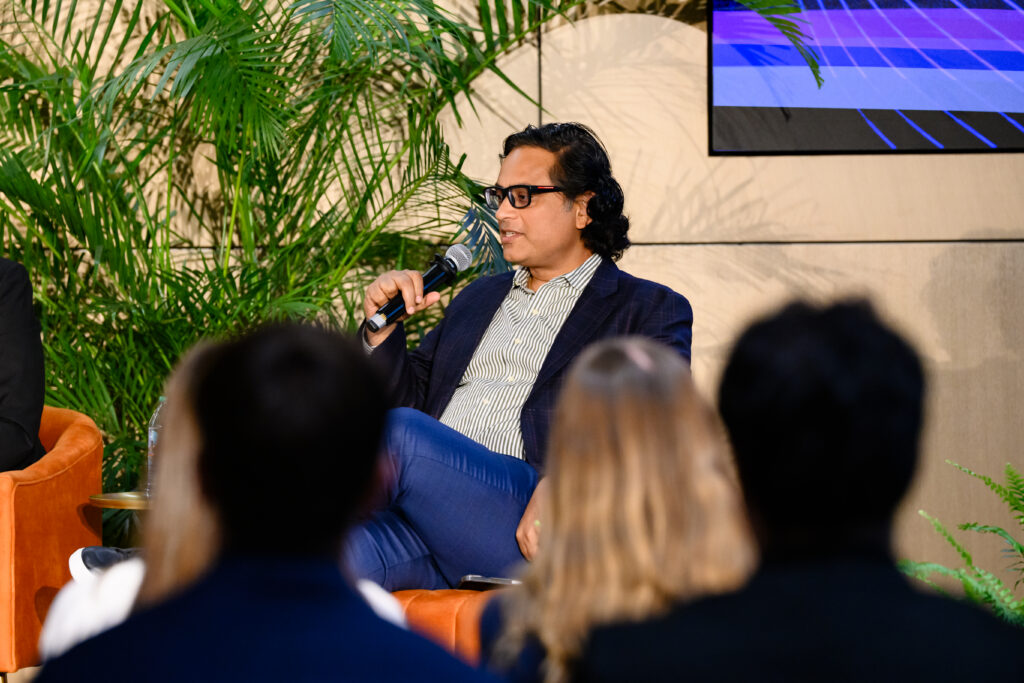
Shrikant Vaidyanathan, a principal in KPMG Technology and Consumer/Retail, urged consultants to resist looking for problems to justify using AI. The work starts with understanding the root cause and the task itself. “What’s the business problem?” he asked.
A predictable, well-defined task may be better suited to traditional automation, he said, while work involving judgment or unstructured information may be a better fit for AI. Teams also need to weigh the potential return and whether the underlying process is ready for new technology.
That approach matters as client expectations shift. Daniel Csoka, principal of AI & Engineering and a Leader in the Center for Process Bionics at Deloitte, said clients are also using AI and expect consulting teams to deliver plans, recommendations and results faster. He described a prototype built with Claude in a weekend, compared with similar work that had taken 20 weeks four years earlier.
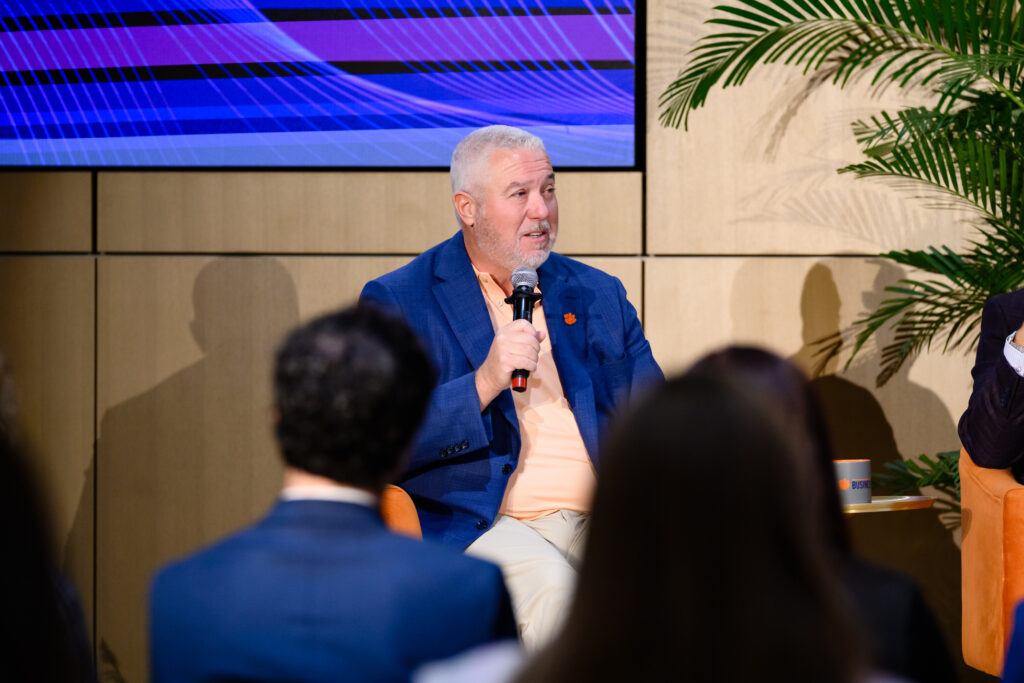
Chris Hornbecker, a founder and investor at Stronghorn Venture Capital, encouraged students to use AI to address real challenges, rather than only to retrieve answers. “You want to learn how to use AI to solve real-world problems, not just go use it like Google and query it and say, hey, write me the paper,” he said. He added that consulting teams should help clients’ employees use the technology to solve problems themselves.
Speed does not guarantee a sound decision

Karen Bomber, GXO Logistics Inc’s chief commercial officer, cautioned against mistaking AI’s intelligence for human wisdom. “We can’t confuse intelligence with wisdom,” she said. “It’s the wisdom that is going to help us prioritize how and where we use AI.”
Bomber discussed how AI can help with tasks such as responding to requests for proposals or preparing complex visualizations. But she said results still depend on the quality of the information and whether it supports the decisions a client needs to make. People must interpret the output and decide what to do with it.
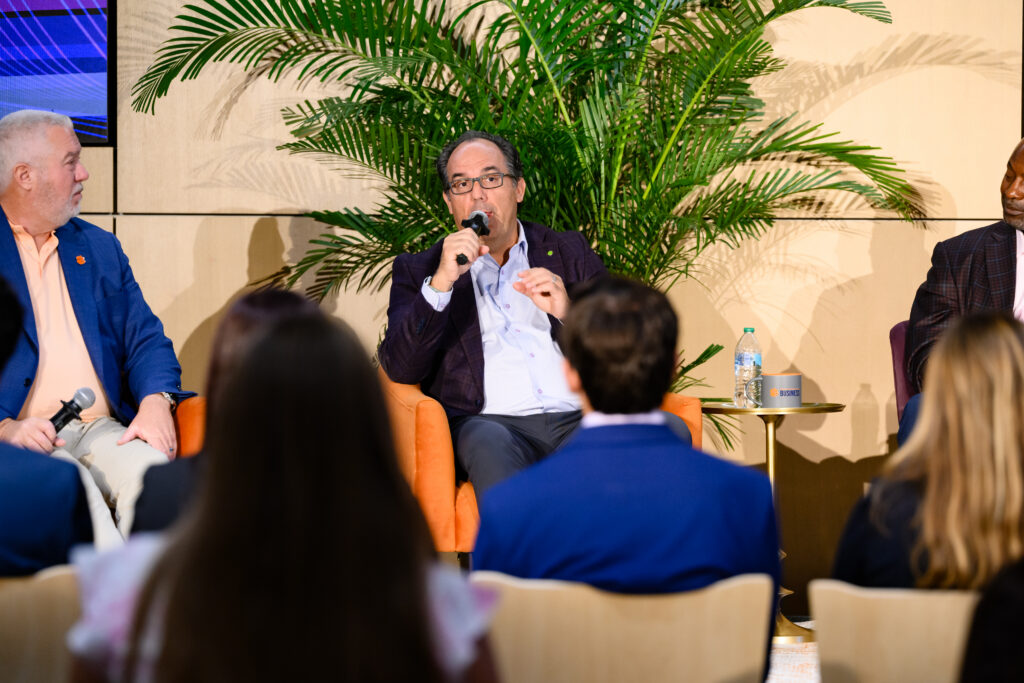
The panel also discussed the value of relationships. Daniel Csoka, principal and leader in Deloitte’s Center for Process Bionics, described using AI to review a client conversation and identify potential solutions, leaving more time to build interpersonal connections. Panelists encouraged students to develop those skills alongside their technical fluency.
Build expertise and stay curious
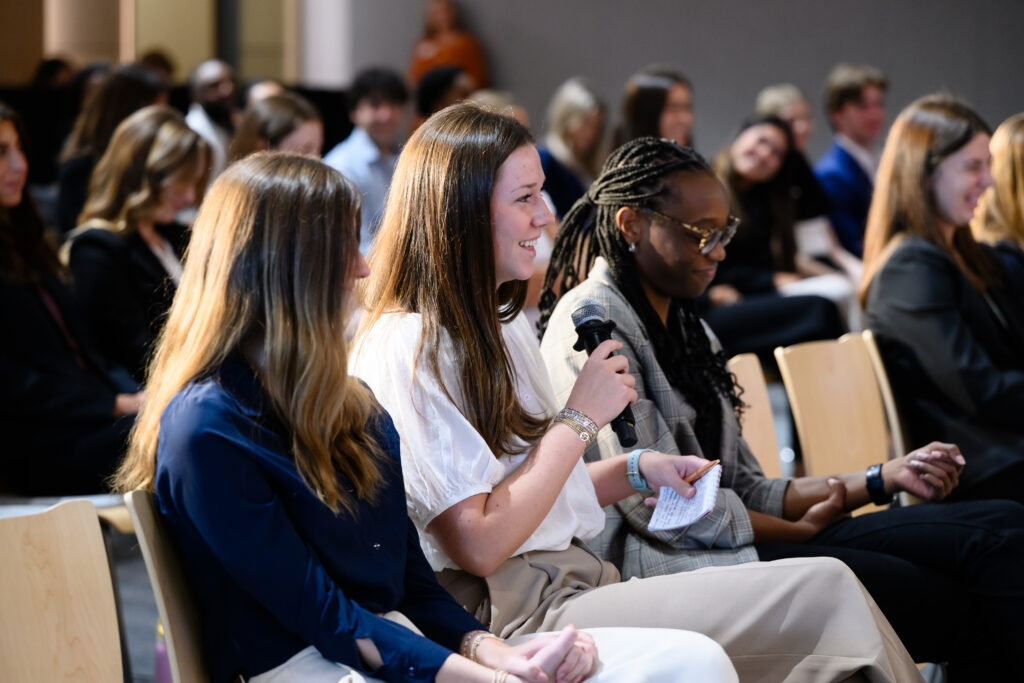
Student questions turned to future careers and whether AI might reduce demand for consultants. Bomber said she expects it to change clients’ expectations. Drawing on her experience across industries, she said clients increasingly look for consultants with specialized knowledge who can deliver quickly.
Vaidyanathan said domain knowledge and the ability to apply it will help distinguish future consultants. He encouraged students to stay curious. Across the discussion, panelists emphasized learning how to use AI while developing subject expertise, communication skills and professional relationships.
Clemson’s Management Consulting Signature Program offers students a related experiential path. The multi-semester, interdisciplinary program connects students with faculty, industry professionals and client organizations on real-world challenges. That kind of work gives students a chance to practice the skills the panelists described: framing a problem, working across disciplines, judging potential solutions and communicating recommendations.
The panel’s advice was to build AI fluency alongside the knowledge and judgment needed to use it well. For students preparing for consulting, that means learning the tools—and learning when they can help solve a problem.
About the Wilbur O. and Ann Powers College of Business
The Wilbur O. and Ann Powers College of Business empowers students to evolve into innovators, entrepreneurs and leaders thriving in the dynamic global marketplace of ideas. Through immersive learning inside and outside the classroom, students graduate as adept, market-ready leaders prepared to influence the future of business.