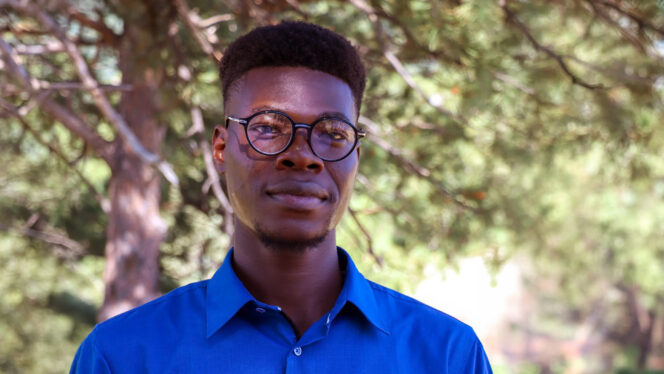
A College of Education faculty member with an extensive background in rural education outreach and research will use an award from the National Science Foundation to better understand how rural students can excel in the study of life science. Darris Means, professor of educational leadership in the College of Education, will seek to identify and characterize the assets, resources and networks that rural students use to persist in life science majors and raise awareness among faculty about how to improve science learning for this population of students.
Since coming to Clemson University, Means has been elected president-elect designate by the National Rural Education Association, where he leads national efforts to implement strategies to support and elevate rural education. Means is also currently serving as the Jackie Bezos Researcher-in-Residence at the Bezos Family Foundation to help shape the foundation’s research agenda, identify where its investments and partnerships can go further, and bring a research-grounded lens to its work.
Means has been tapped by Clemson and other organizations for his expertise on rural students and his novel approach to studying what makes them successful. This NSF award will fund similar work, as Means seeks to “flip” the usual approach used by other scholars.
“Instead of starting with why rural students fail to enter or complete science programs, I want to study students who have successfully reached their final year,” Means said. “Too often, we look at student populations — and rural students are just one of them — through a deficit lens, so I want to see what assets, resources and networks rural students bring to these programs that strengthen their work.”
Means said rural students are less likely to pursue science degrees, which is why an examination of the challenges they face and the tools they use to succeed is so important. He points to existing research on STEM participation in secondary education settings. In the ninth grade, rural and suburban students show similar interest in STEM careers. However, by the 11th grade, suburban students show somewhat greater interest in STEM, and this gap widens after high school, with rural students becoming less likely to enroll in STEM degree programs.
The pattern suggests the issue isn’t simply a lack of early interest, but something that emerges as students move through school. The study aims to understand what enables some rural students to successfully navigate that pathway and buck the trends shown by existing data.
“I choose to get students involved in the research because that research will only improve when people with direct experience help design and interpret it,” Means said.
Means will use participatory action research and recruit six undergraduate life sciences majors from rural communities who will help to finalize the study design, collect data, analyze findings and develop practical products based on the research. Means values undergraduate researchers because they bring current lived experience that senior researchers cannot replicate, and he envisions emerging from the research with resources, such as webinars and briefs, to help faculty and academic advisers better support rural students.
The research team will interview 40 rural students from participating universities who have persisted into the final year of a life-science program. Student researchers will come from Clemson University, the University of Georgia and the University of North Georgia, while Means’ research partners include Julie Stanton from the University of Georgia, Jori Hall from the University of Illinois, and Sonja Ardoin from Clemson University.
Means hopes this research will help to paint a clearer picture of what works well for rural students. Putting that knowledge in the hands of faculty members or advisors will enable them to more easily recognize strengths and incorporate them into mentoring and support that help students succeed. “If we can really focus in on what has worked, we can figure out ways to amplify those strategies, those networks and those opportunities across institutions of higher education; that would go a long way in support of rural students,” Means said. “It will be powerful to have those students speaking directly back to faculty or advisors about ways that they can better support rural students based on what we learned from the research.”