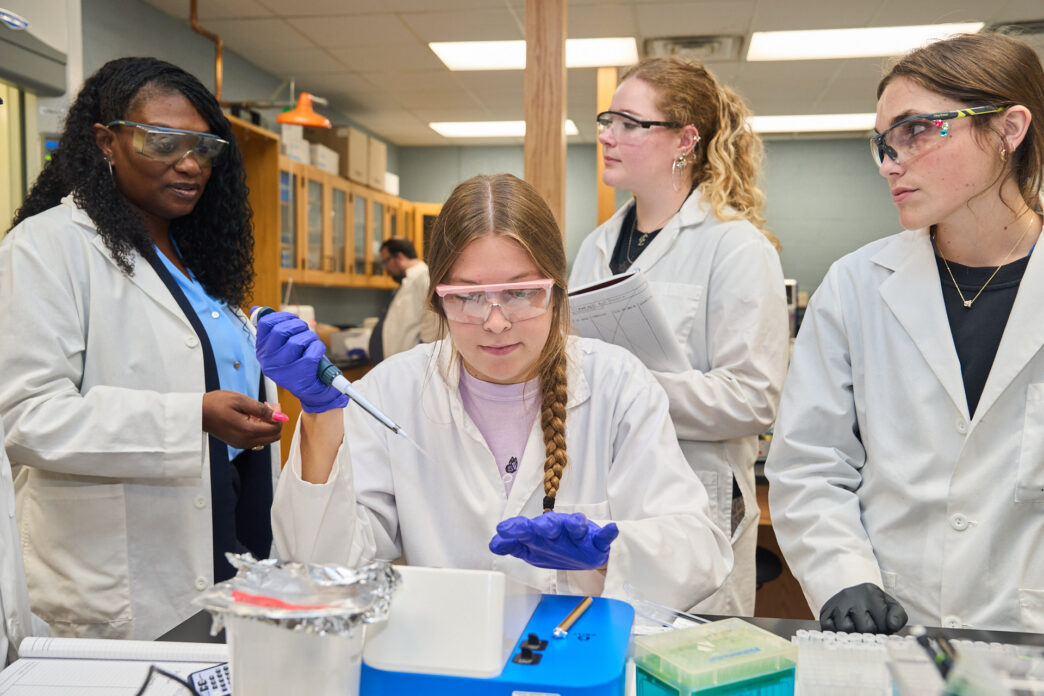
Before the wet-lab work could begin, a group of Clemson University students had to help make decisions about the experiment itself.
What sequence should be used? Which primer would work? How should the protocol be designed?
Although junior genetics major Alayna Khoja has had research experience both in high school and during her time at Clemson, those weren’t questions she was used to answering.
“Although I’ve had a lot of lab experience, I haven’t worked on the planning that happens before the wet-lab work can even start. In academic labs, that has usually already been done by the professor or the graduate student. Usually, they just hand it off to you and say, ‘Go use it.’” Khoja said. “Here, we must figure out exactly what we need and how to develop it.”
That kind of independence and teamwork is at the center of the new Summer Research InCUbator, a five-week program designed to give undergraduate students an industry-focused research experience on campus.
“I wanted to create an industry-like setting,” said Kim Paul, an associate professor in the Department of Genetics and Biochemistry who created and directed the program. “We are not in Boston. We’re not in Research Triangle Park. We’re not in the Bay Area. That creates a challenge for students who might be interested in industry to get access to industry experience.”
New experience
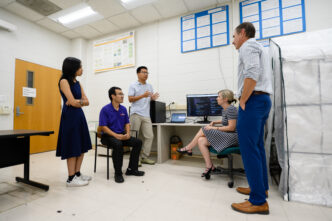
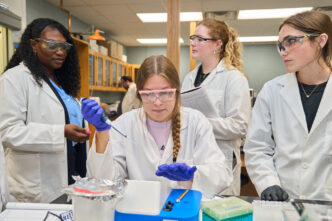
The InCUbator brought that experience to Clemson by using teaching laboratories as an on-campus contract research organization, or CRO. Students worked in teams on defined research projects for Clemson faculty members and were guided by faculty and industry mentors.
“We were working for a client, validating as we go, reporting back weekly and talking about regulatory issues, quality control and quality assurance, Paul said.”
The students worked on two projects. One involved inserting DNA sequences for natural and artificial peptides into plasmids so they can be studied in human corneal cells. The other involved screening a library of compounds against pathogens while checking whether the compounds also harm mammalian cells.
The students were organized in cell-culture, molecular-biology and assay teams. They developed protocols, calculated concentrations, validated equipment, maintained physical and digital records and reported their progress each week.
The first cohort of 20 students included those with very different levels of experience.
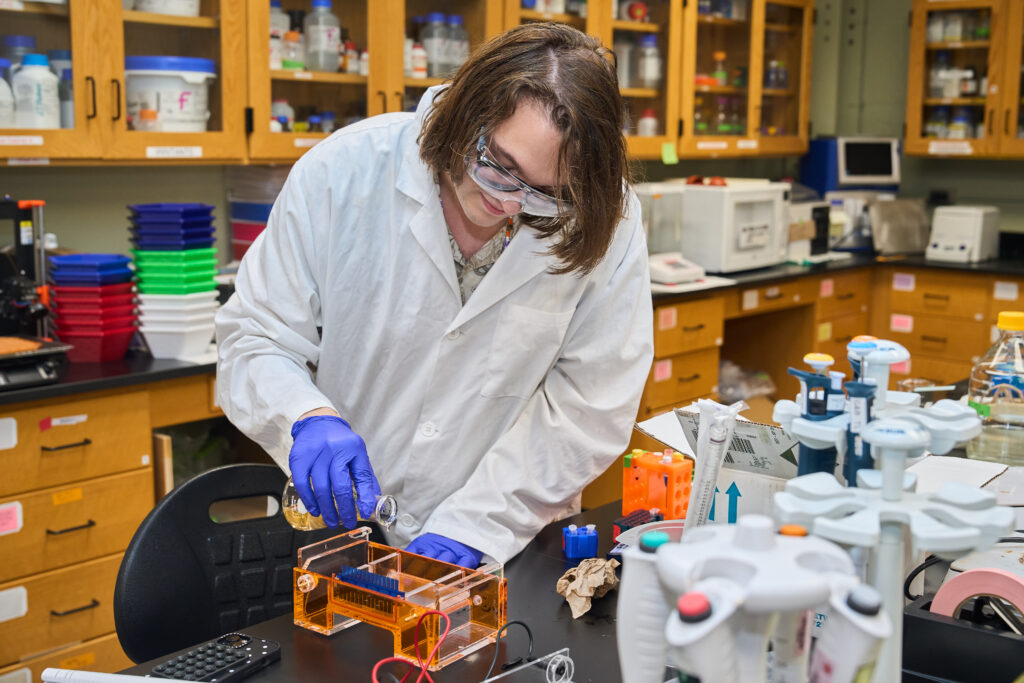
Khoja participated in her first research project during the summer before her senior year of high school at the South Carolina Governor’s School for Science and Mathematics and has gone on to work in two different faculty labs at Clemson.
Senior biological sciences major Michael Cromer, on the other hand, had no research experience.
“I’ve done a lot of normal lab courses, but not really research,” said Cromer, who transferred to Clemson from Tri-County Technical College a year ago. “I’ve always thought that I would enjoy research. It’s a lot different when you’re doing research and figuring things out rather than just following a sheet of notes.”
Like in industry, not everything the students did worked.
They encountered cell-growth problems, contamination, equipment issues and experiments that produced unexpected results. Those setbacks were part of the learning process.
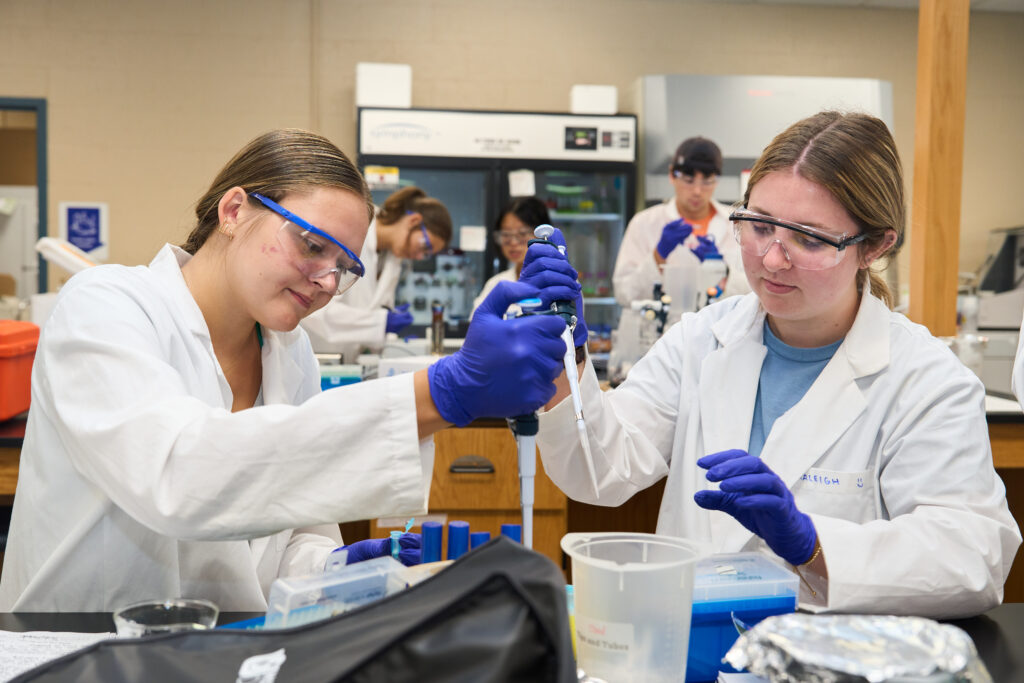
Paul said troubleshooting is one of the most important skills employers seek. She said it’s important that students understand that a failed experiment is not necessarily a personal failure.
“If you can figure out what went wrong, then you know what you can do to fix it and move ahead,” she said.
The program also included professional development sessions focused on job descriptions, resumes, networking and interviews, and the students met with Clemson alumni working in contract research, biotechnology and pharmaceutical companies.
Industry mentors
Paul said the industry mentors are an important part of the program’s value.
“Students see that and say, ‘I could do something like this,’” Paul said. “They’re getting exposed to the diversity of career types within the life sciences industry.”
The program was funded through a competitive grant process using state-appropriated funds for experiential learning. Paul said she hopes to continue the program and eventually conduct research for industry clients.
The students said they think the program was valuable.
“It’s not just making us well-rounded students,” said Kaleigh Langlais, a senior microbiology major. “It’s making us more well-rounded people.”