From a coppery moon to a crewed trip around it, 2026 has been a big year for anyone who looks up to the sky.
In honor of National Space Week, David Connick, senior lecturer in the Clemson University Department of Physics and Astronomy and coordinator of Clemson’s planetarium, offers his perspective on five of the year’s biggest astronomical events, plus one more you can catch through mid-October.
Two lunar eclipses turned the moon red
On March 3, a total lunar eclipse sent the entire moon into Earth’s umbral shadow for 58 minutes, turning it into a coppery red thanks to the Earth’s atmosphere.

“Refraction of light in the atmosphere is what allows the red light to bounce off the moon despite being in the Earth’s shadow, effectively reflecting the light of every sunrise and sunset happening on Earth back to us,” Connick said.
An eclipse on August 27 and 28 came close to matching it. About 96% of the lunar disk entered the umbra, which left the moon a dark reddish orange. It wasn’t a full “blood moon” because a thin sliver stayed in direct sunlight. That sliver was small enough for viewers’ eyes to adjust to the dark and pick out the color.
Connick said some type (penumbral, partial or total) of lunar eclipse happens about twice a year. The next total lunar eclipse visible in the eastern United States will not occur until June 2029.
Artemis II sent astronauts around the moon
NASA’s first crewed Artemis mission launched April 1 and splashed down April 10 after a lunar fly-by lasting just over nine days. It was the first time humans had traveled to the moon in about 50 years.
“This added those astronauts to the very short list of people who have seen the far side of the moon with their own eyes,” Connick said. “As the moon is tidally locked to the Earth, everyone on the Earth always sees the same side of the moon.”
The mission tested the Orion spacecraft and its deep-space systems with a crew aboard. It also cleared the way for future landings and, eventually, missions to Mars.
Total solar eclipse swept across Europe
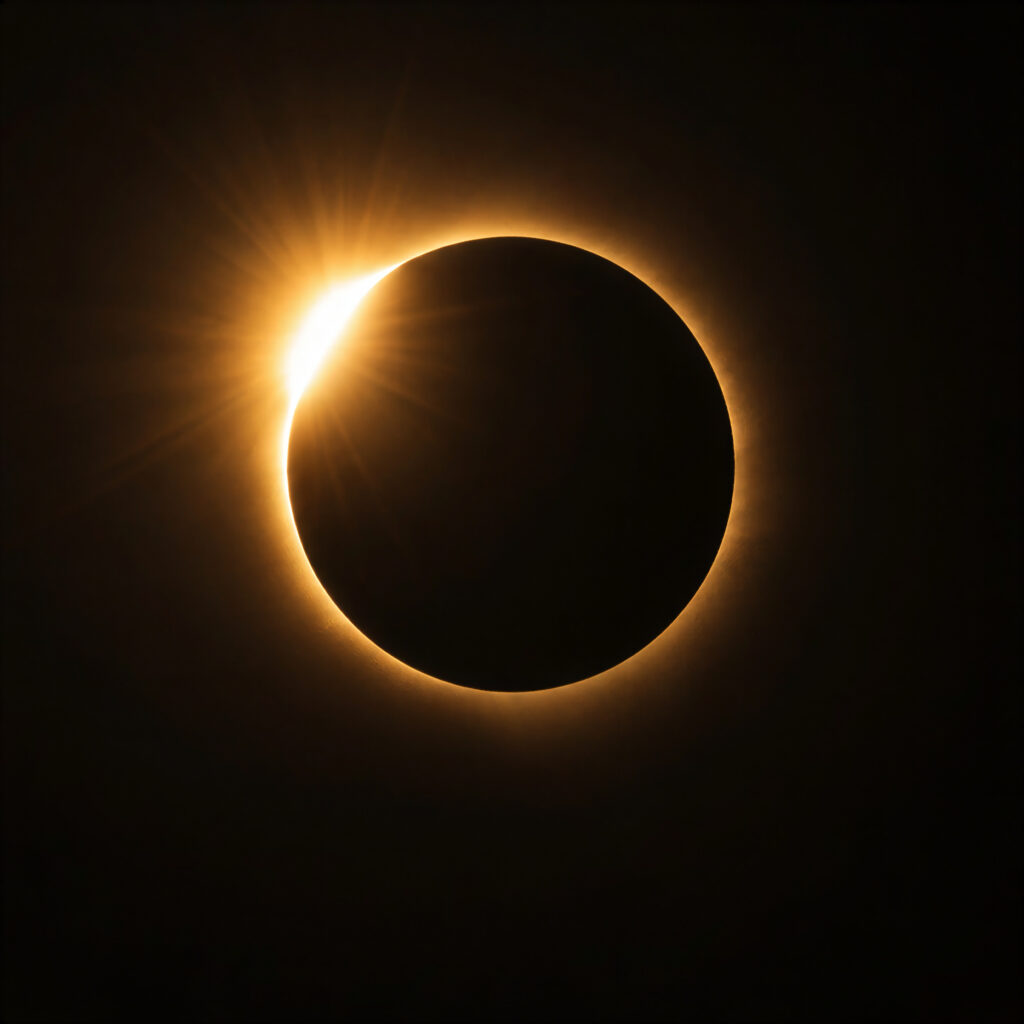
On August 12, when the moon crossed between the sun and Earth, a shadow crossed Greenland, Iceland, northern Russia, the Atlantic Ocean, Spain and a small corner of Portugal. It was the first total solar eclipse in over two decades for much of the region. For Spain, totality came in the late evening, just before sunset. Much of the northern hemisphere saw a partial eclipse, including the northern United States, most of Canada, much of Europe and northwestern Africa.
“This solar eclipse happened two weeks before the lunar eclipse of August 27 during the August eclipse season. Lunar and solar eclipses always come in pairs due to the required alignment of the Earth, sun and moon that only happens about twice a year,” Connick said.
Six planets lined up in the morning sky
On August 12, Jupiter, Mercury, Mars, Uranus, Saturn and Neptune appeared together in the predawn sky in a “planetary parade.” Mars and Saturn were the easiest to spot. Mercury and Jupiter sat low on the horizon. Binoculars were needed to see Uranus, and a telescope was necessary to spot Neptune.
“Planetary parades are quite common as all the planets move through the stars along a similar path called the ecliptic,” Connick said.
If you want to see all the planets in one night (actually early morning) of viewing, prepare for the week of November 14. Saturn and Neptune will lead the parade, setting around 3 a.m., followed by Uranus and then Jupiter and Mars in conjunction. Finally, Venus and Mercury will make an appearance near the eastern horizon at 6 a.m., just before sunrise.

Nancy Grace Roman Space Telescope launched
NASA’s newest flagship observatory lifted off aboard a SpaceX Falcon Heavy from Kennedy Space Center on August 30, eight months ahead of schedule. It is now headed for an orbit about 1 million miles from Earth.
The United States astronomical community rated Roman the highest priority large space mission of the 2010s. Scientists expect it to find between 60,000 and 200,000 candidate exoplanets by watching for stars that briefly dim as a planet passes in front. It will also survey more than 1 billion galaxies and study dark energy, the mysterious force driving the universe’s accelerating expansion.
Up next: Saturn at opposition
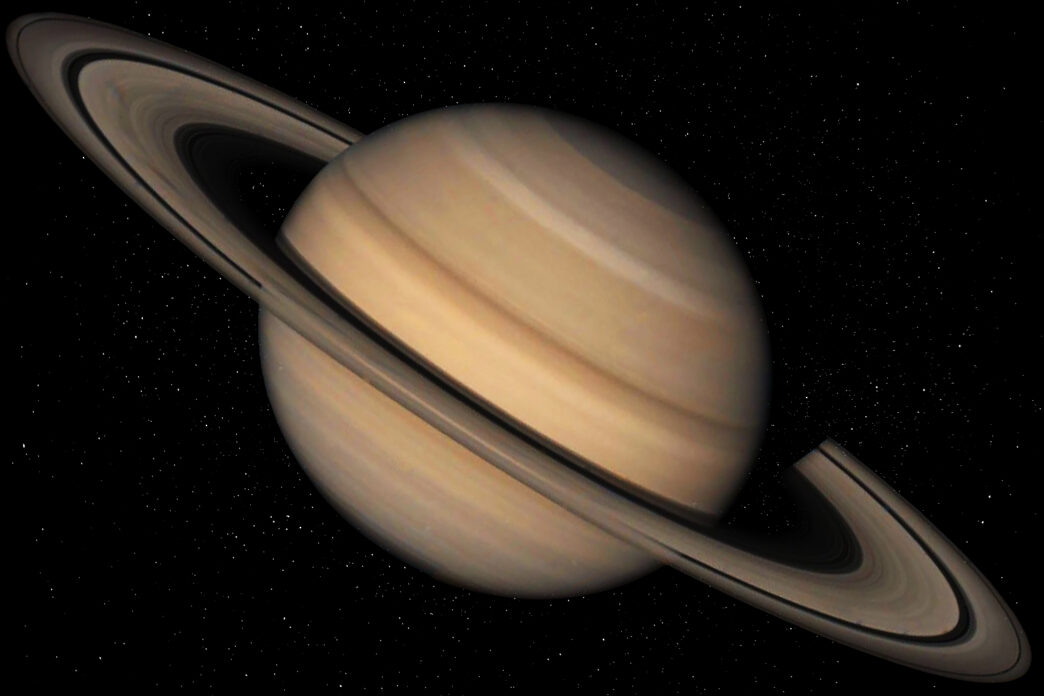
You don’t have to wait long for the next big space event. On October 4, the Earth passes between the sun and Saturn, so the ringed planet sits opposite the sun. It rises at sunset and stays up all night at its brightest of the year (magnitude 0.3, about as bright as the brightest stars) and about 784 million miles away.
Look for it in the constellation Cetus, right next to Pisces. You can see it with the naked eye, and any small backyard telescope will show its rings. The best viewing lasts through mid-October. Saturn stays in the evening sky for the rest of 2026 and disappears in the sun’s glare in March 2027.
If you miss it this year, don’t worry.
“Saturn is at opposition every year, just a few days later each year,” Connick said.