

Scientists have long used satellites to observe forests and fields from above. They can measure vegetation, track drought and identify changes in the landscape.
But satellites cannot tell researchers exactly which organisms are moving through the air.
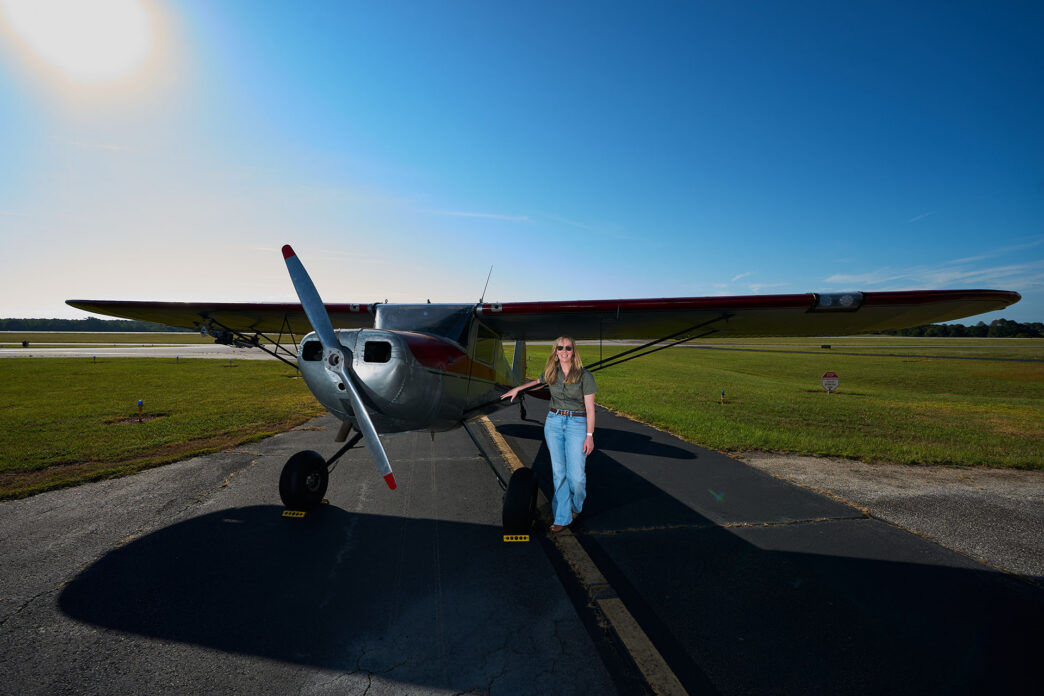
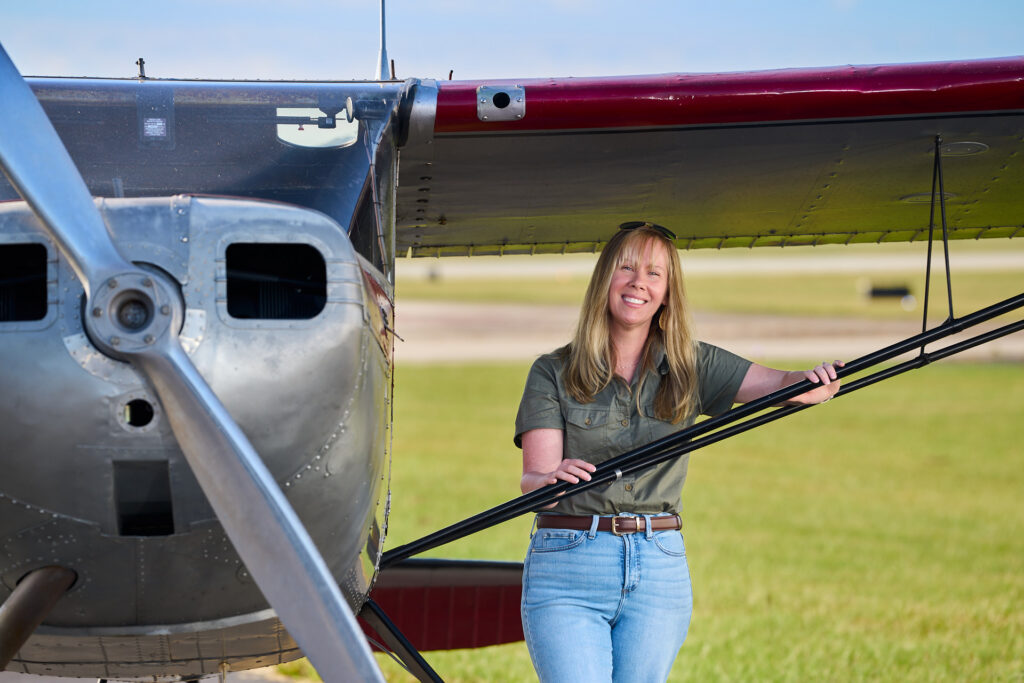
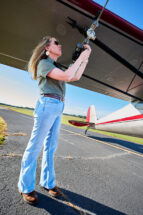
That is where the research of Clemson University molecular ecologist Kimberly Métris and her single-engine aircraft come in.
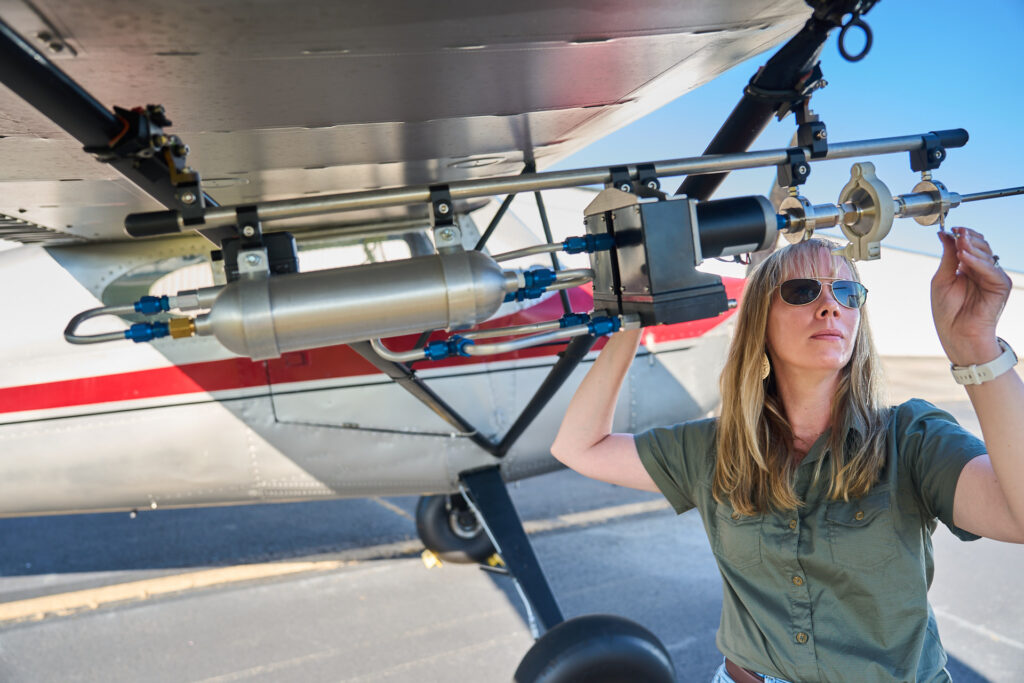
Using a contamination-free air sampling device developed by her and her husband, Jeremy, Metris gathers samples from hundreds of meters in the air.
During 10 flights in 2022 and 2023, the pair sampled the atmosphere over forests, farmland and rural areas near Hartwell, Georgia. They also made one flight on a football Saturday near Clemson. They flew at approximately 300, 1,200 and 2,500 meters above the ground, collecting air during spring and fall.
Spring and fall are familiar allergy seasons. Flowers bloom, leaves fall and many people reach for tissues and antihistamines.
But pollen is only part of what moves through the air.
Hundreds of fungi
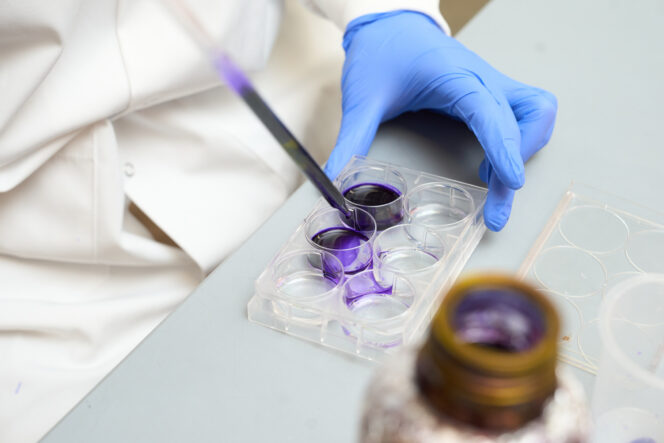
Back in the laboratory, Métris sequenced fungal DNA from the filters in the device and compared the results with weather records, air-mass models and satellite measurements of vegetation productivity. The study found a varied airborne community containing hundreds of fungi. The researchers detected fungi associated with plants, animals, soil, wood, dung and decaying leaves. They also found organisms classified as potential plant or animal pathogens.
The airborne fungal communities could become an early-warning system for forest disease, crop threats or major ecological disturbance.
Researchers could compare biological samples before and after hurricanes, wildfires, droughts or changes in land use.
“We have the genomic makeup of this whole area,” Métris said, describing the long-term potential, “and then how does it change over time?”
The study showed that fungal diversity generally decreased with increasing altitude. But the strongest environmental signal was not altitude alone. The study showed that the fungi also reflected the forests and agricultural areas beneath them.
The Normalized Difference Vegetation Index (NDVI), a widely used metric for quantifying the health and density of vegetation using satellites, helped explain the pattern. The NDVI estimates how green and photosynthetically active vegetation is. Higher values generally indicate more productive, growing plants. Lower values can indicate senescence, harvest or decay.
Seasonal differences
The study found in spring, when plants were actively green and growing, the airborne fungal community differed from the one found in fall, when leaves were dropping and plant material was decaying.
“The microbiome reflects the land below us,” said Métris, a senior lecturer in the Clemson Department of Genetics and Biochemistry and a faculty scholar in the School of Health Research.
The researchers also found evidence that some fungi were likely coming from the local landscape. They detected Xylaria liquidambaris, a fungus closely associated with the fruit of the American sweetgum tree. Because sweetgum is a common hardwood in the region, the finding suggested that some fungal material in the atmosphere came from nearby vegetation rather than carried from a distant continent.
Other fungi were associated with pine stands and hardwood forests. The samples included Heterobasidion irregulare, a pathogen capable of causing root rot in conifers and damaging pine plantations. The discovery does not mean that an outbreak was occurring. It means the fungus’s DNA was detected in the sampled air.
DNA sequencing can reveal that biological material is present, but it cannot establish whether the source organism is alive, active or infectious, Métris said.
Putative pathogens
About 45% of the fungal genera detected were classified as putative pathogens of plants or animals., including humans. Other fungi had beneficial ecological roles or contained compounds with potential antimicrobial, anticancer or blood-pressure-related properties.
“We tend to only look at pathogens and threats,” she said. “But there were fungi with potentially useful biological properties as well.”
The aerial research provides scientists something ground-based monitoring cannot: a way to sample the atmosphere at precise heights and across broad areas.
The work fills a gap, said Abby Seneor, CEO of Treelyon, Inc., a corporation specializing in vegetation analytics and artificial intelligence.
“I went looking for this technology because I hit the limits of what remote sensing can do. You can measure every tree on a continent and still not know which ones are sick. Reading biology straight out of the air is the piece that has been missing,” she said. “Seeing it done repeatedly from an ordinary aircraft is the most exciting thing I came across in a very long time. Such contributions tend to answer questions nobody thought to ask and solve problems written off as impossible.”The research was recently published in the journal Peer J in an article titled, “Fungus above us: exploring the atmospheric mycobiome by aircraft.”