A Clemson University doctoral student has developed a $21 floating platform that drones carry into remote wetlands, helping researchers record wildlife in places not easily reached on foot.
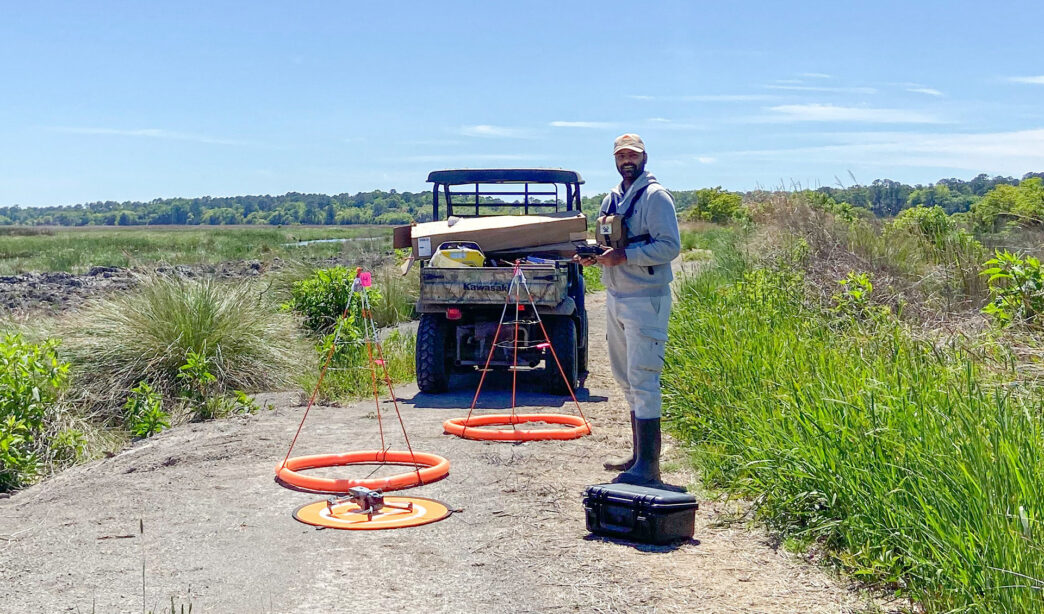
Akshit Suthar’s design carries an autonomous recording unit, or ARU, which records sounds from birds and other wildlife. A drone lowers the unit onto the water, where it floats with the recorder held above the surface.
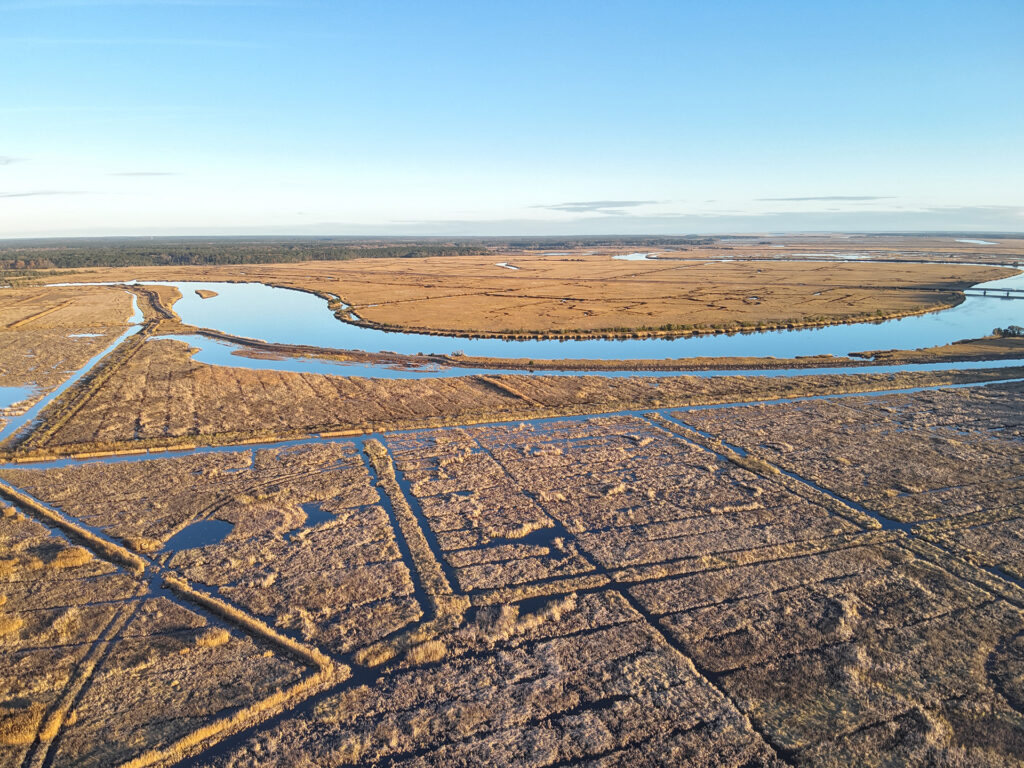
“One of the main challenges we face when monitoring wildlife in wetlands is getting our equipment to the places where the animals actually are,” Suthar said. “We wanted to find a way to place recorders in the interiors of wetlands without requiring us to personally travel there.”
Placing recorders only along roads, dikes or wetland edges can leave interior habitats underrepresented, skewing scientists’ understanding of animal populations and habitat use. The new approach will help researchers study secretive marsh birds and other wildlife that are difficult to observe.
Suthar is based at Clemson’s James C. Kennedy Waterfowl and Wetlands Conservation Center at the Baruch Institute of Coastal Ecology and Forest Science near Georgetown, South Carolina.
Built with everyday materials
The platform uses pool noodles, fiberglass driveway markers, wire and zip ties. A pyramid-shaped frame keeps the recording equipment above water.
All 50 platforms deployed during the study were recovered. They remained upright and were not displaced by strong winds and heavy rainfall.
Jim Anderson, director of the Baruch Institute and the Kennedy Center, is Suthar’s advisor and is also conducting the study.
“This innovation addresses a challenge that has limited wildlife monitoring for decades,” Anderson said. “By making remote wetlands more accessible to researchers, this approach can improve how we study and conserve these important ecosystems.”
More tools for wetland research
Suthar envisions adapting the platform to carry water-quality sensors, cameras, insect traps and tools that collect environmental DNA. These additions will allow researchers to gather several types of data from a single location.
Such information would help land managers evaluate wetland health and guide restoration. Birds and other wildlife respond to changes in water levels, vegetation and food availability, offering clues about conditions in these habitats.
“I hope this study encourages people to think about drones not only as cameras in the sky, but as mobile tools capable of carrying, placing, retrieving and interacting with scientific sensors,” Suthar said. “That shift could open a wide range of applications in wetlands, forests, coastal systems and other challenging environments where access continues to limit ecological research.”
For more information, read “Developing a Low-Cost Drone-Based Method for Deploying and Retrieving Autonomous Recording Units in Inaccessible Areas”, in Wildlife Society Bulletin.