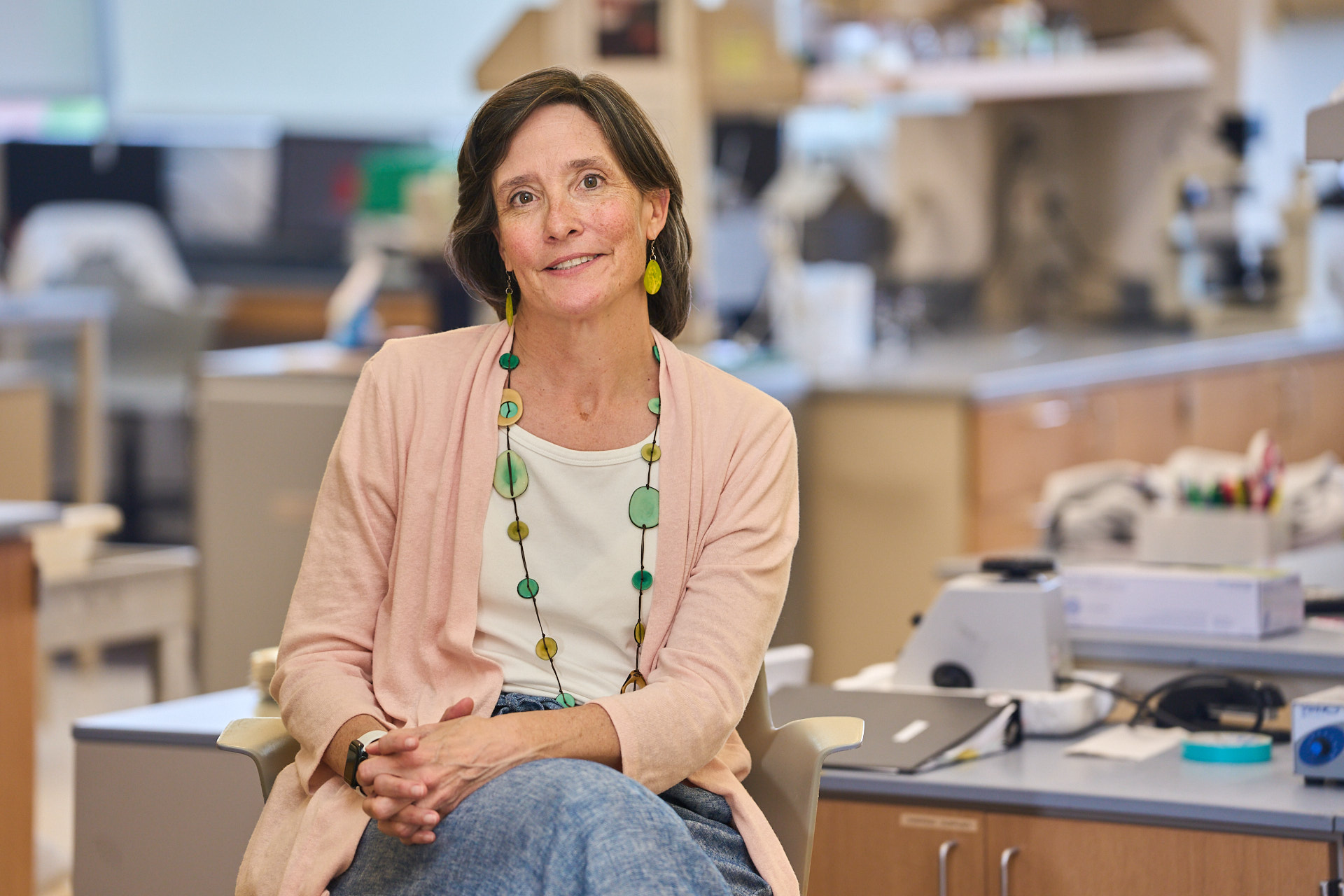

Meredith Morris, an associate professor in the Clemson University Department of Genetics and Biochemistry, has been awarded a Fulbright Specialist grant to advance international research and training on parasitic diseases through a collaboration with scientists in the Czech Republic.
The grant will support a six-week residency this fall at the Institute of Parasitology within the Czech Academy of Sciences, a globally recognized center for parasite research. Unlike traditional research funding, the Fulbright Specialist program is designed to build sustained international partnerships.

“This is really about creating a long-term collaboration,” Morris said. “The science is important, but what makes this unique is that it’s about building the relationship that allows the science to grow.”
In addition to scientific advancement, the collaboration will advance the Clemson student experience by increasing learning and research opportunities, she said.
Targeting diseases
Morris is a molecular parasitologist whose work focuses on kinetoplastids, a group of parasites responsible for diseases such as African sleeping sickness, Chagas disease and leishmaniasis, which pose global health threats. Her research aims to identify biological processes unique to these parasites that can be targeted with drugs.
At the center of her current work are enzymes called protein lysine methyltransferases, which her lab has shown are essential for parasite survival. These enzymes modify other proteins and appear to play a critical role in how the parasites generate energy.
“They rely on a very limited system for producing energy,” Morris said. “If we can disrupt that system, we can essentially starve the parasite.”
Her team has already generated promising preliminary data linking these enzymes to mitochondrial function, but they lack the specialized tools needed to fully analyze those processes. That gap is where the Czech collaboration comes in.
Complementary expertise
Morris will work closely with Alena Zíková, a leading expert in mitochondrial biology in parasitic organisms. Zíková’s lab has developed advanced techniques for isolating and studying mitochondrial ribosomes — large molecular complexes responsible for producing proteins inside the parasite.
“These are very specialized methods,” Morris said. “They’ve been doing this work for years and have both the equipment and the expertise that we don’t currently have.”
The collaboration aims to determine how disrupting key enzymes affects parasite survival, something that could inform future development of drugs to treat or prevent the diseases they cause.
Building a global classroom
In addition to research, the grant places strong emphasis on education and training. Morris and her Czech colleagues will co-develop an international course on parasite metabolism, addressing what Morris calls a major gap in training opportunities.
Currently, education in parasite biology is often fragmented and highly specialized, limiting broader understanding and collaboration among early-career scientists. The new course will integrate lectures, laboratory demonstrations and case-based learning, drawing on expertise from both institutions and additional international partners.
The initiative is intended not only to train students but also to establish a sustainable framework for future collaboration, including joint workshops, exchange programs and shared funding proposals.

Student opportunities
A key component of the project is student engagement. Morris will be accompanied by Clemson Ph.D. student Lauren Mitchell, who will work in the Czech laboratory and gain firsthand experience in international research.
Beyond that, Morris expects the partnership to create new opportunities for students on both sides.
“We want this to open the door for ongoing exchanges, sending our students there and bringing their students here,” she said.
Such exchanges could eventually include study-abroad programs, collaborative research projects and expanded access to specialized training environments.
Long-term impact
The immediate goal of the project is to generate preliminary data to support future grant applications and scientific publications. But Morris emphasized that the broader objective is to establish a lasting international research network.
The collaboration also aligns with broader institutional priorities at both Clemson’s Eukaryotic Pathogens Innovation Center (EPIC) and the Czech Institute of Parasitology.
“This is really about building something that lasts beyond the six weeks,” Morris said.
As global health challenges increasingly require cross-border solutions, Morris sees the grant as part of a larger movement toward international scientific cooperation.
“Parasitic diseases don’t respect borders,” she said. “Solving them requires scientists working together across countries, and that’s exactly what this program is designed to do.”