
Clemson University’s singular military heritage was on display when nine men who attended the University, including four Medal of Honor recipients, were inducted into the South Carolina Military Veterans Hall of Fame during its inaugural gala at Fort Jackson on June 6, 2026, the 82nd anniversary of the D-Day landings that were the beginning of the end of World War II.
Of the nine, four served in WWI, two in WWII, two in Vietnam and one is the only American lost to enemy fire during the Cuban Missile Crisis. The SCMVHOF was created to honor and preserve the legacy of South Carolina’s most notable military veterans. In all, 41 veterans were in the first cohort of inductees: 14 living and 27 posthumous.

“We’re coming up on the 250th anniversary of the Declaration of Independence and the founding of our nation,” said U.S. Army Maj. Gen. (Ret.) William Grimsley during his opening remarks. “I can’t think of a more appropriate way to honor the legacy of those who fought at that time and recognize South Carolina as not only central to the defense of the nation, but where the American Revolution was won, as our license plate says.”
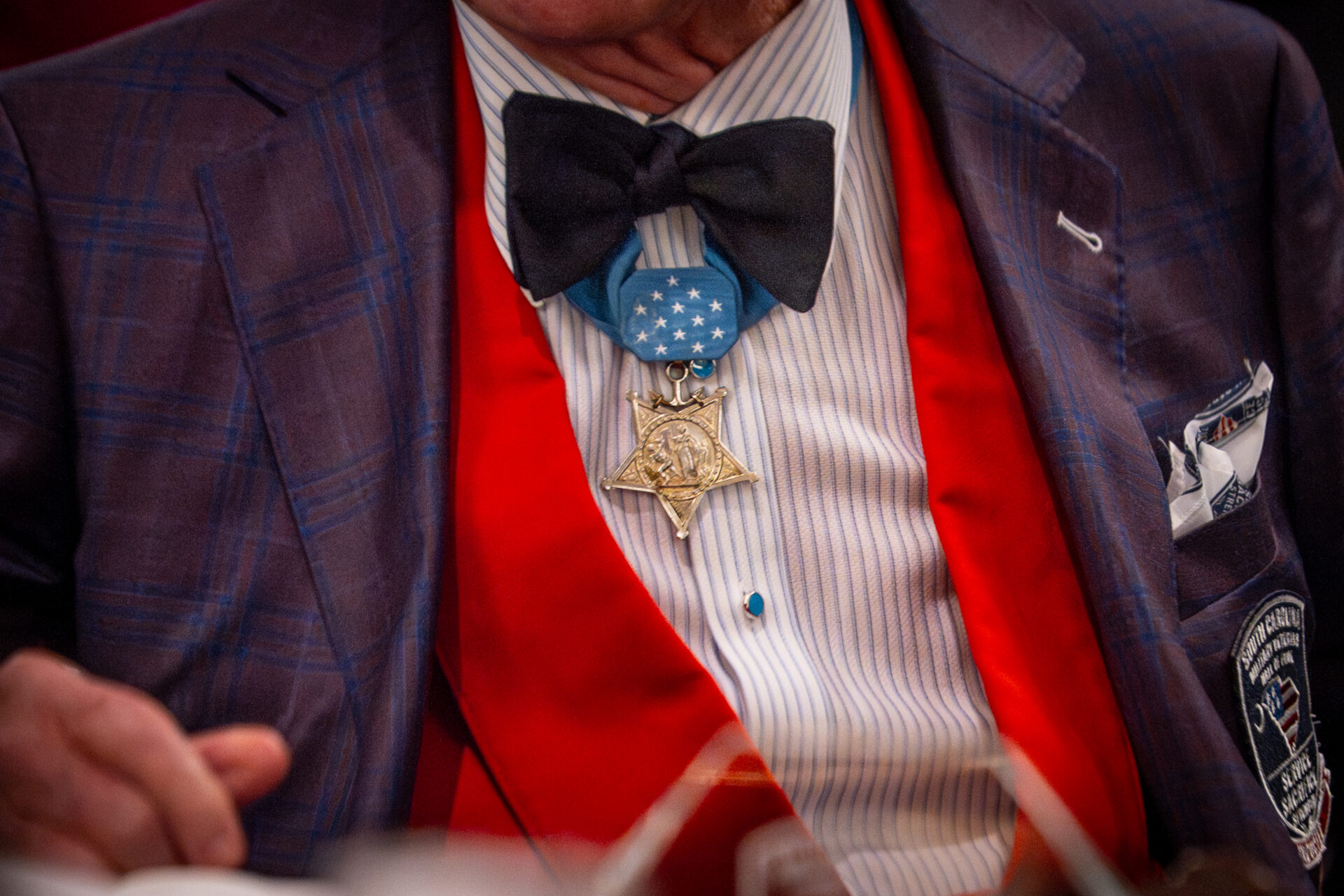
Military dress uniforms heavy with awards dotted the sea of dark suits and ball gowns that filled the event space, Fort Jackson’s historic 1917 Club. The presence of quiet valor could be seen and felt, as Silver Star, Bronze Star, Purple Heart and other marks of heroism were everywhere one looked. U.S. Marine Corps Maj. Gen. (Ret.) James E. Livingston, one of just 63 living Medal of Honor recipients and a resident of Charleston, drew attention like a rock star as he entered the room. In addition to the nation’s highest award for valor, Livingston’s chest display includes the Silver Star Medal, Bronze Star Medal with “V” for valor, three Purple Hearts, a Navy Commendation Medal with “V” and stacks of others.

“I couldn’t believe it when they told me there would be more than 380 people here tonight,” said Livingston, who was one of the driving forces behind the establishment of the SCMVHOF. “[Members of the board] have done an exceptional job of executing the mission.”
Livingston said he was gratified to look around the room and see so many people who have served the nation having a good time, but he couldn’t help contemplating the unfathomable sacrifices made on this day 82 years ago juxtaposed with those serving today.
“On June 6, years ago, our young soldiers hit the beach and over 10,000 of them got killed on that particular day, D-Day,” said Livingston, who, at 86, was four years old on D-Day. “I’m reminded that we’ve got young kids from South Carolina off the coast of Iran tonight who may have to hit the beach, to make sure our country is free. We only live as a free people as long as we have young people who are willing to hit the beach.”

South Carolina’s Secretary of Veterans’ Affairs, U.S. Army Maj. Gen. (Ret.) Todd McCaffrey, said the men and women who will be enshrined in the hall exemplify the highest characteristics of valor, dedication and selfless commitment to South Carolina and the nation.
“They are leaders who value service more than self, and they are patriotic veterans who recognize that the United States was founded on ideals that have stood the test of time,” McCaffrey said. “Tonight’s gala most appropriately establishes an honor roll, and with the notables present here this evening, it is clear this hall of fame will endure.”
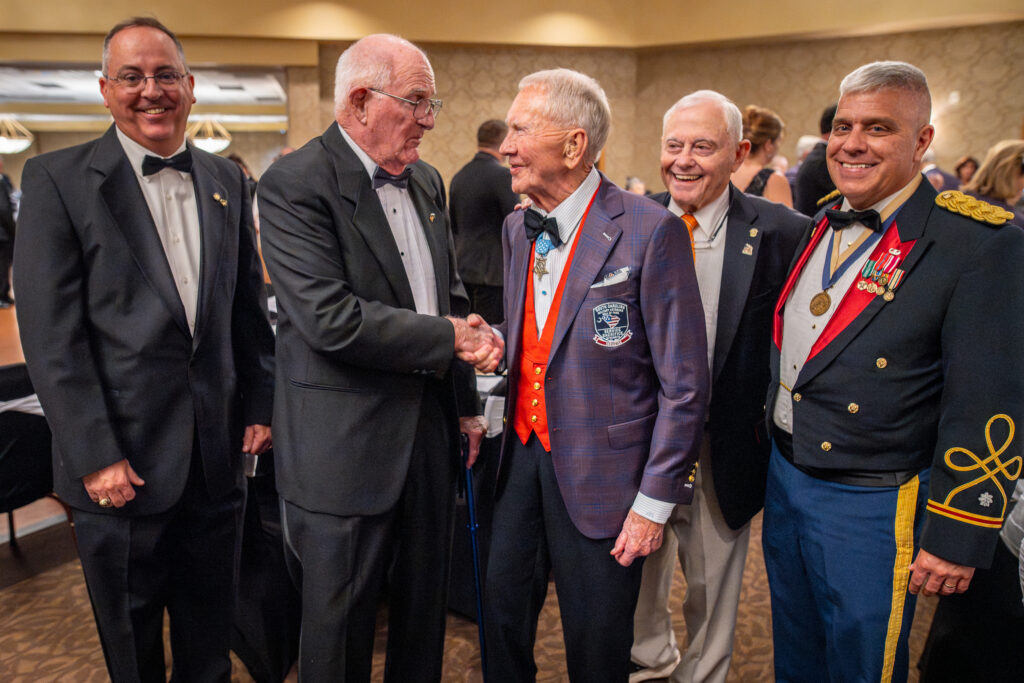
By preserving the stories and celebrating the contributions of its honorees, the SCMVHOF hopes to inspire a culture of patriotism, civic responsibility, and unwavering support for those who served, are serving, and will serve the nation. Ultimately, the group plans to install a permanent display in the Columbia Convention Center.
Sixteen people represented Clemson at the event, including Air Force Col. Bill Austin and Air Force Brig. Gen. Chalmers “Hap” Carr, the only living inductees of the nine.
The nine Clemson-connected inductees are:
U.S. Army Brig. Gen. Ben Skardon (Class of 1938) —A Clemson University legend, Skardon was commander of a battalion of Filipino Army recruits on the Bataan Peninsula at the start of World War II, when Japan invaded the island ten hours after the attack on Pearl Harbor. Skardon earned two Silver Stars, a Bronze Star for Valor and a Purple Heart before the American troops were ordered to surrender. He then survived the Bataan Death March, one of the worst war crimes in history, and more than three years as a POW in Japanese prison camps. The story of how two fellow Clemson alums traded his Clemson class ring, which he managed to hide from his captors, for food that saved his life is still told at every Clemson ring ceremony. Skardon also survived the sinking of two “Hell Ships” – unmarked transport ships full of American POWs that were sunk by Allied planes – before finally being freed by Russian troops from a prison in Manchuria. In his later years, he was the only survivor of the Bataan Death March who walked in the Bataan Memorial Death March at White Sands, New Mexico. He walked eight and a half miles every year, the last time in 2019 when he was 101.

U.S. Air Force Col. Bill Austin (Class of 1959) —A fighter pilot with the storied “Triple Nickle” 555th Tactical Fighter Squadron, Austin flew 80 combat missions over North Vietnam in the powerful F-4 Phantom II, earning a Silver Star, two Distinguished Flying Crosses, and 10 Air Medals.He was shot down by a surface-to-air missile on his 81st mission. His aircraft commander did not survive. He endured 1,986 days — more than five and a half years — as a Prisoner of War before being released during Operation Homecoming in 1973.

U.S. Air Force Maj. Rudolf Anderson (Class of 1948) —Anderson was the first recipient of the Air Force Cross, the U.S. Military’s and Air Force’s second-highest award for valor. He became the nation’s top pilot of the U-2 reconnaissance aircraft with more than 1,000 hours. His aircraft was shot down by a Soviet-supplied surface-to-air missile in October 1962 during his sixth mission over Cuba, making him the country’s only combat death of the Cuban Missile Crisis.

U.S. Air Force Brig. Gen. Chalmers “Hap” Carr Jr. (Class of 1960) —Carr was a command pilot with more than 4,020 flying hours. His military awards and decorations include the Legion of Merit, Distinguished Flying Cross with oak leaf cluster, Bronze Star Medal, Meritorious Service Medal with two oak leaf clusters, Air Medal with nine oak leaf clusters, and Air Force Outstanding Unit Award with “V” device and five oak leaf clusters. Chalmers held combat, command and U.S. Defense Department leadership roles. He has continued a life of service after retiring from the Air Force in 1992, exemplified by his service as a SCMVHOF board member, and is the recipient of countless accolades, including the Clemson Alumni Distinguished Service Award, the highest award bestowed by the Clemson Alumni Association.

U.S. Marine Corps 1st Lt. James Adams Pickens (Class of 1917) —Pickens is one of the most decorated Clemson men to serve in WWI. He was awarded the Silver Star Citation for gallantry in action at Chateau-Thierry between June 6 and July 10, 1918, and would later be awarded two Croix de Guerre medals, a second Silver Star Citation, the Navy Cross and the Distinguished Service Cross, making him the most decorated member of Clemson’s famed War Class of 1917.

Four Medal of Honor recipients:
U.S. Marine Corps Lt. Col. Aquilla James “Jimmie” Dyess (Class of 1932) — A Marine Corps Lieutenant Colonel, he is the only person to receive both the Carnegie Medal for civilian heroism and the Medal of Honor. An Eagle Scout, he received the Carnegie Medal for saving two swimmers off the coast of Charleston, South Carolina. He earned the Medal of Honor during the assault on Namur Island in the Battle of Kwajalein on Feb. 2, 1944. He repeatedly placed himself at the front of an advance, moving between opposing lines to identify enemy positions and direct his Marines. He was struck down while standing on the parapet of an antitank trench and directing an attack against the last enemy strongpoint.

U.S. Army Sgt. Gary Evans Foster (Attended) — Foster served as an Army sergeant in WWI, earning the medal for actions on Oct. 8, 1918, when his company was pinned down by machine-gun fire coming from a sunken road. Foster and an officer moved forward to attack the enemy position, but the officer was wounded. Foster kept going alone through intense fire, using hand grenades and his pistol to kill several of the enemy and capture 18 more.

U.S. Army Cpl. James Davidson Heriot (Attended) — Heriot’s South Carolina unit fought in northern France. On Oct. 18, 1918, near Vaux-Andigny, he and four other soldiers moved against a machine-gun nest that was inflicting heavy casualties on his company. Two of the men were killed, and the other two were forced to take cover, but Heriot pressed on alone with a fixed bayonet, charging through about thirty yards of enemy fire and forcing the enemy gun crew to surrender. He was killed later that same day, charging another machine-gun nest.

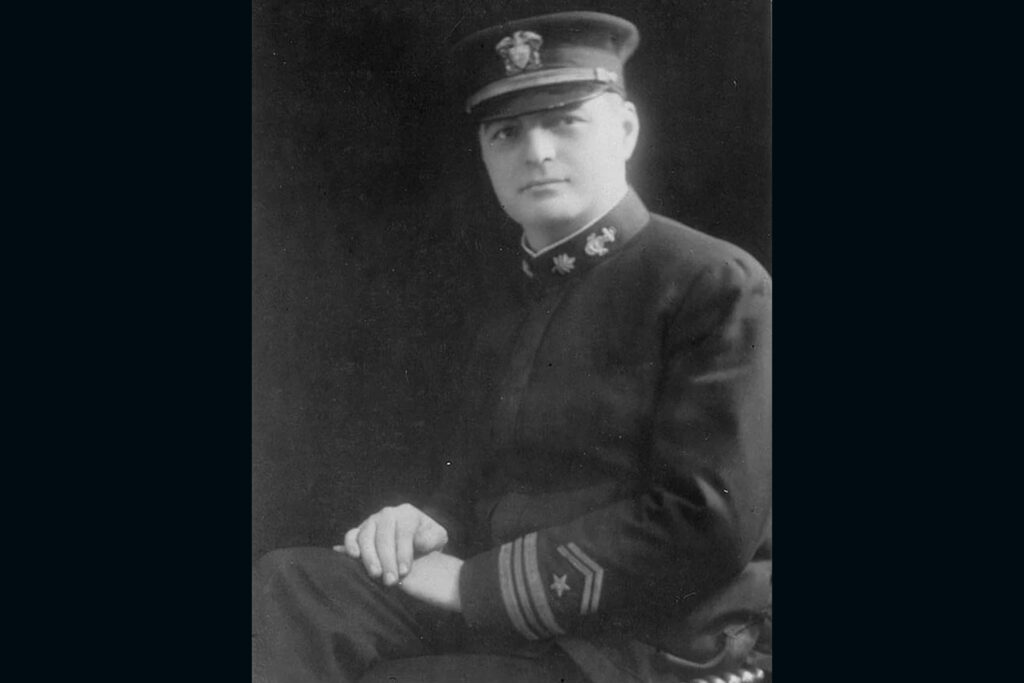
U.S. Navy Lt. Com. Daniel Augustus Joseph Sullivan (Class of 1902) — Sullivan received the Medal of Honor (specifically the rare Tiffany Cross design) for actions as a U.S. Navy ensign on the USS Christabel, an armed yacht used on anti-submarine duty, on May 21, 1918. On that day, the Christabel was hit by the blast from a depth charge that shook the ship so violently that armed charges were thrown loose across the deck. Sullivan threw himself onto the live depth charges and secured them, saving the crew from what would have been a devastating explosion.