Infections are a silent threat to human health.
More than 6.5 million people in the United States suffer from chronic wounds, many of which get infected and can result in costly hospitalizations and amputations. The problem is particularly severe in rural and medically underserved areas, where long travel distances and limited access to health care professionals make it difficult for patients to receive medical care.
“Those (complications) are completely preventable if the infection is caught early,” said Alejandra Rodriguez, a first-year biomedical engineering major at Clemson University.
The problem is that detection of infection relies on visual symptoms such as redness, swelling and pus, which appear well after an infection has developed.
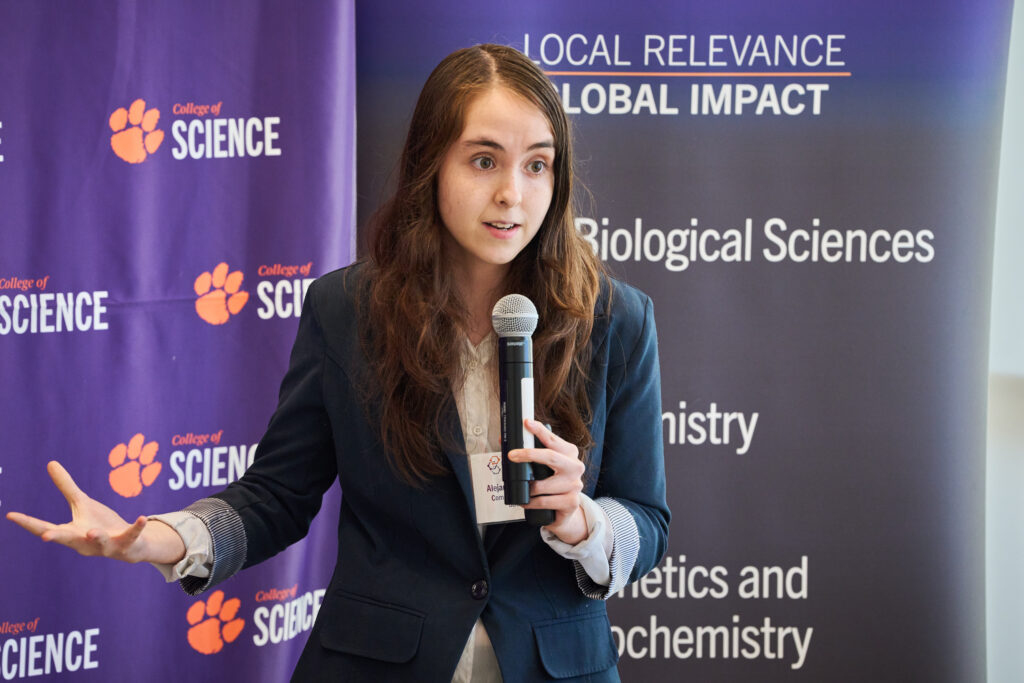
Rodriguez and Prasamsa Tatineni, a first-year microbiology student, knew there had to be a better way. They created DermAlert, a high-tech, disposable wound dressing that detects early infection by using well-established physiological markers like temperature and size.
“We need a better way than bacterial swabs and lab cultures,” Tatineni said. “We need something that makes the infection more visible. DermAlert uses enzymes that are usually present in infections and allows us to ‘see’ the infection before the visible signs.”
DermAlert was the winning idea in the fifth annual College of Science Catalyst Competition. The entrepreneurial challenge culminated March 12 when student teams pitched their innovative ideas to a panel of judges at the Brook T. Smith Launchpad in downtown Clemson. Rodriguez and Tatineni won $2,500 and the chance to compete in the University-wide 2026 Launchpad Liftoff Pitch Competition on April 10. The Launchpad provides funding for Catalyst each year.

“There were some really amazing ideas in the competition, and winning is such an honor,” Tatineni said. “We’re really excited to see where this takes us.”
Both said personal medical situations influenced their project choice. Tatineni said her grandfather was bedridden and developed bed sores, something that was painful for her to watch. Rodriguez said her family’s experience getting medical care after a bad wreck in rural Texas illustrated to her the difficulties that underserved communities faced in accessing needed health care.
Gap in accessing needed care
That gap can come with big price tags, both in hospital costs and human suffering, Rodriguez said. One zip code in South Carolina has a diabetic limb amputation rate 20 times the national average, she said.
In addition to the disposable wound dressing, DermAlert also has an app that would help physicians track wound healing.
The students are working with physicians who specialize in wound care on the project.
“I feel like I have an entrepreneurial spirit. I want to identify an issue and try to come up with a solution to make it better,” Rodriguez said.
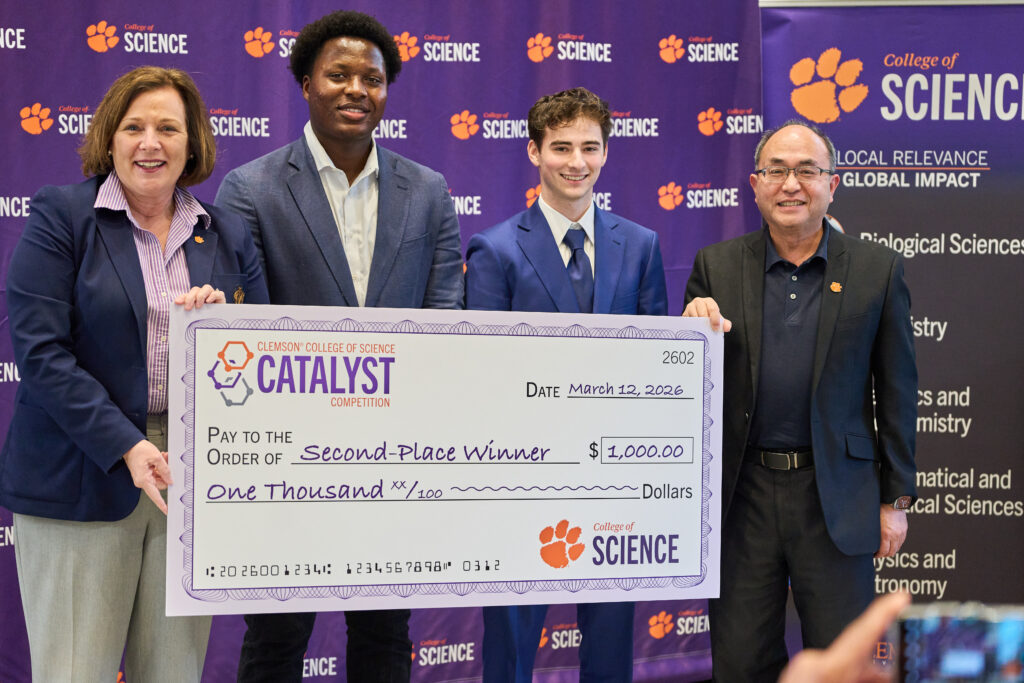
Second place went to FitCheck, a gym motion sensor designed to track weightlifting exercises designed by Jacob Limoni, a senior chemistry major, and Donovan Nzambele, a senior biological sciences major.

Roshni Muruganandam, a junior microbiology major, won third place for Clear Trace, a portable UV-fluorescence microplastics detector.
The Catalyst Competition, which launched in 2021, is a two-semester program in which participating student teams receive support through a Creative Inquiry course, professional consultants and faculty advisers.