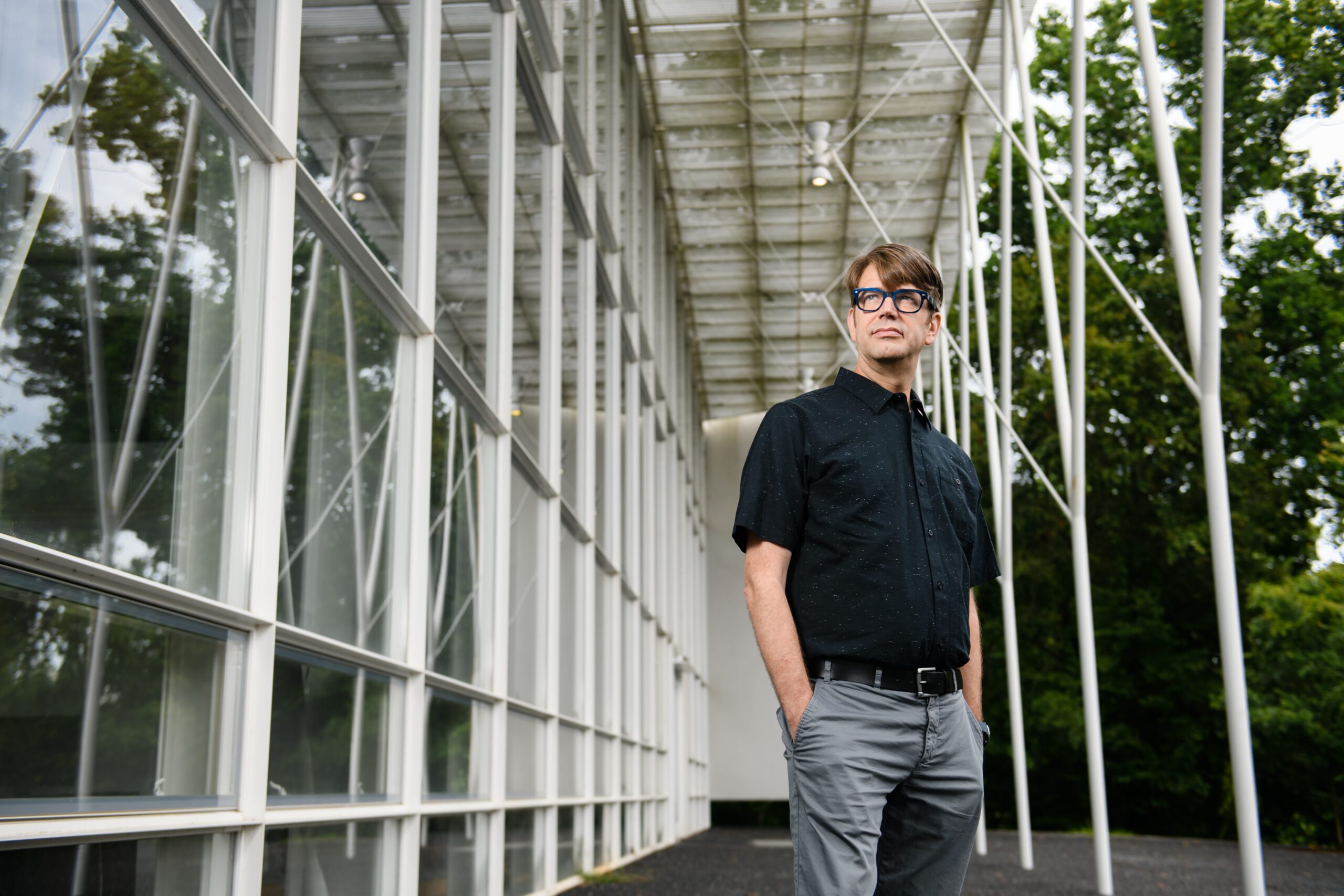
Clemson University’s School of Architecture Director Jim Stevens, FAIA, Ph.D., has been selected for a Fulbright Specialist Program award by the U.S. Department of State and the Fulbright Foreign Scholarship Board.
Stevens is completing a project at the Universidad Nacional de San Agustín de Arequipa (UNSA) in Peru, from July 14 to August 22, aimed at exchanging knowledge and establishing partnerships benefiting UNSA students, faculty and community through digital technology.
“The opportunity to collaborate with UNSA aligns with my lifelong mission to support access to digital fabrication and computational design education,” said Stevens. “At UNSA, I’ll be working closely with faculty to cultivate a technologically enriched architectural education framework, influenced by cultural context, that empowers students and strengthens the university’s global competitiveness.”


As part of the highly competitive Fulbright Specialist Program, Stevens joins a cohort of over 400 U.S. citizens selected for their demonstrated leadership, academic excellence and potential to build lasting partnerships across borders.
“My goal is not just to share knowledge, but to co-create a framework that elevates architectural education both regionally and globally,” he noted.
Stevens brings a rich background to the Fulbright Specialist post. At Clemson, he oversees eight graduate and undergraduate degree programs, including architecture, landscape architecture, city and regional planning, and historic preservation. He has previously founded and directed makeLab, a globally recognized digital fabrication laboratory at Lawrence Technological University and was instrumental in establishing a digital fabrication laboratory at POLIS University during a Fulbright Scholar appointment in 2016.
Stevens’ past international engagements span over 24 workshops in Albania, India, China, Romania and France. He has also co-authored Digital Vernacular: Architectural Principles, Tools, and Processes, a foundational text exploring the integration of digital tools with traditional architectural practices. His work has also seen him at the forefront of the integration of artificial intelligence in parametric and digital fabrication.