The doors of the Advanced Materials Innovation Complex (AMIC) have been open just a few weeks, and the facility is already doing what it was built to do: attracting top research talent to Clemson University.
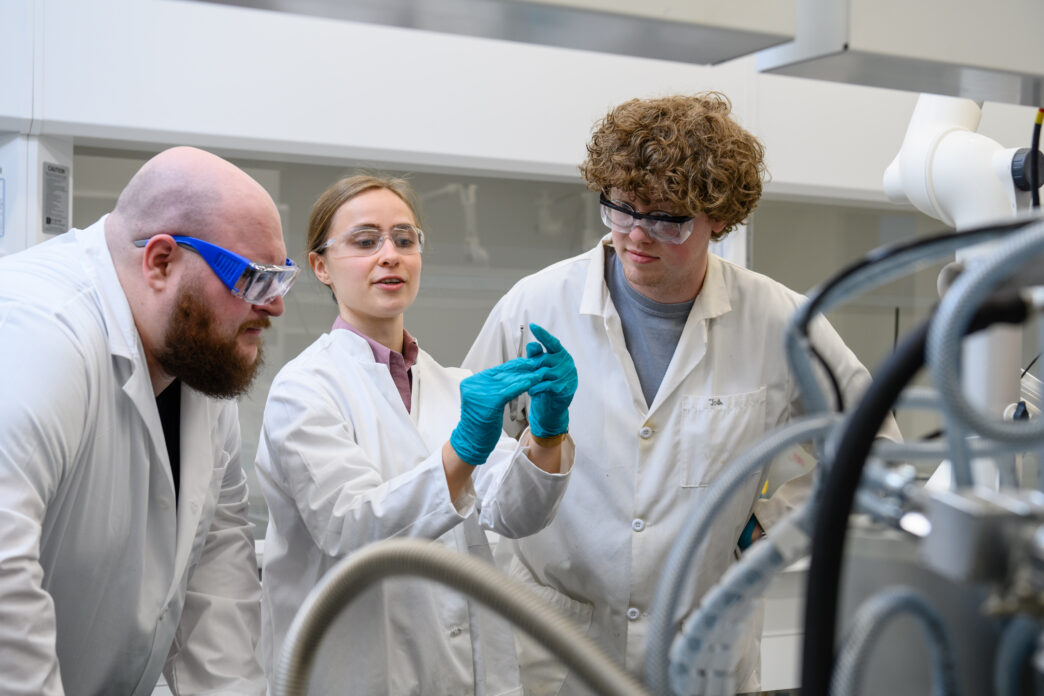
Merle Wellmann, a Ph.D. student from Germany’s Leibniz University Hannover, is visiting Clemson as a Fulbright Scholar for the spring semester. Her work focuses on advanced ceramics that could improve the performance of next-generation energy technologies.
Wellmann’s four-month stay places her at the heart of AMIC, a facility designed to bring together engineers and scientists from different disciplines under one roof.
“I was looking for a place with a strong reputation in materials science,” she said. “Clemson stood out, especially because materials science here is closely connected to engineering. That opens up a lot of opportunities to learn from different perspectives.”
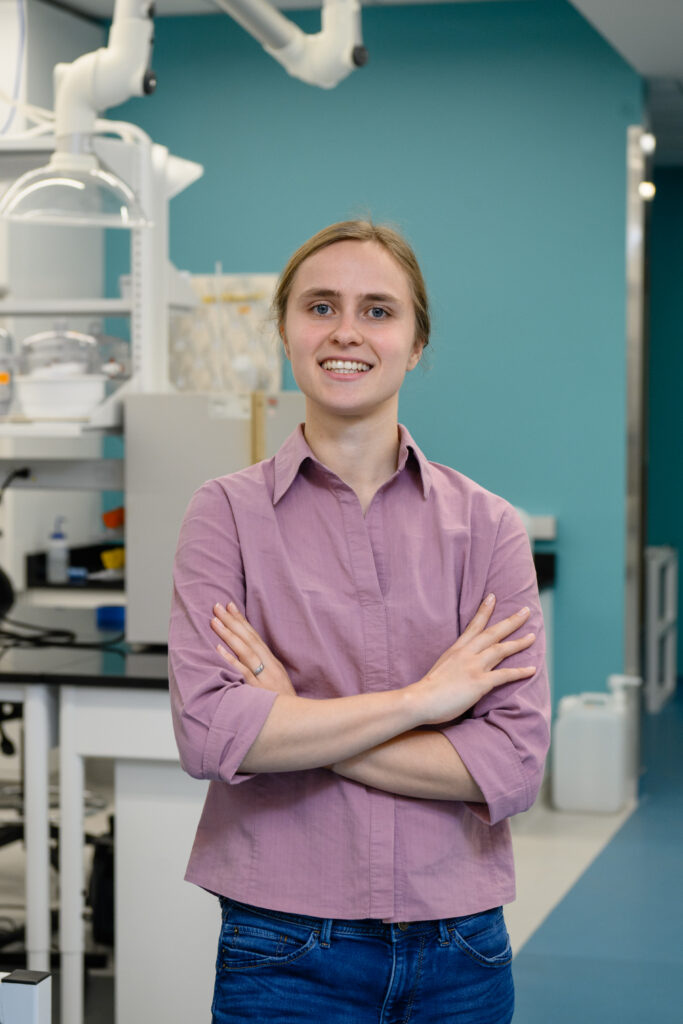
While Fulbright awards are often associated with U.S. faculty traveling abroad, the program also supports outstanding international scholars such as Wellmann to conduct research at American universities.
At Clemson, Wellmann is working in the research group of Kyle Brinkman, chair of the Department of Materials Science and Engineering.
“We’re thrilled to welcome Merle to Clemson,” Brinkman said. “AMIC was built to bring outstanding researchers together, and seeing international scholars choose to work here shows the facility is already delivering on that vision and creating a world-class graduate student research experience.”
Wellmann is pursuing her Ph.D. at Leibniz University Hannover, where she studies under Armin Feldhoff.
“This visit is a valuable opportunity for Merle to work with colleagues at Clemson and gain experience with facilities that complement what we have in Hannover,” Feldhoff said. “International exchanges like this are important for building strong research connections and broadening perspectives for young scientists.”

Wellmann’s work in Germany has focused on designing and understanding advanced ceramic materials, and her time at Clemson allows her to test how those materials perform under conditions that are difficult to replicate in most labs.
The advanced ceramics she is creating could improve performance for solid-oxide fuel cells and oxygen-separation systems, both used in next-generation energy technologies.
As part of her research, Wellmann is using electrical conductivity relaxation (ECR), a specialized testing technique that helps her measure how oxygen moves in and through her ceramic samples.
ECR systems are uncommon. At a ceramics conference in January, Wellmann said she met only one other research group using one.
“For me, it’s a game changer,” she said.
Wellmann said AMIC’s high-end equipment isn’t the only thing that has made a strong first impression on her. She has also found why Clemson often ranks as one of the friendliest universities in the nation.
“When I was in my office, I had people standing in front of my door who just wanted to connect with me and get to know what my research is on and who I am, and that was very nice,” she said. “It is a good start for potential collaboration.”