Most visitors to Ecuador’s cloud forests marvel at the lush green landscape, colorful birds and cascading waterfalls. Clemson University entomologist Michael Caterino focused instead on the forest floor.
As the John and Suzanne Morse Endowed Chair of Arthropod Biodiversity, Caterino has spent years exploring arthropod biodiversity in the southern Appalachian Mountains. There, he developed a faster way to identify species where traditional methods had struggled. He wanted to know whether it would work in an even richer biodiversity hotspot.
He found the perfect testing ground and collaborators in Ecuador.

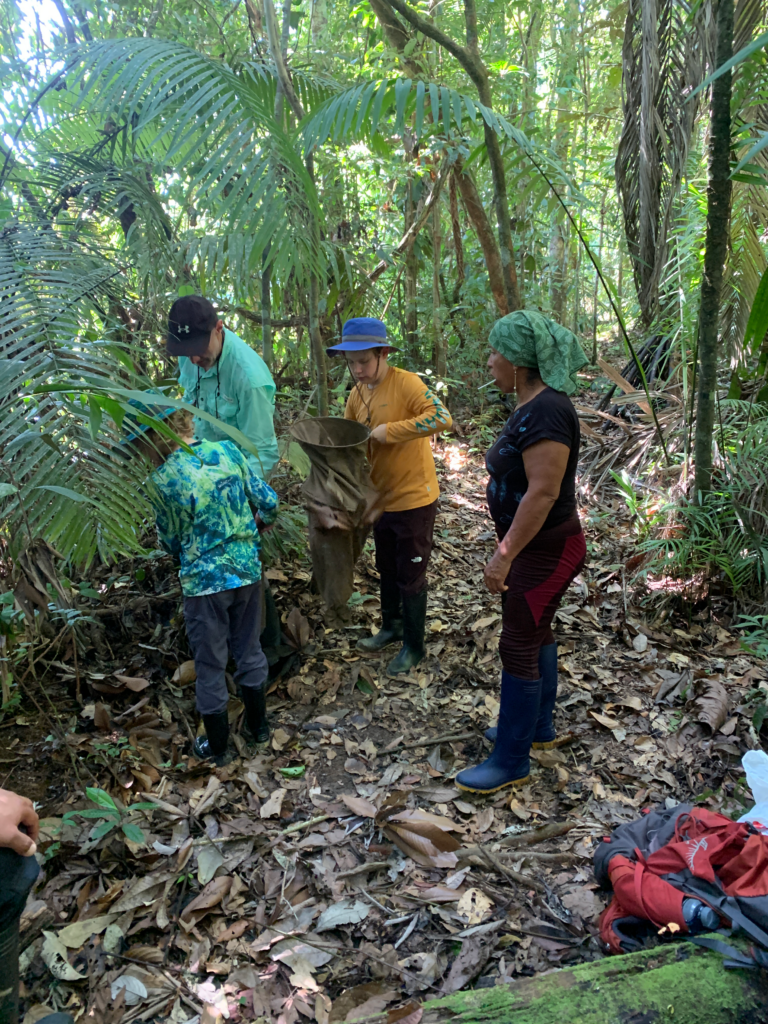
Working alongside students and researchers at Ecuador’s Instituto Nacional de Biodiversidad (INABIO), Caterino spent his year-long sabbatical collecting and analyzing sacks of leaf litter from forests along the spine of the Andes.
One of the collaborators who helped make the project possible was Sofía Muñoz-Tobar, Ph.D. ’18, one of Caterino’s first doctoral students at Clemson. Now a researcher at INABIO, she helped connect her former advisor with the scientists leading Ecuador’s efforts to document the country’s biodiversity.
The project didn’t disappoint.
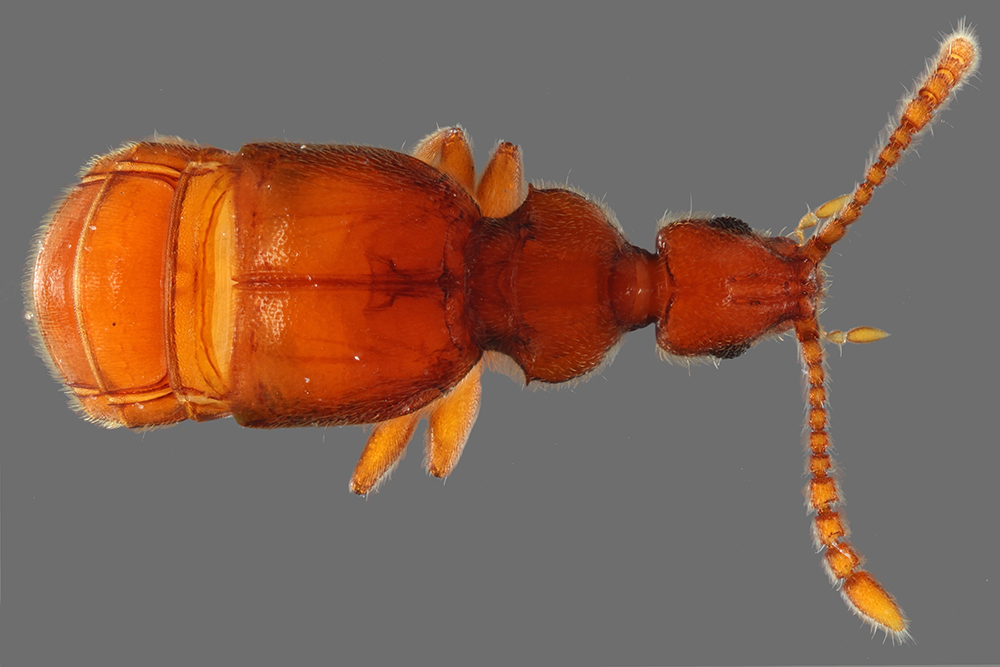
The effort resulted in a scientific monograph describing 339 previously unknown species of rove beetles—one of the largest single-paper species descriptions published in recent history.
Caterino believes the forests still hold many more.
“Ecuador’s insect diversity is off-the-charts exceptional. We’ve really only scratched the surface,” said Caterino.
Why the little things matter
Rove beetles spend their lives beneath layers of fallen leaves, members of a diverse community that recycles nutrients, breaks down organic matter and helps keep forests healthy. Many of the newly documented species appeared at only a single collection site, hinting at a much greater diversity at sites still unsampled.
Because INABIO works closely with Ecuador’s conservation agencies, the discoveries can also help researchers identify areas of exceptional ecological value and inform future conservation planning.
For Caterino, helping people notice these overlooked organisms has become the driving force behind his work.
“My strongest motivation now and always is to make people aware of—and then care about—the ‘little things that run the world,'” Caterino said.
He believes insects are often dismissed because of their size, even though they perform essential work that supports nearly every terrestrial ecosystem.
“People think because insects are small, they are insignificant, but their small body size is misleading. Their tremendous ecological diversity and abundance make them relevant.”
What’s in a name?
One perk of discovering a new species is naming it.
For Caterino, this became an opportunity to recognize the people, places, and traditions that made his work possible.
Thirty-six species have names derived from indigenous languages and mythology.
Among them are a pair of beetles named for a legendary pair of Cañari brothers, Ataorupagui and Cusicayo, who, according to tradition, survived a great flood by climbing to the summit of a mountain before becoming ancestors of the Cañari people.
Another species honors Princess Quil, who is said to have fought alongside Chief Guayas against the Spanish conquistadors.
One new genus, Ayapuna, combines Kichwa words meaning “spirit of the mountain.”
Another 29 species honor Ecuadorian scientists, conservation leaders and community members whose work has advanced understanding and protection of the country’s biodiversity.
Among them are:
- Jubus limaorum, named for the Lima family, owners of El Pahuma Orchid Reserve, where many of the new species were discovered.
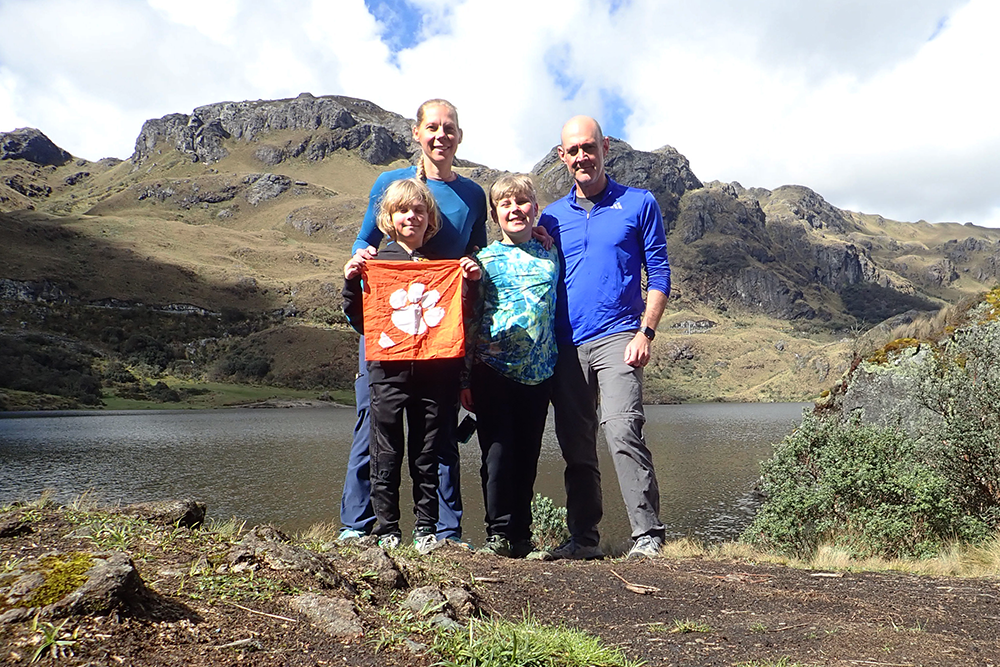
- Barroeuplectoides donaritae, honoring Doña Rita, an indigenous community steward who introduced Caterino’s family to Ecuador’s Amazon rainforest.
- Euphalepsus inclani, recognizing Diego Inclán Luna, director of INABIO and Caterino’s host during the sabbatical.



A lasting impact
The monograph gives researchers a solid foundation for future work; however, the project’s most lasting impact may not be the species it documented, but the people it trained.
“I hope one of the lasting outcomes of my sabbatical is that some of the students and collaborators I worked with continue this research,” Caterino said. “Building local expertise is just as important as documenting new species because it helps ensure the work continues long after I’m gone.”
Read the full study published in the peer-reviewed journal, Megataxa.