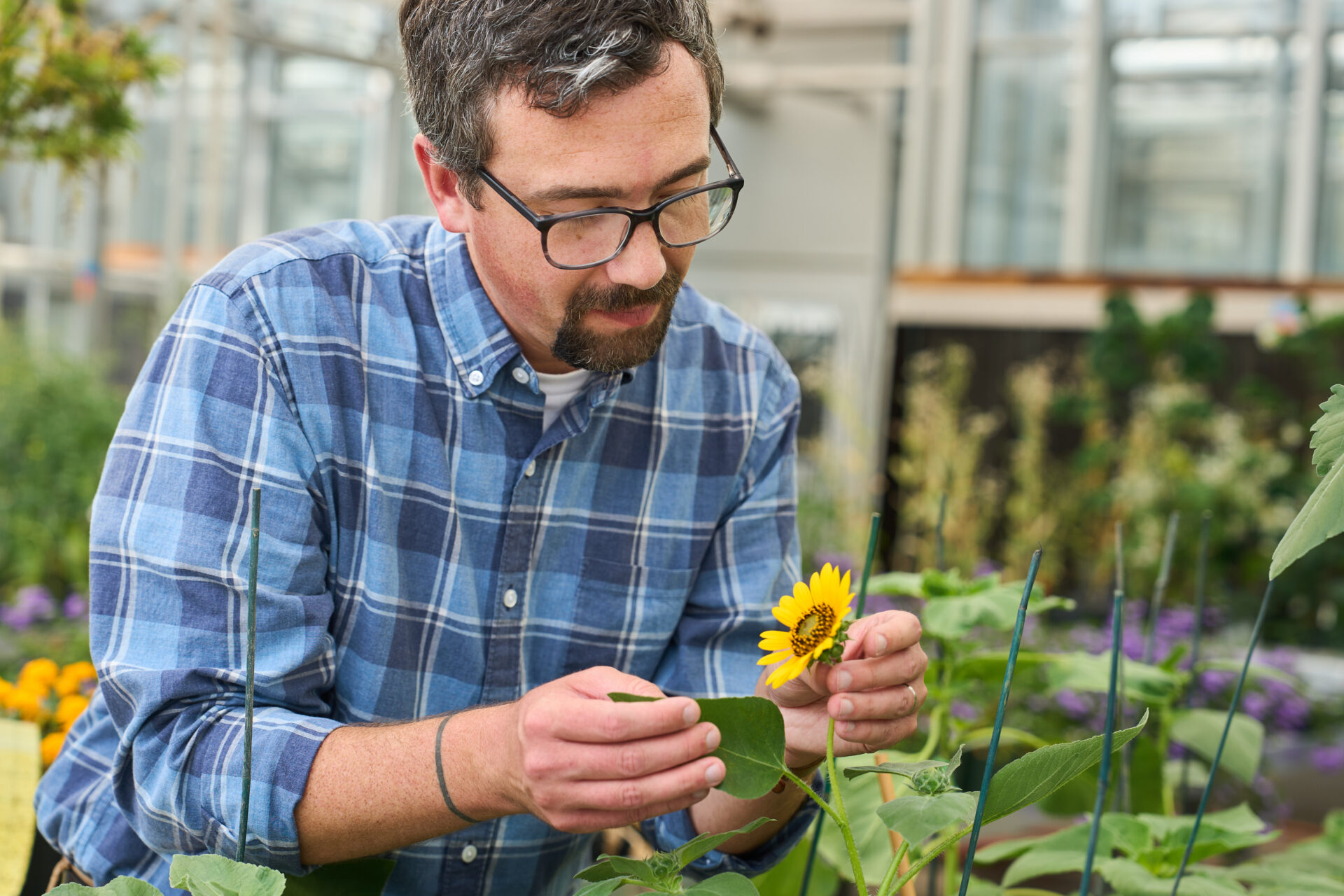

Clemson University biologist Daniel Jones is studying one of the world’s largest and most diverse plant families to explore natural variation in conserved genetic pathways, insights that could ultimately help improve plant growth and development.
Jones, an assistant professor in the Department of Biological Sciences, has received a five-year, $1.6 million National Science Foundation CAREER award to study gene duplication in the sunflower family.
Gene duplication is a process that occurs when plants copy part or all of their genomes over time. While many duplicated genes are eventually lost, some are retained and can evolve new or specialized functions that influence how plants grow and develop.
“Those retained duplicates are likely how biological innovations arise,” Jones said. “They can take on new roles that shape plant structure and adaptation.”
Big family
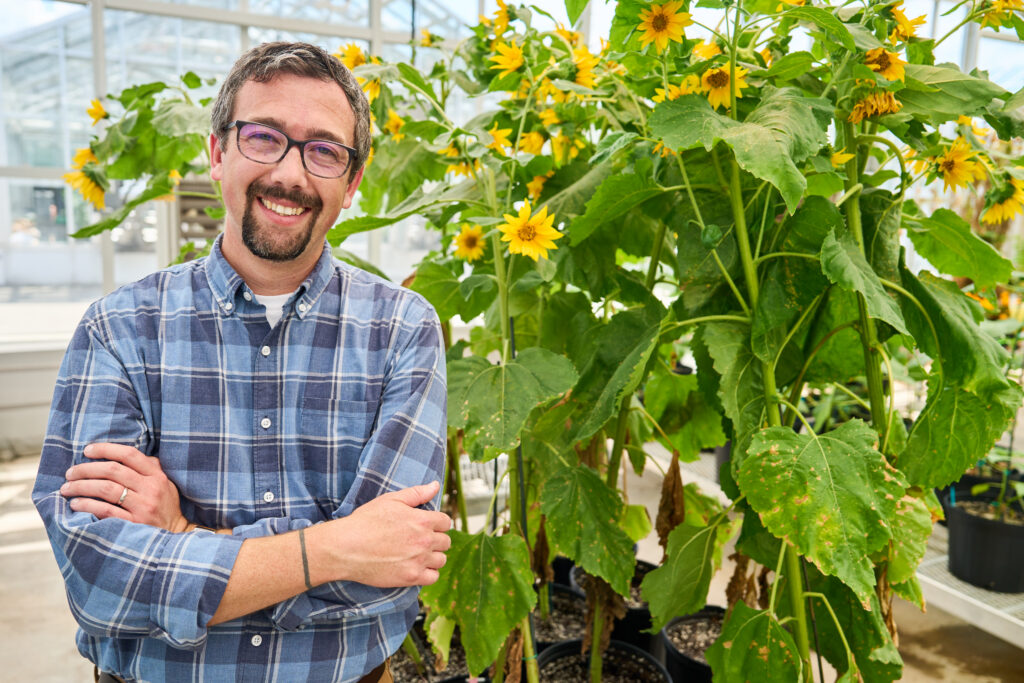
The sunflower family contains roughly 30,000 species and accounts for 10% of all flowering plants. It includes familiar ornamentals such as its namesake, marigolds and dahlias, alongside less obvious yet important members like lettuce. This diversity makes it an ideal system for exploring how genetic differences translate into biological form.
Jones’ CapituLab, named after the sunflower head comprised of many small florets that look like one big flower (called a capitulum), will focus on transcription factors — which are genes that act as regulators by controlling when and where other genes are activated. Using comparative genomics, the researchers will analyze sequencing data across the sunflower family to identify duplicated transcription factors that may have evolved distinct functions. The researchers will then determine how the genes operate in living plants.
“This project allows us to connect evolutionary history with real genetic function,” Jones said. “We’re not just identifying genes of interest—we’re testing what they actually do.”
Beyond advancing fundamental knowledge, the research has important practical applications. One major challenge in plant biotechnology is in regeneration, or the ability to produce a complete plant from a small piece of tissue through the process of tissue culture. While well established in a few model species, it remains difficult or inefficient in many crop species.

Introducing beneficial traits
Jones aims to identify new developmental regulators in Asteraceae (the sunflower family) that could be applied more broadly across species. That could help make it easier to introduce beneficial traits such as improved yield, resilience or disease resistance into crops that are currently difficult to work with.
“If we can find genes that improve regeneration across a wider range of plants, that could significantly expand what’s possible in crop improvement,” he said.
In addition to research, the CAREER award requires an educational component. Jones is launching GrowLab, a multi-semester training program designed to provide undergraduate and graduate students with hands-on experience in plant molecular biology.

Through GrowLab, first-year students will learn foundational techniques such as DNA extraction, polymerase chain reaction (PCR), cloning and plant transformation. The program is structured to allow sustained engagement over multiple semesters, helping students build technical skills, confidence and a deeper understanding of the research process.
“Students don’t always get exposure to this kind of work early in their academic careers,” Jones said. “Nearly every biological field utilizes molecular biology, from medical research to ecology and evolution. Learning practical foundational skills in molecular biology early on can open many new doors to students for their careers moving forward.”
Undergraduate participants will be connected with faculty labs, where they can apply their training to ongoing projects and gain experience working in active research environments. Jones will also offer a chance for graduate students to get hands-on experience in functional genetics and genomics in plants as part of a plant anatomy and development course he teaches. He also plans to develop a week-long outreach program for high school students in the future.