An infection by Naegleria fowleri, commonly called the brain-eating amoeba, can get its start during an activity that is synonymous with summer: swimming or diving in a freshwater lake, pond or river to beat the heat.
If contaminated water gets far enough up the nose, the microscopic amoeba can cause a rare but nearly always fatal brain infection called primary amoebic meningoencephalitis.
According to the U.S. Centers for Disease Control and Prevention, there have been 169 diagnosed cases of infection from the brain-eating amoeba in the United States since 1962. Only four survived.

Clemson University researcher James Morris is part of a five-year, $3.8 million multi-university effort to find chemical compounds that could be turned into a possible treatment.
Currently, there’s no Federal Drug Administration-approved drug specifically for the disease. Treatment now consists of cocktails of drugs developed for other infections, including bacteria and other parasites.
The National Institutes of Health research starts with molecules designed in the laboratory of University of Wisconsin-Madison medicinal chemist Jennifer Golden, a long-term collaborator of Morris.
Testing compounds
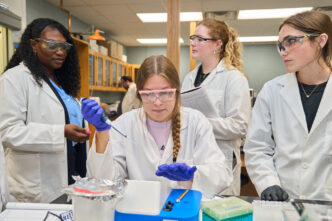
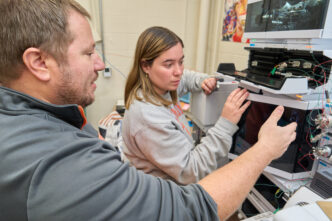
Morris’ laboratory is responsible for the experimental work involving the pathogen, including testing compounds against the amoeba, studies with human cells and experiments in mouse and rat models. Additional specialized analyses will be done by researchers at Brigham Young University and the University of Tennessee Health Science Center.
Unlike bacteria, the brain-eating amoeba is a single-celled eukaryote that shares many biological features with human cells. Because of these similarities, it’s challenging to develop a drug that can kill the amoeba without also damaging human cells.
Morris expects to screen hundreds or possibly thousands of compounds in small-scale laboratory tests.
He estimated that fewer than 50 would undergo animal studies, which will use both mouse and rat models because the two species process drugs differently. A candidate that looks promising in both models provides evidence that its performance isn’t tied to one model’s biology.

Compounds that harm human cells or fail to affect the amoeba are dropped.
The researchers have already found several chemical starting points that kill the amoeba at very low concentrations and appear less harmful to human cells in petri dishes.
But a potential medicine has to reach the brain, stay there long enough to be effective and leave before it causes too much damage elsewhere in the body. In the rodent models, Morris’s lab will study how much of each compound can be given, how often it should be administered and determine whether delivery by mouth, vein or nose offers the best chance of getting an effective dose to the brain.
They’ll also study whether the new compounds work better with already existing drugs.
Unknown target
The researchers don’t yet know the compounds’ biological target.
“All I know right now is that when I put molecules on the amoeba, they die,” said Morris, who is a professor in the Clemson Department of Genetics and Biochemistry and a member of the Eukaryotic Pathogens Innovation Center (EPIC).
Knowing the compounds’ biological target would allow chemists to redesign the molecule so it could work more precisely.
Morris said the goal at the end of the grant is to have a preclinical compound that works in two rodent models, has a defined mechanism and shows no unacceptable toxic effects.
Further studies would be required before it could be administered to humans.
“I have learned through the decades not to get too excited about molecules because they so often break your heart,” Morris said.
Morris recalled a South Carolina case that prompted phone calls from people searching for answers he could not provide.
“In the end, we are obligated to try to make things that help people,” he said. “It’s the right thing to do.”