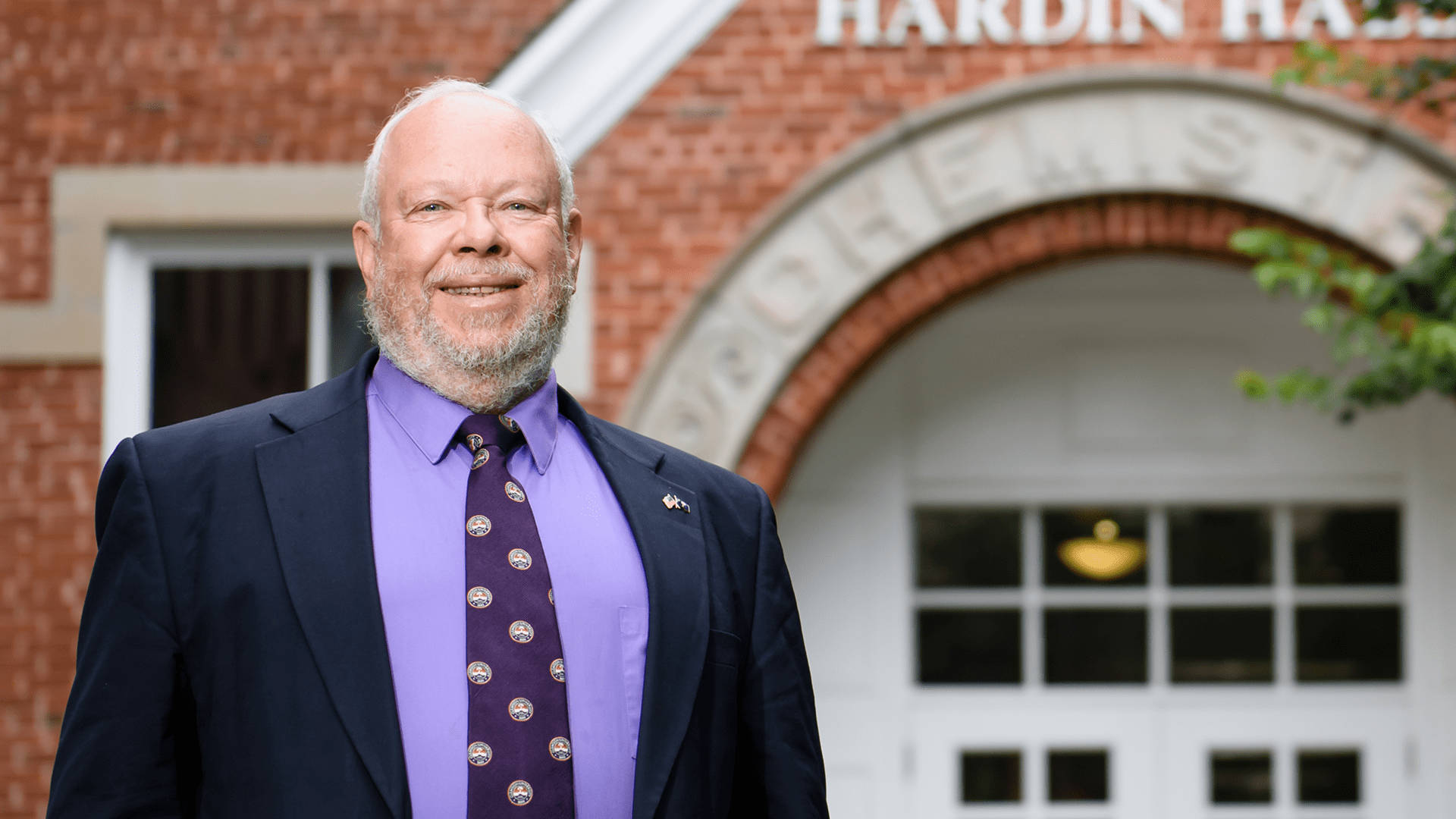

Vernon Burton, the Judge Matthew J. Perry Distinguished Professor of History, wasn’t originally supposed to teach at Clemson. He was brought to the University in 2010 to bring a high research profile to the humanities to help Clemson reach its goal of becoming an R1 research university. He was also leading an effort to start a digital humanities program. But he loves teaching and wanted to interact with students, so he started teaching anyway, and his first class was a Creative Inquiry (CI) project suggested by then Provost Doris Helms.
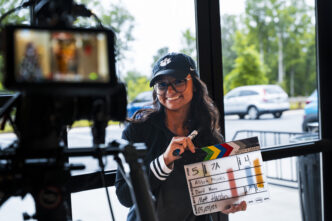
That project, “Digital History and Digital Humanities Introduction in Humanities, Arts, and Social Sciences,” gave students the opportunity to use technology to interpret history in new ways. For example, the class worked with the Social Media Listening Center to study people’s attitudes about the Civil War during the 150th anniversary of the war. The class also works to compile databases and websites of historical records that could be useful to researchers, such as records of soldiers’ service in the Civil War.
Burton said CI is valuable in that it allows undergraduates to work alongside faculty, something that harkens back to the way teaching used to happen in the past.
“The way I teach is an apprenticeship/mentoring process where we work side-by -side. We work together, and that’s the best way to learn,” said Burton. “That’s the way original graduate training was, even in the old English-Oxford system. I think it’s very appropriate. Students learn how to do research, and if we have time, they can learn how the results of that research go forward into disseminating knowledge, through talks that they give or papers we publish.”
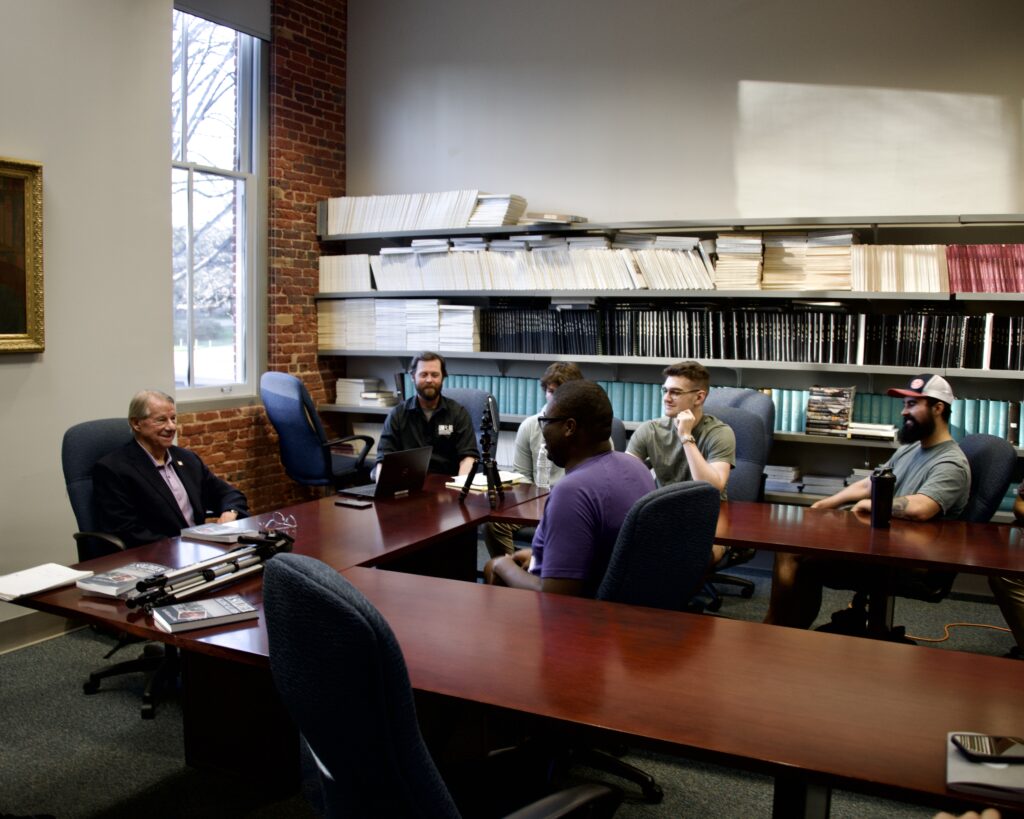
Another CI project that Burton has mentored for years is the Veterans Oral History Project. The project was first established in 2012 in the ROTC program to record the oral histories of Clemson alumni who are military veterans, with a particular focus on capturing stories from World War II. Burton started mentoring the project in 2015 after the students approached him because their original mentor was retiring. As a veteran of the U.S. Army, Burton felt a special connection to the project.
With Burton’s guidance, the project expanded to include veterans from other wars, as well as veterans who were from a variety of backgrounds. He made a special effort to seek stories of people of color and of women, who were not as well represented in the project.
Many of the oral histories are sent to the Library of Congress for their Veterans History Project (VHP). In fact, Clemson has sent more than 170 recordings to the VHP, more than any other college or university involved with the project. Burton and the CI class were invited to the Library of Congress for special recognition for their work and were given a private tour of the Pentagon. All of the recordings are also added to the military heritage collection in Clemson’s Special Collections and Archives.
Burton would like to connect his two CI projects by having students in his Digital Humanities project use mapping technology in the Clemson Center for Geospatial Technology’s GIS Lab, located in Cooper Library, to create a map of battles shared in the oral histories captured by the Veterans Oral History project. The mapping could allow students to find commonalities between the stories shared by the veterans.
“I love working with students. This is a superb way to interact with students as opposed to just inside the classroom. Students have to learn how to do history and how to use new tools that are important wherever they might go. That is essential, and there’s no better way to do it than CI.”
Vernon Burton, the Judge Matthew J. Perry Distinguished Professor of History
He said both projects allow students to learn not just the technical aspects of recording history and capturing data but also skills that can be applied to any field, such as interacting with people, building relationships, analyzing and evaluating data, and critical thinking.
“I think CI has been a crown jewel here at Clemson. It has helped the reputation of this University to give students this opportunity and this experience,” he said.
This story is part of a series focused on long-standing projects and faculty mentors who have been involved with Creative Inquiry + Undergraduate Research since nearly the beginning of the program. For more information, visit clemson.edu/ci.