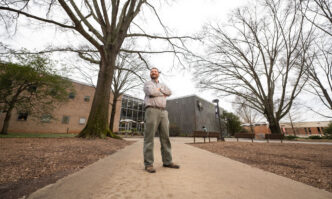
Ken Maassen came to Clemson University for a Bachelor of Science in mechanical engineering, but he left with that and so much more.
By the time he collected his diploma, he had hands-on research experience, a strong co-op background and a taste for solving hard problems.
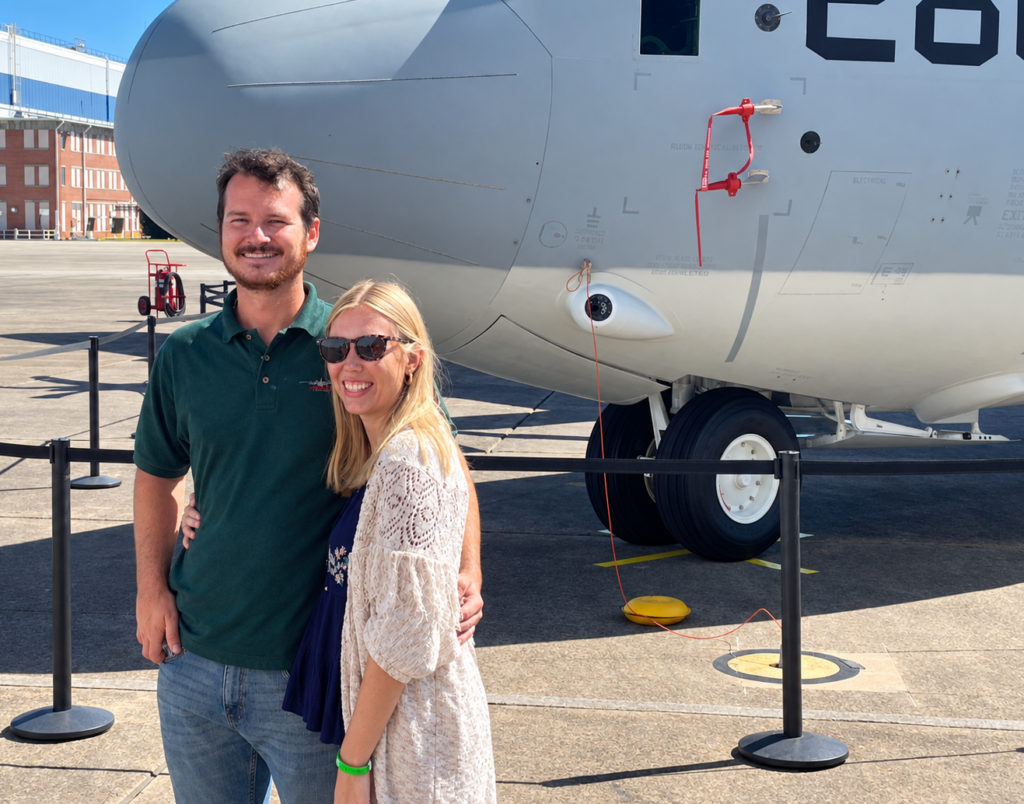
Now Maassen, a third-generation Clemson graduate, is a staff propulsion engineer at Lockheed Martin in Marietta, Georgia, where he designs how gas turbine engines are integrated onto the aircraft.
Maassen’s path to one of the world’s leading aerospace and defense companies stands as one example of how a Clemson degree can help prepare a graduate for take off, both literally and figuratively.
It’s been more than eight years since he crossed the graduation stage at Clemson, and Maassen is still using what he learned in undergraduate classes, including controls, fluid dynamics, structures, heat transfer and thermodynamics.
“What I like best about propulsion integration is that it’s a little bit of everything,” Maassen said. “When I look back at the classes I had at Clemson, I find topics from every single one of them that I have to use week in and week out.”
At Clemson, Maassen worked closely with mechanical engineering Professor Joshua Bostwick on research that included modifying a 3D printer with ultrasonic soldering capabilities to join metal to glass.
“He let me have freedom with that project. He empowered me to research on my own, find where the engineering challenges are, and spend time in the lab improving and exploring our experimental setup” Maassen said. “I really value how Dr. Bostwick supported me and taught me research fundamentals during that time.”
Thanks in part to his experience with Bostwick, Maassen was able to hit the ground running when he went to the Georgia Institute of Technology for a master’s degree in mechanical engineering.
Bostwick said Maassen stood out for his curiosity, independence and willingness to tackle difficult problems.
“Ken was an outstanding student who made the most of every opportunity Clemson gave him,” Bostwick said. “It’s rewarding to see him succeeding at this level, and he represents the kind of graduate we hope to prepare for careers in engineering.”
Also in his time at Clemson, Maassen completed several co-op rotations with BorgWarner Turbo Systems.
He discovered in the co-op that he enjoyed the technical aspects of gas turbines and engineering the intersection between the turbine and the rest of a vehicle. The co-op also gave him experience engaging with customers including Ford, GM and Chrysler.
While at Clemson, Maassen also took part in several extracurricular activities, including Formula SAE, helping him learn how to solve problems that do not come with a ready-made answer.
Also making an impression on Maassen was Jean-Marc Delhaye, a senior lecturer who taught him fluid mechanics and heat transfer.
“Clemson gave me a very well-rounded education,” Maassen said. “It’s not only that I can go into technical depth on the engineering topics that I learned, but at Clemson I learned to communicate those areas to people who might not be familiar with engineering.”
Maassen comes from a family filled with Clemson connections. His great grandfather, W.R. Paden, conducted agronomy research at Clemson. Maassen’s maternal grandfather, Bill Paden, earned a mechanical engineering degree from Clemson in 1958.
Maassen’s father, Kirk Maassen, is a 1980 Clemson mechanical engineering graduate. While Maassen’s wife, Rachel, did not attend Clemson, her father, John, received an electrical engineering degree in 1992, and her mother, Jill, received an education degree in 1991 and a Master of Education in reading in 1992.
For any students who want to follow in Massen’s footsteps, he has this advice: Soak up as much as you can in your classes and look for hands-on opportunities such as co-ops, undergraduate research and student engineering teams.
“With all of the extracurricular opportunities Clemson gives its students, you can solve challenging problems that you might not encounter in the classroom,” he said.