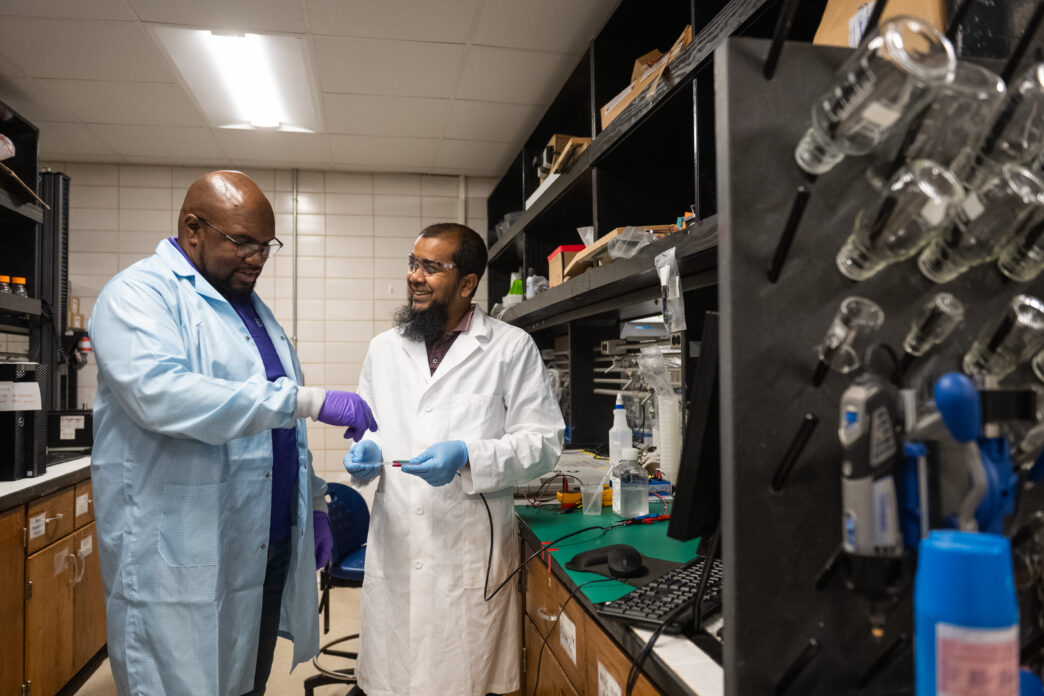
A Ph.D. student who is developing sensors to monitor chronic wounds is serving in the same national leadership position that his advisor did 13 years earlier.
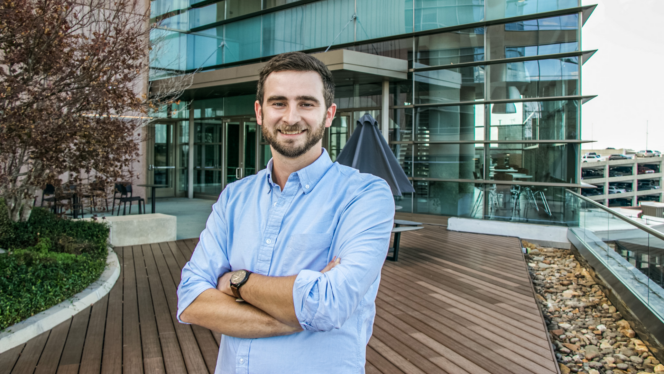
Md Salauddin Sk was voted by his peers to serve as the president-elect of the Society for Biomaterials’ national student chapter this year and president next year. The same path was taken in 2013-15 by Salauddin’s advisor and associate professor of bioengineering, Jordon Gilmore.
The honor has special meaning at Clemson. A 1969 symposium at Clemson helped bring together researchers in what was then the emerging field of biomaterials.
The Society for Biomaterials was formally established in 1974, and its first annual meeting was held at Clemson the following year. The society still presents its Clemson Awards annually.
Salauddin’s research is helping keep Clemson firmly established as a leader in biomaterials.
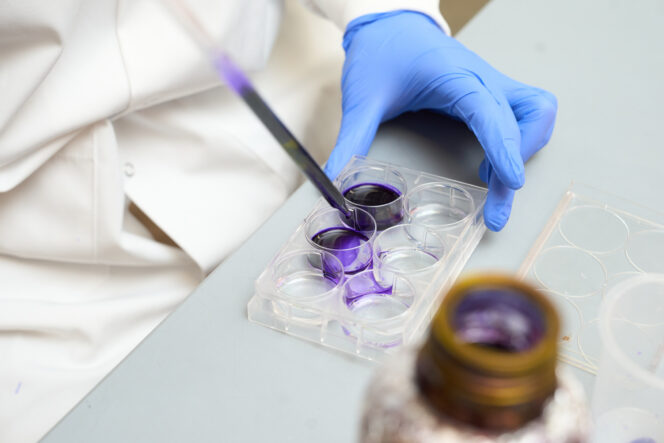
He is working with Gilmore and fellow Ph.D. student Azrin Jamison to develop sensors that could be built into bandages for chronic wounds, which can remain open for weeks or longer.
The sensors are designed to track biological signs linked to inflammation and healing. That information could someday help doctors spot problems earlier and adjust treatment before a wound becomes more serious.
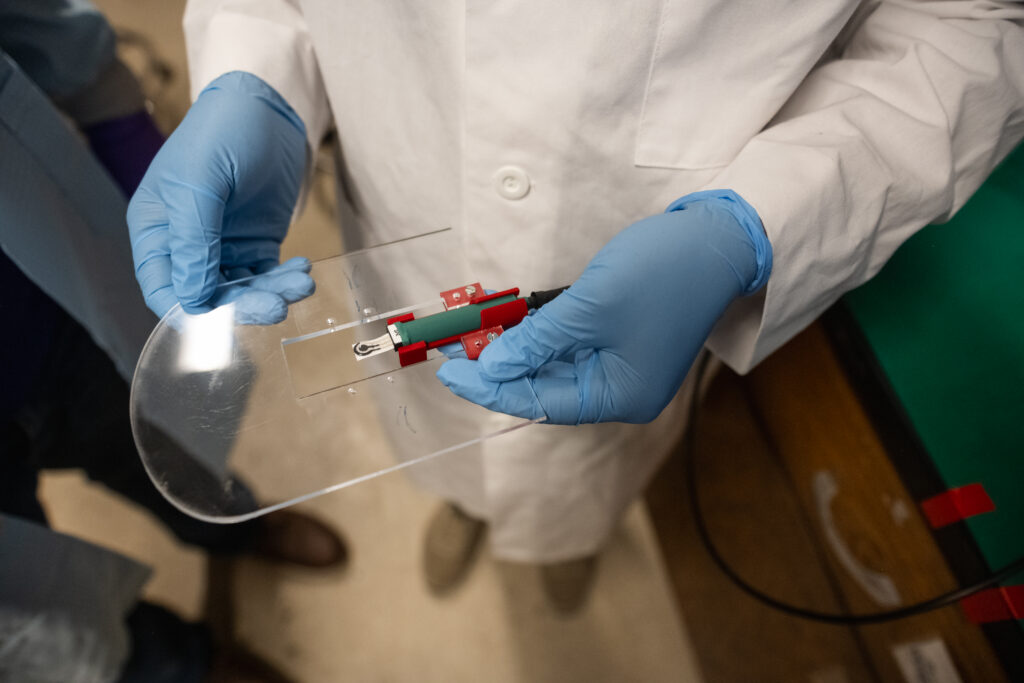
The team has tested the technology in a clinical setting involving 13 patients, Salauddin said.
“It’s exciting to see that things we are developing in the lab are working in real life,” he said.
Salauddin said that as the society’s president-elect he will help organize student activities for its annual meeting and that he wants to build stronger connections between students and industry through mentoring sessions.
Gilmore said the society played an important role in his own development as a young researcher and gave him his first opportunity to present research publicly. He encouraged Salauddin to seek the presidency.
“He is already a great leader in our lab, has a lot of maturity and is able to bring people together,” Gilmore said. “I’m excited to see how he shapes his new role.”
Salauddin came to Clemson after 12 years in the textile industry, including six years in manufacturing and six with a textile chemical company. Technical problem-solving on the job pushed him to seek deeper knowledge, leading him to pursue a Ph.D.
Salauddin once expected to return to industry after completing his doctoral program, but his research and leadership experiences have made an academic career increasingly appealing.
For now, he is focused on finishing his Ph.D. and leading the society’s student chapter. But if Clemson someday offered him a faculty position, Salauddin said he would be happy to stay.
Delphine Dean, chair of the Department of Bioengineering, offered her congratulations to Salauddin and said that his role with the society will help showcase the University’s leadership in biomaterials to researchers across the field.
“It is especially meaningful to see him follow a path that Jordon traveled earlier in his career,” she said. “They are adding another chapter to Clemson’s deep connection with the Society for Biomaterials.”