Ming Yang was pursuing a Ph.D. under the guidance of renowned chemical engineer Maria Flytzani-Stephanopoulos when he went to her with some bad news.
A scientific journal had rejected the first paper they had written together. Flytzani-Stephanopoulos’ response has stuck with him for years– she had little interest in blaming reviewers or dwelling on defeat.
“What can be done better?” he remembered her asking. “How quickly can we get it done? Let’s plan it out.”
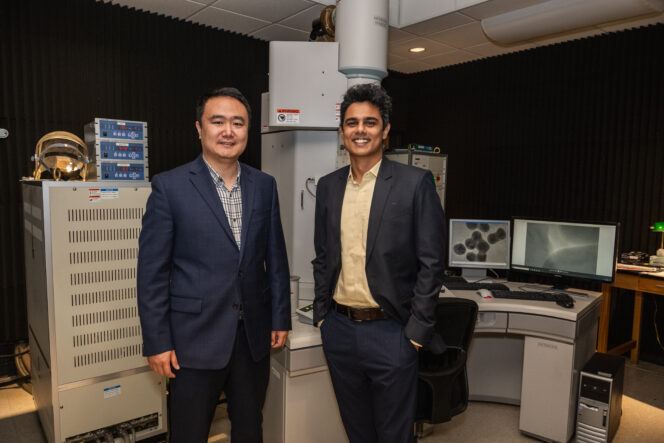
More than a decade later, Yang is passing on that spirit of resilience to his students at Clemson University, where he is now Dean’s Associate Professor of chemical and biomolecular engineering.
His peers are taking notice of his work and honoring him with an award that brings his career full circle, while helping shine a national spotlight on chemical engineering at Clemson.
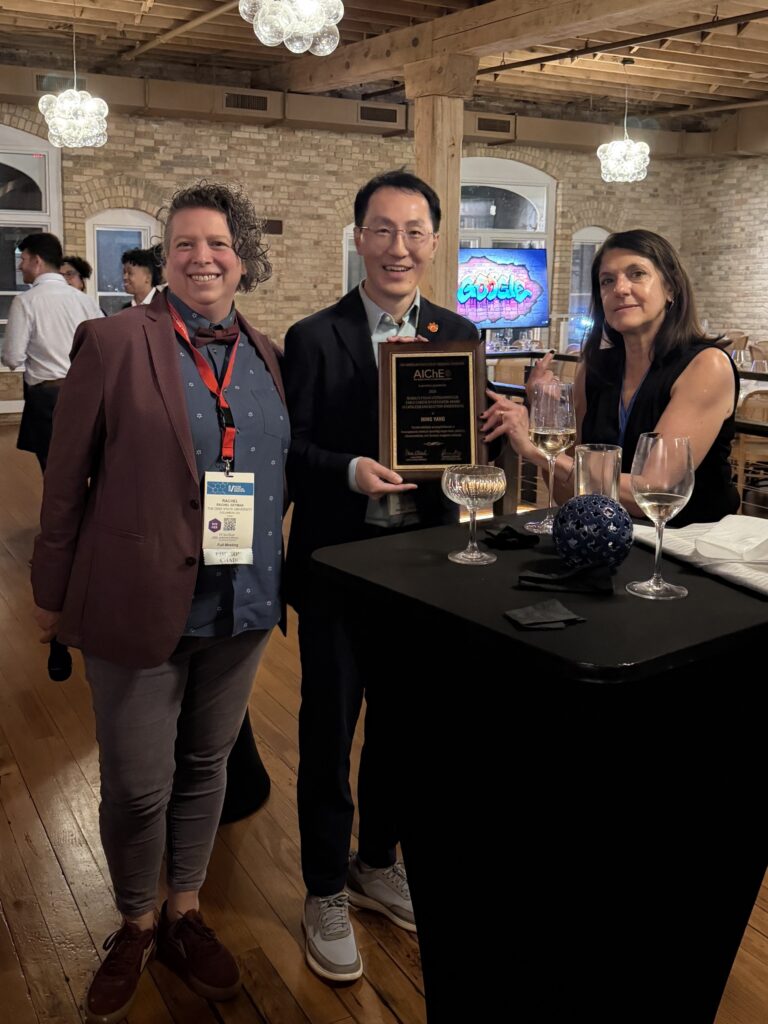
Yang has won the 2026 Maria Flytzani-Stephanopoulos Early Career Investigator Award from the Catalysis and Reaction Engineering Division of the American Institute of Chemical Engineers (AIChE).
It’s a bittersweet honor for Yang.
Flytzani-Stephanopoulos, affectionately known as Professor Miretta, passed away at 69 years old in 2019 after a battle with multiple myeloma. The mother of three was a member of the National Academy of Engineering and had been a pioneering researcher in clean-energy technology.
“She was such a giant in catalysis and reaction engineering and left such big shoes to fill,” Yang said. “If I could talk to her, I would say, ‘I’m very grateful for all the guidance you gave to me. I got my tenure and this very special early career award.’ I know she would be very happy with it.”
Gregory Stephanopoulos, who was Flytzani-Stephanopoulos’ husband, said Yang is fully deserving of the award and that she would have been delighted to see his distinction.
“She had spoken to me on several occasions about Ming, how brilliant he was in his work, his exemplary character and the great promise he held for an academic career,” said Stephanopoulos, now the Willard Henry Dow Professor in Chemical Engineering at the Massachusetts Institute of Technology.
“She was very proud of him and would be immensely pleased to witness Ming’s great progress and especially his recognition with an award that bears her name.”
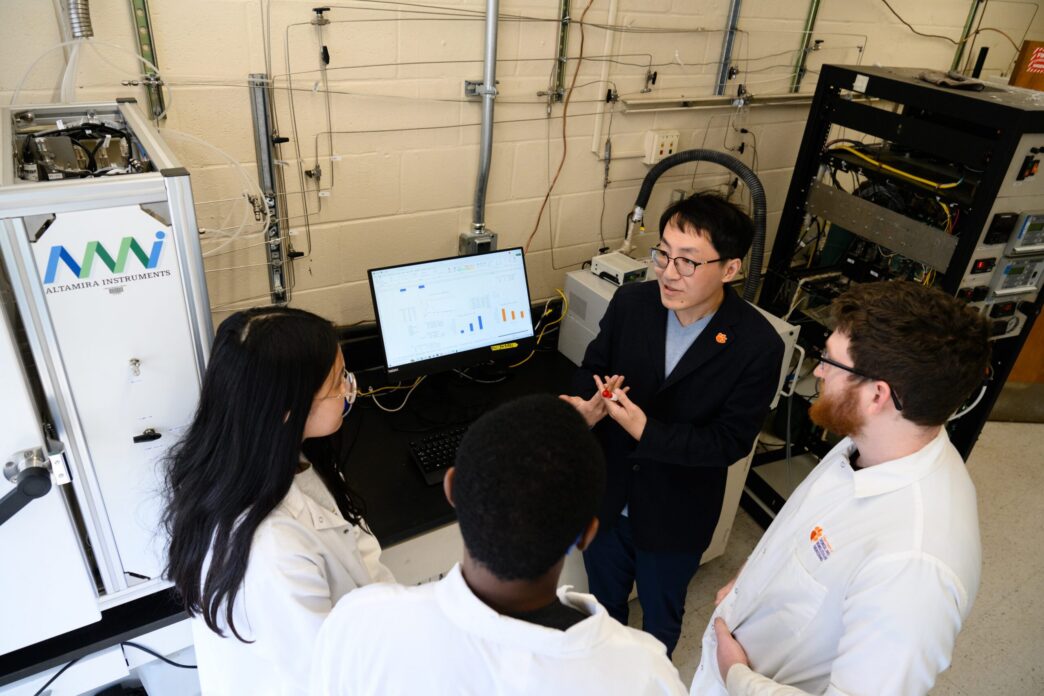
At Clemson, Yang oversees a lab of five doctoral students, two postdoctoral researchers and eight undergraduates. They design catalysts with applications in clean energy and sustainable manufacturing.
The work has helped earn Yang multiple honors, including the Junior Faculty Researcher of the Year Award from Clemson’s College of Engineering, Computing and Applied Sciences.
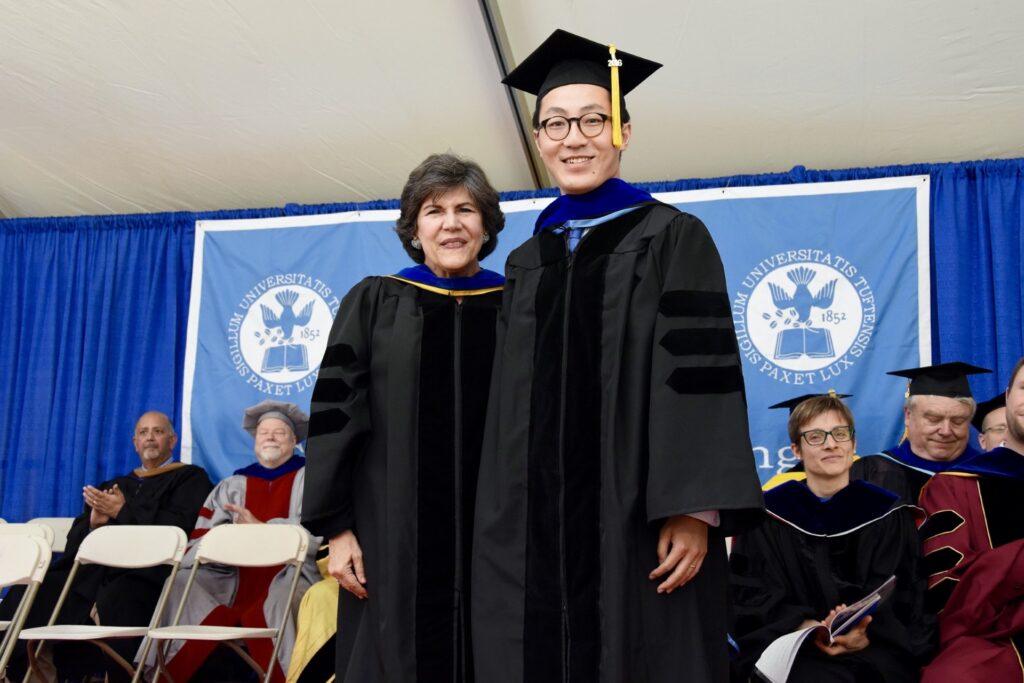
For Yang, the road to Clemson went through Tufts University, where Flytzani-Stephanopoulos was the Distinguished Professor and the Robert and Marcy Haber Endowed Professor in Energy Sustainability.
Her reputation drew Yang to the lab, but it was her approach to teaching that made the lasting impression.
Flytzani-Stephanopoulos gave students freedom to explore their ideas while holding them to exacting standards for scientific evidence and writing, Yang said.
She also readily admitted when a student knew something she did not, he said.
Yang earned his doctorate in 2016 and joined General Motors as a researcher. He said he continued seeking his former advisor’s advice and that she was enthusiastically supportive when he decided to return to academia as a faculty member.
Since joining Clemson in 2020, Yang has encouraged his students to explore unfamiliar fields and place greater value on careful, meaningful research than on publication counts. Several have published in leading scientific journals, carrying forward the standards his mentor established, he said.
David Bruce, chair of Clemson’s Department of Chemical and Biomolecular Engineering, said the award reflects the growing national impact of Yang’s research.
“Ming has built an outstanding research program while remaining deeply committed to the success of his students,” Bruce said. “He is highly deserving of this prestigious honor, and I congratulate him on this remarkable achievement.”
Yang’s students sometimes encounter setbacks, just as he did. When they do, he can draw on the lessons Flytzani-Stephanopoulos taught him years ago– and show them the value of persistence.
The first paper Yang and Flytzani-Stephanopoulos wrote together didn’t get tossed into the waste basket after that first rejection.
They revised it, and it was eventually published in the Journal of the American Chemical Society.