Faculty and graduate students from the College of Education’s counselor education program have added the College of Engineering, Computing and Applied Sciences (CECAS) to a growing roster of University units that have taken advantage of its embedded counseling program. The program provides on-site services to students in an innovative approach to improving student well-being.
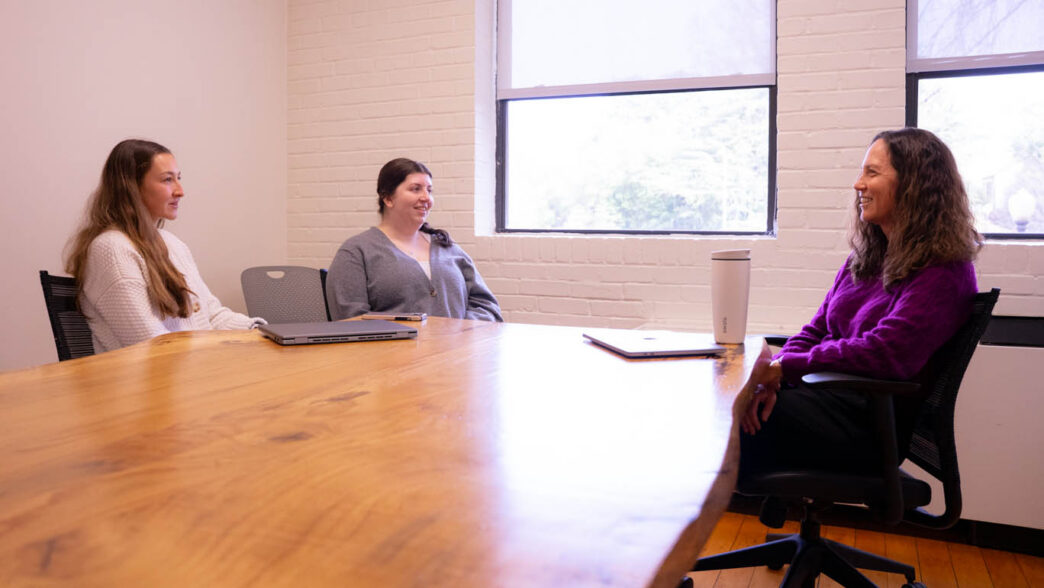
Faculty and counselors-in-training from the College of Education’s clinical mental health counseling specialty area have provided counseling appointments and drop-in hours in Sirrine Hall for students from every major in CECAS. Stephanie Evans, director of student services in CECAS, has worked with Corrine Sackett, the College of Education professor overseeing counselors-in-training, to position the services near the advising offices.
“We want these services to be a natural complement to the work of our advisers,” Evans said. “Having counselors on site and near our advising office lowers barriers for students and increases their comfort level with the service; a unified support team is what students need, whether they are having issues with academics or with issues common for anyone in higher education.”
Evans became aware of the embedded counseling program Sackett helped introduce in the College of Architecture, Art and Construction (CAAC), and she saw in that program a model that could be easily adapted for CECAS students. While embedded counseling for a college is not a new concept, Clemson does stand out because the services are provided by another College on campus and by counselors-in-training under close supervision.
Sackett said that the stigma of seeking help for mental health issues and general apprehension still affect how often students use the service, but efforts to get the word out about the services help to normalize and increase use. Sackett said the simple fact that students can seek support in a familiar space increases the likelihood they will use the service.
“It’s truly a benefit for all: students get the help they need, faculty and staff can use it to aid in student success, counselors-in-training get the experience they need, and it eases the case load for the University’s counseling and psychological services,” Sackett said.
Sackett has worked in collaboration with Clemson University Counseling and Psychological Services (CAPS) since before bringing the embedded counseling program online with CAAC. From the beginning, the embedded program was designed as a supplement to CAPS services, acting as an initial filter for student needs.
Sarah Allen, CAPS’ co-coordinator of CU Cares and CIPPP coordinator, said the embedded counseling program is a good complement to CAPS’ work, as it makes services accessible to students in their respective colleges and programs, often in the same buildings where their classes take place.
“[The embedded counseling team] consults with us and can refer students to our groups or workshops to build on any care they receive from the embedded provider,” Allen said. “CAPS is still totally available to students with services like psychiatry and counseling for alcohol and substance use or relationship and sexual violence issues. Embedded counseling provides even more coverage for our students.”

Sackett serves as a licensed therapist and on-site clinical supervisor, allowing Lauren Hendry and Felicity Negin, both practicum students in the clinical mental health counseling specialty area, to provide one-on-one counseling to undergraduate and graduate students. The program’s records are linked to CAPS, ensuring that documents are synced and available across the embedded program and CAPS’ services.
Hendry and Negin require 100 total hours of work, including a minimum of 40 direct hours with students, to satisfy their practicum requirements in the counselor education program. Future internship students who are further along in their training and need more counseling hours may provide counseling for this program as it expands.
Hendry and Negin have found that students might be more willing to connect with someone their own age, and both have actually enjoyed learning more about an entire academic world in engineering that they were not familiar with before. Hendry said she has predominantly worked with students on balancing the demands of coursework or a part-time job with the demands of everyday life.
“Coursework in these different disciplines can be challenging, but so can every other major,” Hendry said. “We’re seeing issues crop up that are typical of anyone in this age group or anyone in college, so often they are just glad to have someone to talk to and learn that they’re not alone in facing these issues.”
Negin agrees that many issues come from typical college life, such as dealing with roommates, homesickness and navigating peer and friend groups. Hendry said she struggled with transitioning from high school to college, which motivated her to explore counseling as a profession. She can envision herself working with this population in the future after completing graduate studies.
“I feel like these students are easy to build rapport with, and I have enjoyed working with them,” Negin said. “Anything to do with life transitions and the stress that comes along with them is interesting to me, so providing these services to college students has been great because it’s something I enjoy, something I’ve gotten a lot out of myself and something that students obviously need.”

Sackett has also worked to bring counseling services to the Clemson University Police Department, albeit in a support, co-responder role alongside officers in the field. She said that CUPD officers are trained to de-escalate and prepared to address mental health issues when needed. However, people in crisis can benefit more from having a trained counselor who can address immediate needs and connect them to proper services.
Sackett functions as a co-responder in such situations, which connects her to the work of Bryan Miller, associate dean for research in the College of Behavioral, Social and Health Sciences. Miller has worked with Christopher Harrington, CUPD’s deputy chief of police, and CUPD to revamp its response to mental health crisis calls after receiving grants to support the development of a collaborative community law enforcement and mental health strategy to improve police responses and connections for people with mental health and co-occurring disorders.
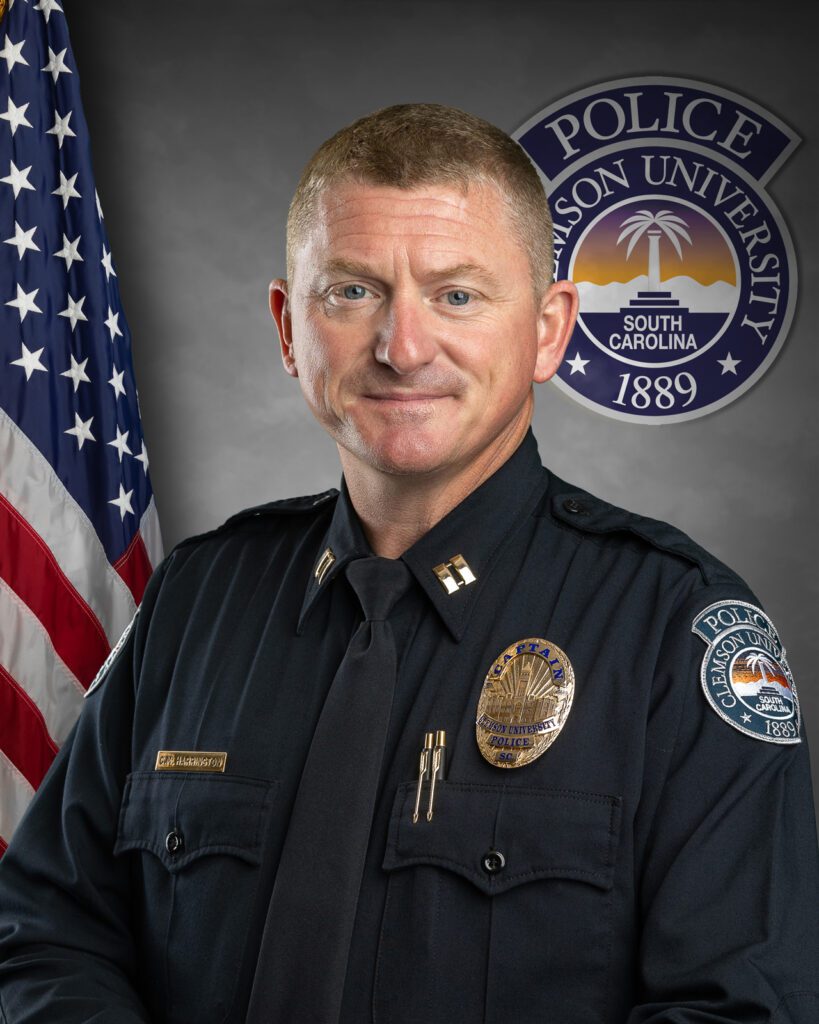
“CUPD is very fortunate to have Dr. Sackett collaborating with our team in support of mental health response needs,” Harrington said. “Her partnership affords us the opportunity to continue to advance the important work of mental health crisis response and provides a valuable resource for our officers and community.”
Sackett said the work with CUPD is not appropriate for a master’s student, but it is a role the program anticipates filling with a doctoral student in the future.
Expansion isn’t a hope at this point but a guarantee. The College of Education will begin embedded counseling services for its students in Fall 2026, allowing Sackett to place more master’s students in the clinical mental health counseling program in yet another Clemson college.
The planned start of a Ph.D. program in counselor education and supervision, slated for Fall 2027 enrollment, should allow for more supervisors and more embedded counselors. If the program continues to expand, Sackett envisions doctoral students, who will be learning to become clinical supervisors, overseeing the work of master’s students in these embedded counseling roles.
“I would be happy to get to know every building on campus by partnering with every college,” Sackett said with a laugh. “I just think it’s great that this college community can collaborate in this way, all in the name of student mental health.”
The embedded counseling program has garnered attention from national academic organizations. The National Board for Certified Counselors awarded the counseling education program the 2026 Innovation in Counselor Education Program Community Engagement Award in New Orleans in late January. This is based largely on the work of the embedded counseling pilot work and the program’s work on Community Collaboration for Counselors.