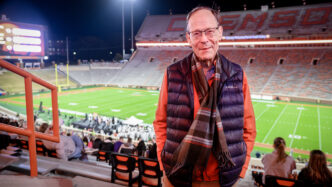

Joe Blandford ’58 was the first director of Tigerama in 1957. The University was a very different place back then, but the Tiger spirit was just as vigorous as it is today.
The first Tigerama was perhaps the best proof of that. Clemson did not have fraternities or sororities at the time, so Blandford and his small team turned to student clubs and committees to provide the entertainment. Thanks to some clever marketing and creative thinking, that first event was so successful that it kick-started a tradition that continues to this day, seven decades later.
Blandford graduated with a degree in ceramic engineering and was commissioned as a second lieutenant in the Air Force. He spent eight years in the Air Force, three on active duty and five in the reserves, as a trainer in T-33, T-34 and T-37 twin-engine jets. As a civilian, he forged a distinguished career as a leader in global equipment manufacturing and as a pilot.
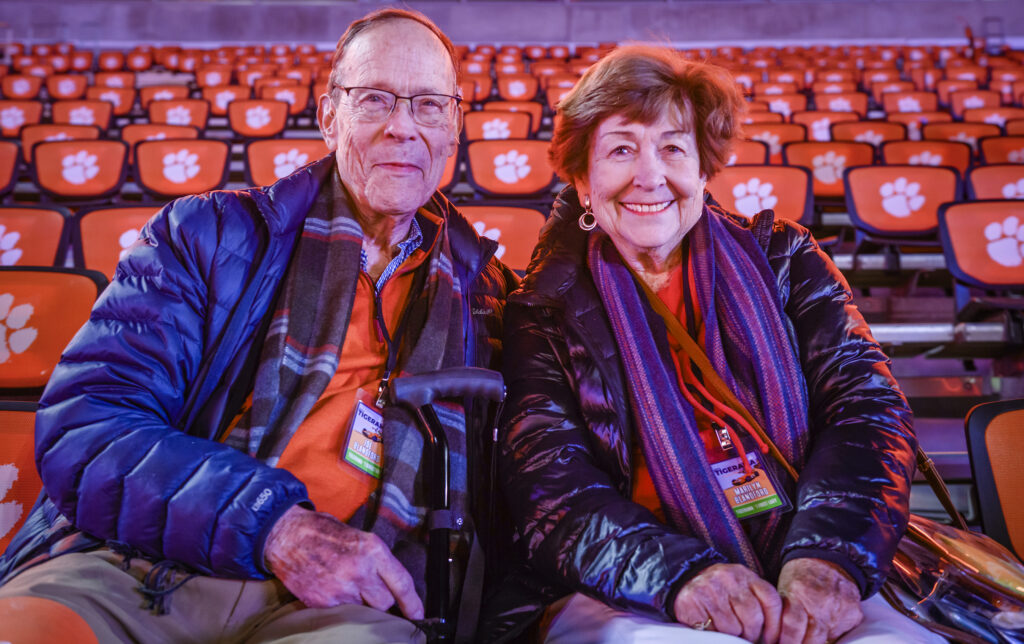
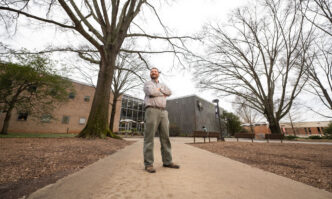
Blandford, now 90, and his wife, Marylin, returned for the 2025 Tigerama as very special guests of the University, and he sat for an interview in the Nieri Family Alumni and Visitors Center before the big event.
Q&A with the Founding Director of Tigerama
When was the last time you visited the Clemson campus?
Two years ago, for my 65th class reunion!
What made you choose Clemson?
Several reasons. I knew I wanted to do engineering, and Clemson was well-known for engineering even back then. I had several relatives who went here. My older brother finished three years ahead of me, and I had two uncles who went here. And then three of our children went here.
So, you’re a real Clemson Family.
Yes, we are. Our blood runneth orange.
Where did the idea for Tigerama come from?
The idea came from a gentleman named Joe Sherman, who was the original director of what was then the Alumni Association. He was out of the class of 1934, and he ended up on the staff of the University of Florida for several years. Florida has its own huge homecoming pep rally called the Gator Growl, and when he came back to Clemson in 1956 he thought Clemson ought to have a similar kind of thing.
How hard was it to organize that first Tigerama?
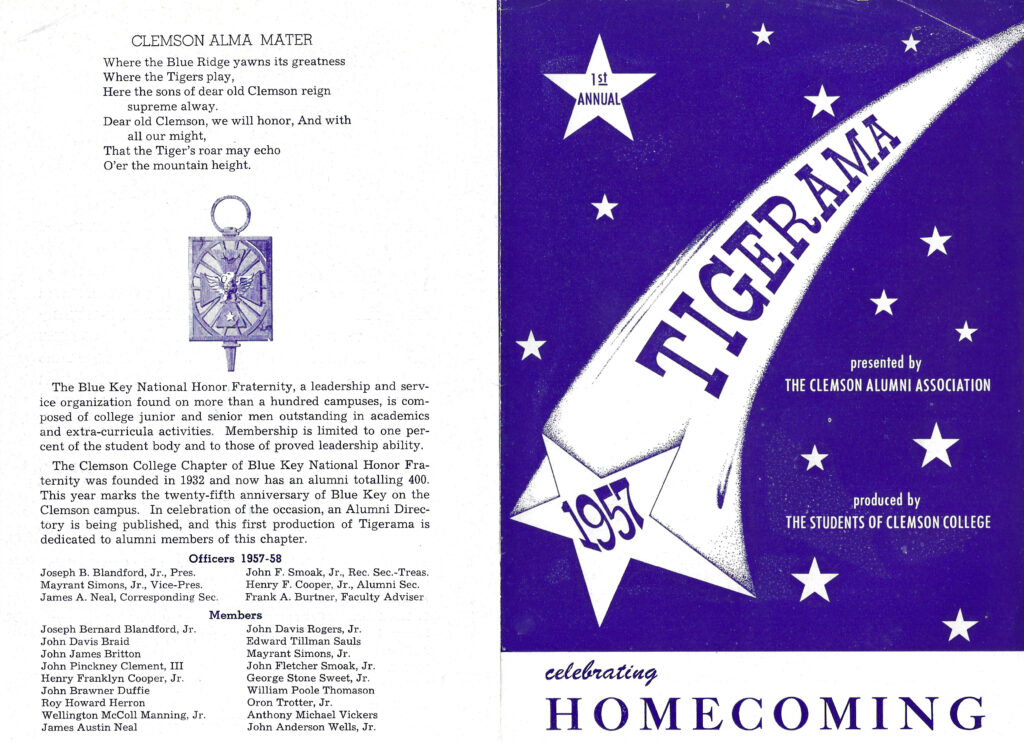
We didn’t even know what we were going to call it, so that’s part of the story. We decided we’d throw darts at a dart board, and that’s how we picked Tigerama as the name. What we ended up doing for publicity was we made bunches and bunches of posters. All they said was, “What is Tigerama?” We posted them all over Oconee County on buildings, trees, telephone poles — everywhere. We wanted to get people’s minds thinking, “What is this Tigerama thing that we keep seeing these posters for and hearing about on the radio stations?” There was no Internet, obviously, and no cell phones. So, we had this campaign to generate interest in people finding out what the heck Tigerama is. And it worked.
Were there other challenges getting the event on its feet?
One other obstacle was we were going to have to get permission from coach Frank Howard to use his football field the night before the game and not do any damage to it. We thought we’d have a problem with it, but he agreed to it. Also, Clemson had no fraternities or sororities then, so we didn’t have an infinite set of participants. We went to the various clubs on campus and presented them with the idea of put on on a skit of their choice, and they responded very well.
How many people came to the first Tigerama?
That’s a good question. I’ve heard figures anywhere from 5,000 to 10,000, so that’s pretty good. We charged 50 cents for adult tickets, 25 cents for student tickets, 10 years old and under got in free. We weren’t sure how many people we were going to actually have until the night of the thing. We were pleasantly surprised, to say the least.
Were there any standout performances you remember from that evening?
Yes! We had one single solo performer who was a fire eater. That was a good one. And then we had another one who was a juggler, a guy named Dale Tinsley. Those were standouts to me. The culmination of the whole thing was the fireworks display. We contracted the same fireworks company that the University of Florida used for the Gator Growl, and it was impressive. It went on for like 20 minutes, and the tail end of it was a static fireworks display of the American flag.

What did organizing the first Tigerama teach you about Clemson?
I think the concept of teamwork, people coming together for a common cause that we didn’t totally understand. We didn’t know what the net result was going to be. We didn’t know how people were going to react. It had never been done before, and so I’d say the concept of teamwork and having God come into the picture for us, which He did, was eye-opening.
How does it feel knowing that today’s students are still carrying on something that you started?
The fact that students today are still carrying on Tigerama and all the traditions that have been associated with it over the years, and are as enthusiastic as they are about it, is a tribute. It is very rewarding, and I consider it an honor to be asked to come back and participate with them.
What would you tell a high school student today who is on the fence about coming to Clemson?
I would highly recommend that you, as a student, strongly consider enrolling at Clemson. It’s the best school in the country.