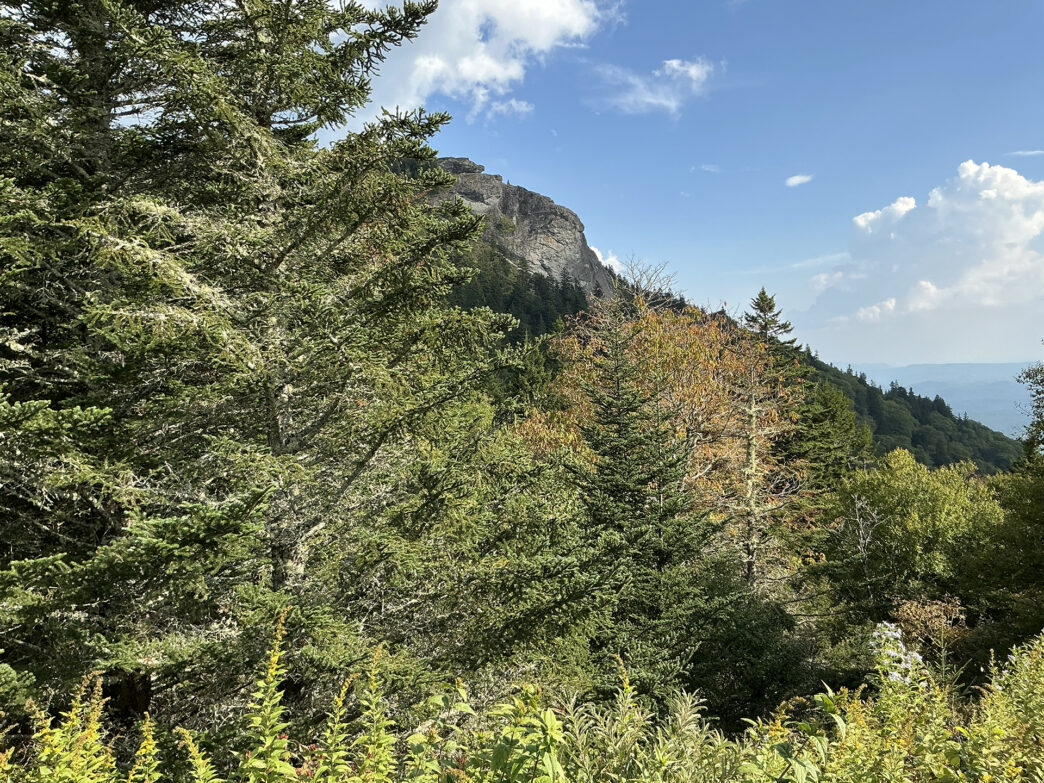
For now, the Blue Ridge Mountains remain more emerald than amber. But beneath the green canopy, trees are quietly preparing for a dramatic seasonal transformation that Clemson University forest ecologist Donald Hagan says could produce one of the region’s most vibrant fall color displays in years.
Warmer temperatures influenced in part by El Niño have slowed leaf color development across much of the Southeast, delaying the annual leaf color transition that typically begins in early fall. This could create unusually vibrant mountain scenery, with ridges and valleys simultaneously displaying shades of red, orange and yellow.
Some of the season’s most dramatic views may develop during mid-October at higher elevations before gradually spreading into lower elevations throughout the fall.
But temperature is just part of the story.
An unusually quiet hurricane season has allowed trees to retain more of their foliage.
“Strong storms often strip leaves from branches before peak color develops,” Hagan said. “This year, many forests remain fully leafed, creating conditions for a more complete display if the weather remains favorable.”
Why leaves change colors
Color change typically begins at the highest elevations before progressing into the foothills and lower mountain valleys. Peak color generally arrives first in October at the highest elevations and later in November at lower elevations.
Areas along the Blue Ridge Parkway, Caesars Head and the Jocassee Gorges could be among the first places where visitors could see peak color.
While fall foliage draws tourists to scenic overlooks each year, seasonal color change also provides valuable information for scientists.
“Tracking leaf color helps us better understand how forests respond to changing environmental conditions,” Hagan said.
Leaves appear green because of chlorophyll, the pigment plants use during photosynthesis. As daylight hours shorten and temperatures cool, trees stop producing chlorophyll. Once the green pigment breaks down, other pigments already present in the leaves become visible. Carotenoids produce yellow and orange colors, while anthocyanins contribute shades of red and purple.
Weather conditions can influence both the timing and intensity of that process. Warmer temperatures can delay the breakdown of chlorophyll, while cooler fall conditions often accelerate color development.
For Hagan, the seasonal transformation provides a window into forest health, climate patterns and ecological change. This year, he expects those conditions to align, producing a particularly memorable display for visitors willing to wait a little longer for autumn’s arrival.