
As invasive insects travel toward South Carolina, Clemson University scientist Zee Ahmed is leading research to help the state detect and manage two emerging threats before they become more widespread.
Ahmed, an assistant professor of entomology at the Pee Dee Research and Education Center near Florence, South Carolina, has received $338,928 from the U.S. Department of Agriculture Animal and Plant Health Inspection Service to lead two research projects focused on the spotted lanternfly and the two-spot cotton leafhopper.
Together, the projects aim to strengthen early detection, improve monitoring and provide growers, nursery operators and homeowners with practical strategies to protect landscapes and ornamental plants.
“South Carolina is facing invasive species from every direction and they are arriving faster than we can study them,” Ahmed said. “These projects will help us give growers and homeowners the information they need to protect their investments.”
The two insects are arriving from different directions. They both threaten nurseries, landscapes and ornamental plants that contribute to the state’s economy and quality of life.
Spotted lanternfly
The spotted lanternfly first emerged in South Carolina in July 2025 and continues to spread southward from the Mid-Atlantic, making early detection critical.
Through a partnership with NC State University, Ahmed will work with Clemson lab specialist James Forest Palmer and NC State Extension assistant Abby Ratcliff to evaluate low-cost lampshade traps along high-risk corridors across the Carolinas.
Wrapped around tree trunks, the traps create sheltered spaces where females prefer to lay eggs, making egg masses easier to find, remove and collect for research. The team will also monitor egg-laying activity to strengthen surveillance and help state agencies respond more quickly as populations expand.
“Because the spotted lanternfly does not recognize state boundaries, the collaboration with North Carolina strengthens regional monitoring efforts and helps both states prepare for future spread,” Ahmed said.
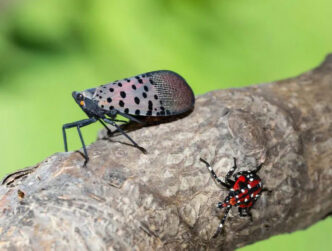
Nymphs are black with white spots before turning bright red as they mature. Adults are about 1 inch long and ½ inch wide, with grayish-brown forewings covered in black spots and scarlet hindwings marked with black and white bars.
Anyone who spots a spotted lanternfly in South Carolina is encouraged to report it to Clemson Regulatory Services.
Two-spot cotton leafhopper
A second USDA-APHIS award supports the first statewide research effort on the two-spot cotton leafhopper. This insect was first confirmed in South Carolina in September 2025.
Working with Clemson scientists Tom Bilbo, Jeremy Greene and Francis Reay-Jones, Ahmed will survey nurseries, landscapes and ornamental settings statewide to determine the insect’s distribution, preferred host plants and overwintering habits while evaluating insecticides for effective management.
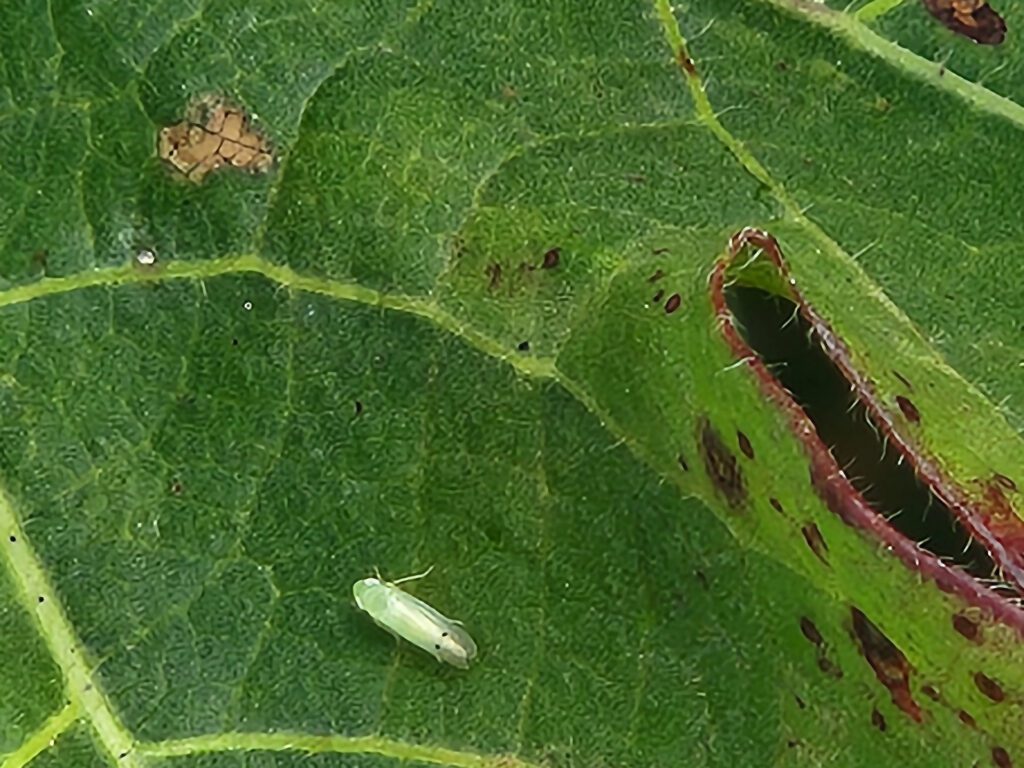
The two-spot cotton leafhopper is a small, slender, pale green insect with transparent wings and a distinctive black spot near the tip of each forewing.
To report leafhopper detections or seek guidance, producers should contact the local Clemson Extension office or the entomology team at the Edisto Research and Education Center.
“This research will provide critical information for growers, nursery operators and regulatory agencies working to limit the pest’s impact before it becomes more widespread,” Ahmed said.
The nursery, landscape and horticulture industry is important to the state’s economy. The latest information from the South Carolina Department of Agriculture shows this sector contributed more than $1.5 billion to the state’s $51.8 billion agribusiness industry in 2022.
This research is funded by USDA award numbers AP26PPQS&T00C128 and AP26PPQS&T00C186.