Alzheimer’s disease affects millions of people worldwide, yet many questions remain about what causes it, how it progresses and how it can be detected before symptoms appear.
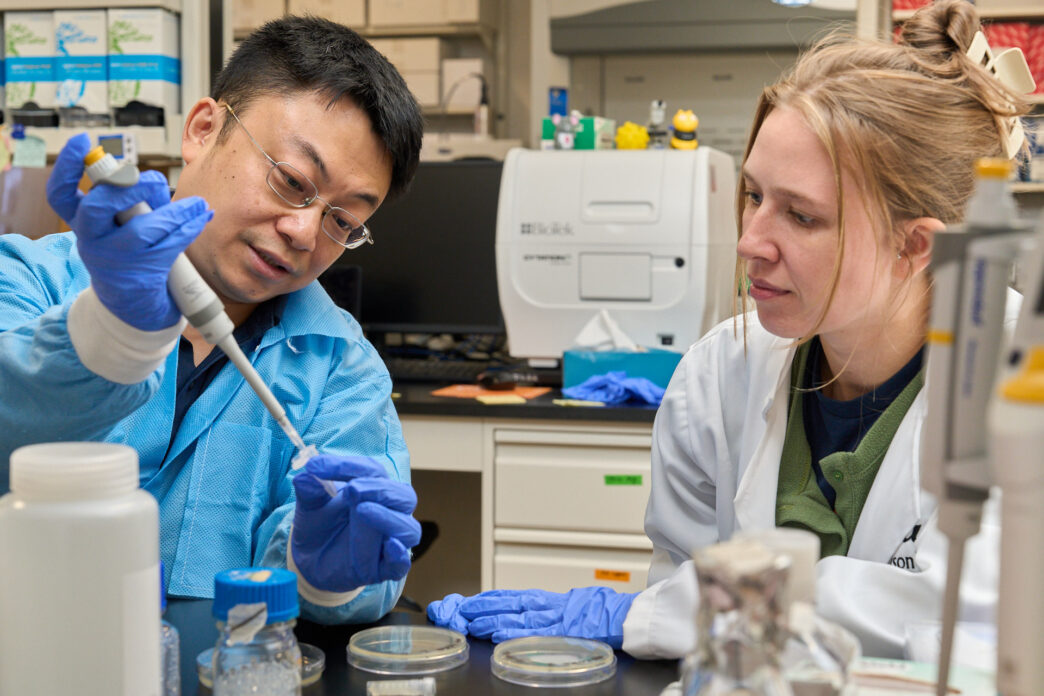
In recognition of Alzheimer’s Awareness Month, we are highlighting how three researchers in the Clemson University College of Science are approaching these questions from different perspectives, each working toward a better understanding of the disease and opportunities for earlier intervention.
Their research highlights the many ways scientists are working to unravel one of the most complex challenges in human health.
Exploring a connection
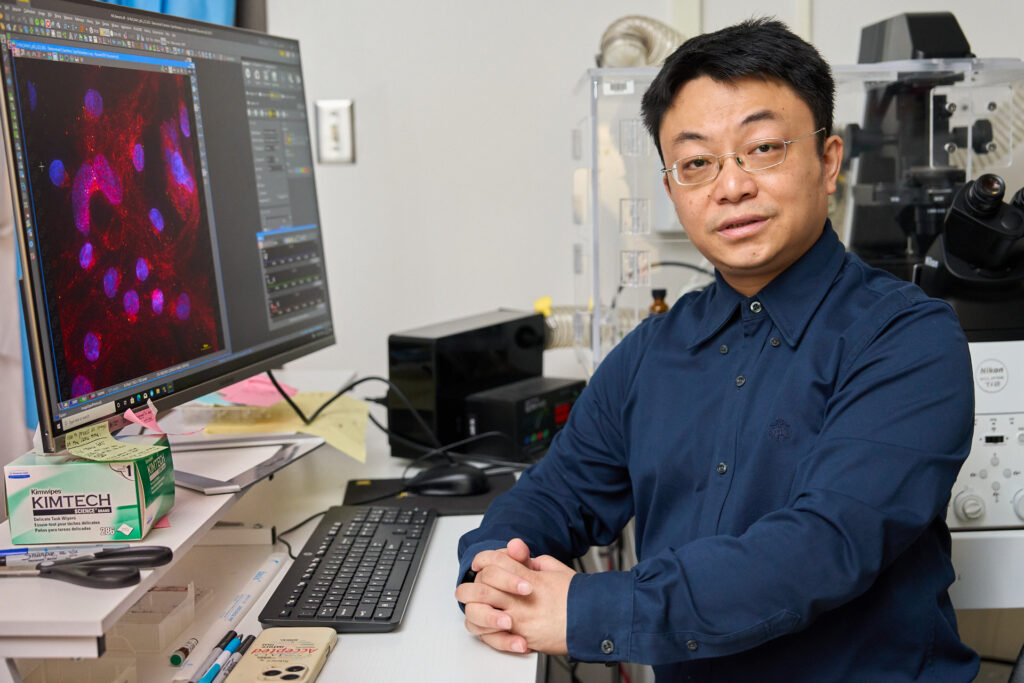
When most people think of Alzheimer’s disease, they think of the brain. But Clemson University researcher Qing Liu is looking somewhere else for answers: the heart.
Liu, an assistant professor in the Department of Biological Sciences, is investigating how genetic risk factors for Alzheimer’s disease may also affect cardiovascular health, potentially revealing warning signs years before symptoms appear.
His research focuses on APOE4 (apolipoprotein E), a genetic variant strongly associated with Alzheimer’s disease. Liu is studying whether this variant influences how lipids, or fatty substances, affect cells throughout the body, including those in the heart.
“The brain-heart axis is very important for many diseases,” Liu said.

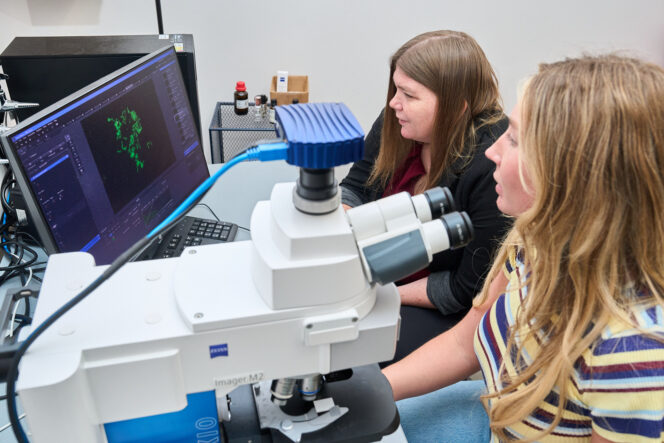
With support from a Clemson Institute for Engaged Aging SPARK grant, Liu uses human stem cells to develop two- and three-dimensional models of heart and brain tissue. These models allow researchers to investigate how genetic mutations affect cellular function, particularly in mitochondria, the structures responsible for producing much of a cell’s energy.
When mitochondria become damaged, their dysfunction can contribute to cardiovascular problems. Liu hopes to determine whether these changes could provide clues about Alzheimer’s risk before cognitive symptoms develop.
“Alzheimer’s disease is always long-term,” Liu said. “If you can identify early signs, biomarkers in the blood or heart indications in the early stage, we can prevent this early.”
Although his research is still in its early stages, Liu envisions a future where researchers could identify potential warning signs in midlife, potentially decades before cognitive symptoms emerge, creating opportunities for earlier intervention and prevention.
Liu, who conducted postdoctoral research in genomics and stem cell biology at Stanford University School of Medicine, studies how genetic mutations and exposure to specific medications influence cardiovascular function.
Using CRISPR gene-editing technology, his team has investigated ways to make heart cells more resilient to stress, including damage associated with cancer treatments. He hopes to apply similar approaches to Alzheimer’s research.
Next, Liu plans to examine how potentially harmful lipids affect additional cell types, including those lining blood vessels and those in the liver.

Uncovering molecular mysteries
For Feng Ding, understanding Alzheimer’s disease begins with examining some of the smallest structures in the human brain.
Ding, a Dr. Wallace R. Roy Distinguished Professor of Physics and Astronomy at Clemson University, uses supercomputer simulations to investigate how proteins clump together, potentially contributing to the development and progression of Alzheimer’s disease.
Two hallmarks found in the brains of those with the disease are amyloid-beta plaques, which accumulate outside nerve cells, and tau tangles, which form inside them. Ding’s research focuses on understanding how these proteins begin sticking together and forming harmful clusters.
Although larger plaques are commonly associated with Alzheimer’s, Ding explained that smaller protein clusters, called oligomers, may be particularly damaging because they can move through surrounding tissue and interact with cells, disrupting normal cellular functions and causing cell death.
His laboratory uses principles of physics and advanced computer simulations to study these interactions at the molecular level, revealing processes that are difficult to observe directly in experiments.

In research published in the journal Nature Communications, Ding and his collaborators investigated how small amyloid-beta aggregates can disrupt the blood-brain barrier, a protective layer of specialized cells lining blood vessels that regulates what enters the brain from the bloodstream.
Combining molecular simulations with laboratory and mouse experiments, the researchers found that these small amyloid-beta aggregates can disrupt VE-cadherin, a protein that helps hold neighboring blood vessel cells together, thereby weakening cell-to-cell connections and increasing vascular permeability. Understanding this process could help researchers develop therapies that target these harmful protein clusters and protect the brain from further damage.
Ding is also contributing to the South Carolina Alzheimer’s Disease Research Center, where his work focuses on developing molecular recognition tools for highly sensitive, portable diagnostic devices. These devices are being developed to eventually detect Alzheimer’s-related biomarkers in samples, such as blood and cerebrospinal fluid.
“The key is to identify the patient early,” Ding said, emphasizing the importance of timely diagnosis, particularly because certain newer disease-modifying treatments are intended for patients in the early symptomatic stages.
Despite the challenges of studying constantly changing protein structures, Ding remains optimistic about the future of Alzheimer’s research.
“We are making a lot of progress,” he said.
Disease progression
For Xinyi Li, Alzheimer’s disease research is more than numbers and statistical models. It’s personal.
While pursuing her Ph.D. at Iowa State University, Li watched her grandfather gradually lose his memory to Alzheimer’s disease. Toward the end of his life, he struggled to recognize her, an experience that strengthened her motivation to better understand the disease.
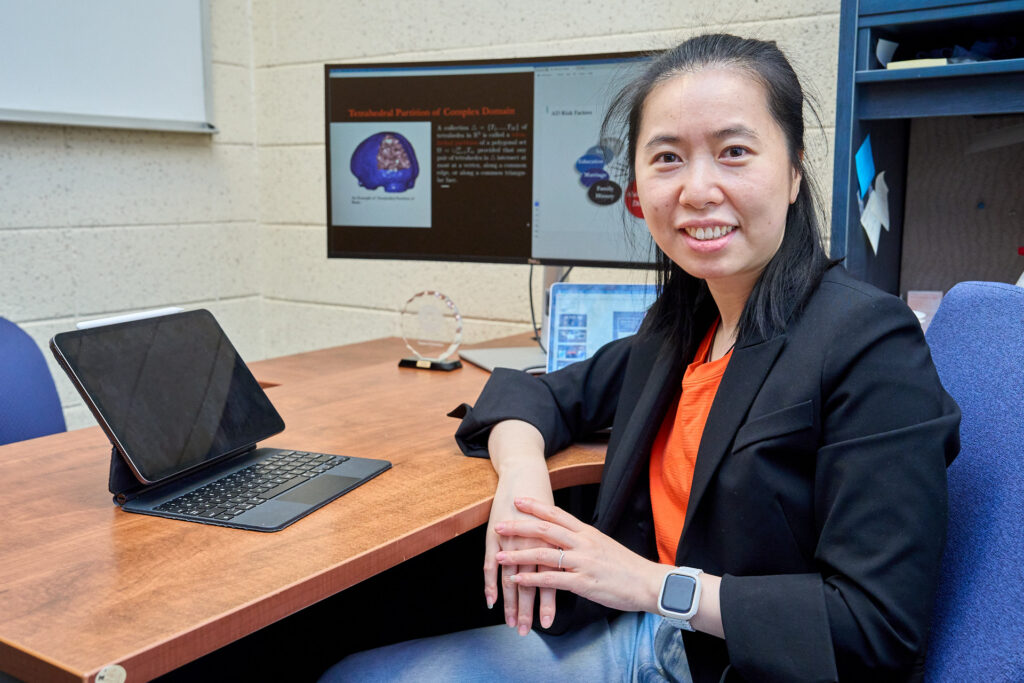
Today, Li, an associate professor in the Clemson University School of Mathematical and Statistical Sciences, uses statistics and machine learning to study Alzheimer’s disease progression and develop methods that could help inform more personalized treatment decisions.
Her research centers on precision medicine, which seeks to incorporate a patient’s genetic, environmental and demographic characteristics to inform treatment decisions.

Certain genetic variations can significantly increase Alzheimer’s risk. Li pointed to the APOE gene, noting that people who carry two copies of the APOE ε4 allele can have a substantially higher risk of developing Alzheimer’s disease than people who do not carry the allele. Other factors, including age, family history and education, are also associated with Alzheimer’s risk and cognitive outcomes.
Li said one particularly interesting finding is the relationship between education and cognitive decline. Higher levels of education and cognitively demanding occupations have been associated with greater cognitive reserve, which may help some individuals maintain cognitive functioning longer despite disease-related brain changes.
The concept of cognitive reserve refers to the brain’s ability to maintain cognitive functioning despite age- or disease-related changes. Li explained that even two individuals with similar genetic backgrounds and family histories may experience different rates of cognitive decline, with education and cognitively stimulating activities among the factors associated with those differences.
But identifying individual risk factors is only part of the challenge.
“We know all these risk factors are related to disease progression. If we want to incorporate them, what’s a good way to marry them? How can we quantify how they’re related?” Li said.
To answer these questions, Li develops new statistical and machine learning methods that integrate complex, high-dimensional data from multiple sources, including genetic information and brain imaging data, such as MRI and PET scans. Using large-scale datasets such as the Alzheimer’s Disease Neuroimaging Initiative and UK Biobank, she studieshow genetic, imaging and demographic factors interact and which patterns may help characterize or predict disease progression.
Li said the goal of her precision medicine research is to develop methods that can inform better decisions and support recommendations tailored to individual patient characteristics.
Challenges remain, including missing information in large datasets and limited racial and ethnic diversity in many existing study populations. Li hopes to eventually extend these methods to more diverse populations, including communities in South Carolina.