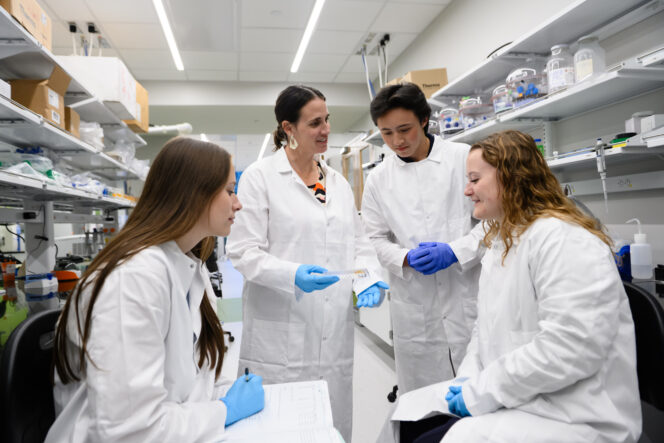
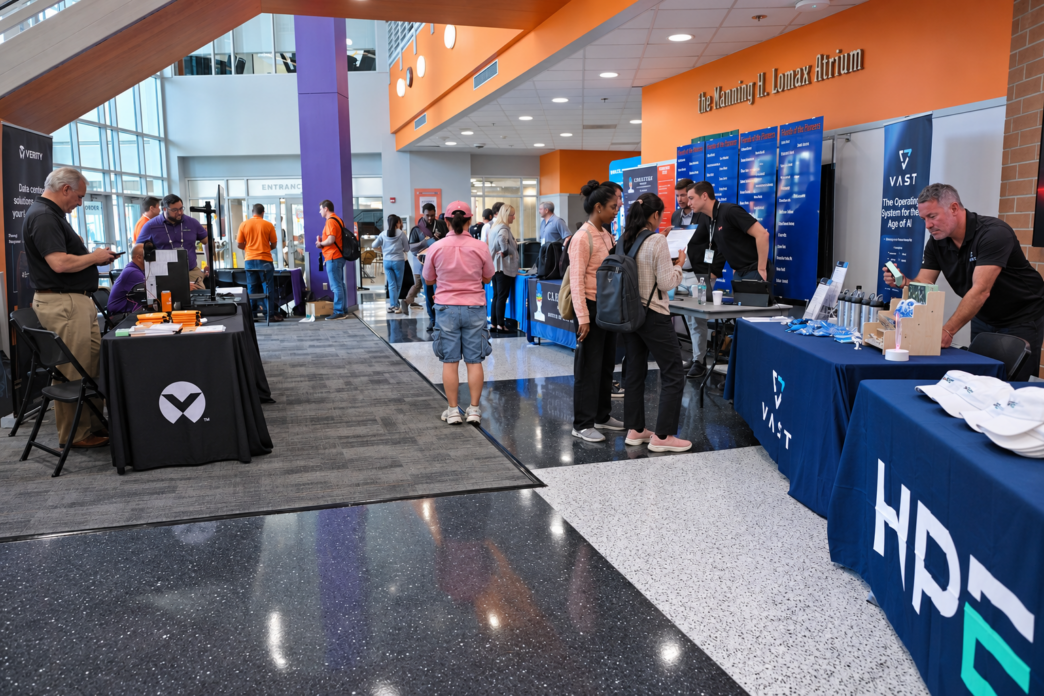
Clemson University’s second annual High Performance Computing (HPC) Day brought more than 260 researchers, students, staff and industry partners together in September to explore how advanced computing is shaping research and education.
Hosted by CCIT’s Research Computing and Data team in partnership with the Research and Data Computational Advisory Team (ReDCAT), the daylong event featured research presentations, faculty lightning talks, panel discussions, workshops and student poster sessions. Keynote speakers included Barr von Oehsen, director of the Pittsburgh Supercomputing Center; Olga Kuksenok, professor of materials science and engineering at Clemson; and D. Hudson Smith, assistant professor at Clemson’s School of Mathematical and Statistical Sciences.
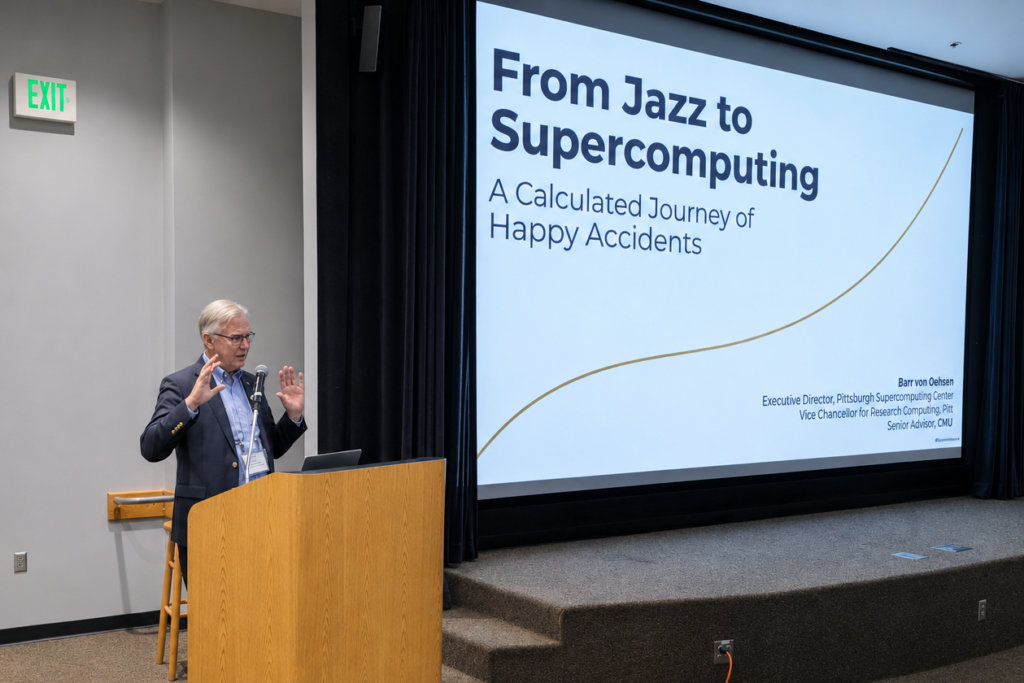
“Clemson HPC Day is really about bringing our research community together around what is now possible with advanced computing,” said Jill Gemmill, associate vice president for CCIT Research Computing and Data. “High-performance computing has become essential to discovery across an increasingly wide range of disciplines, from artificial intelligence and quantum computing to materials science, health, engineering and the humanities. HPC Day gives our faculty, students and research computing professionals an opportunity to learn from one another, share the work they are doing and build new collaborations.”
Sessions explored quantum research at Clemson, bio-soft materials, industry perspectives and data center metrics. Panels covered careers in HPC, quantum computing, integrating HPC into teaching and the use of AI in research. Workshops introduced attendees to CCIT Research Computing and Data’s large language model service and to quantum computing and programming.
“Clemson’s second annual HPC Day highlighted the diverse ways in which HPC is driving research and education at Clemson,” said Jon Calhoun, associate professor of electrical and computer engineering. “With the goal of forming collaborations, this year we put extra emphasis on showcasing individual HPC focus areas through panels and talks. Given the quality of the talks, posters and discussion, Clemson is well positioned to continue its excellence in HPC and to solve challenging interdisciplinary research problems.”
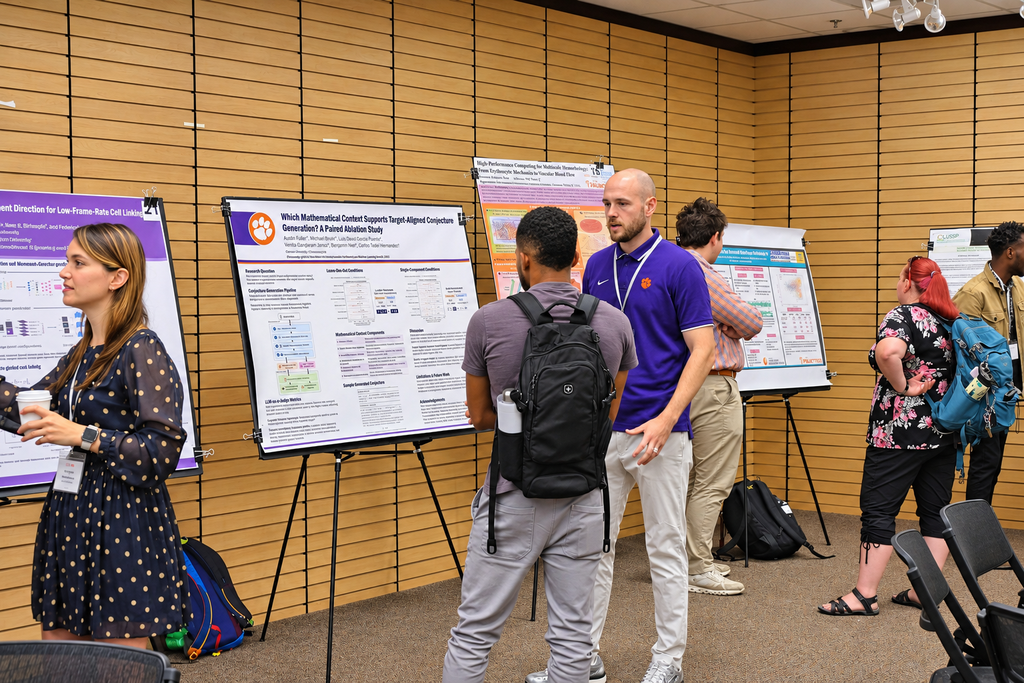
The student poster sessions offered a vivid look at the breadth of research supported by HPC at Clemson. Forty posters covered topics including artificial intelligence, biomedical science, computational chemistry, engineering, materials science, physics, forensic anthropology and the humanities. Students are using advanced computing to study rare diseases and cancer, model blood flow, examine materials at the molecular level, improve disaster resilience, explore autonomous spacecraft and even investigate what happens when AI meets Shakespeare.
“This year’s program especially demonstrates that HPC is about much more than computing infrastructure,” Gemmill said. “It is about people, expertise and access. Our role in Research Computing and Data is to make these powerful capabilities accessible to Clemson researchers and students and to provide the technical expertise, training and support that help them turn computational resources into research outcomes. Seeing the breadth of research represented at HPC Day is a great illustration of the impact that community is having across Clemson.”
The event also gave attendees opportunities to connect across disciplines and learn more about Clemson’s research computing resources, including the Palmetto 2 supercomputer and Indigo Data Lake. Together, these resources support research workflows across the University.
To learn more about how CCIT Research Computing and Data supports Clemson University’s research ascension by accelerating discovery, innovation and impact, visit the CCIT website.