The Clemson University Department of Sociology, Anthropology and Criminal Justice is celebrating the 50th anniversary of its inception as the Department of Sociology over the course of the 2025-2026 academic year.
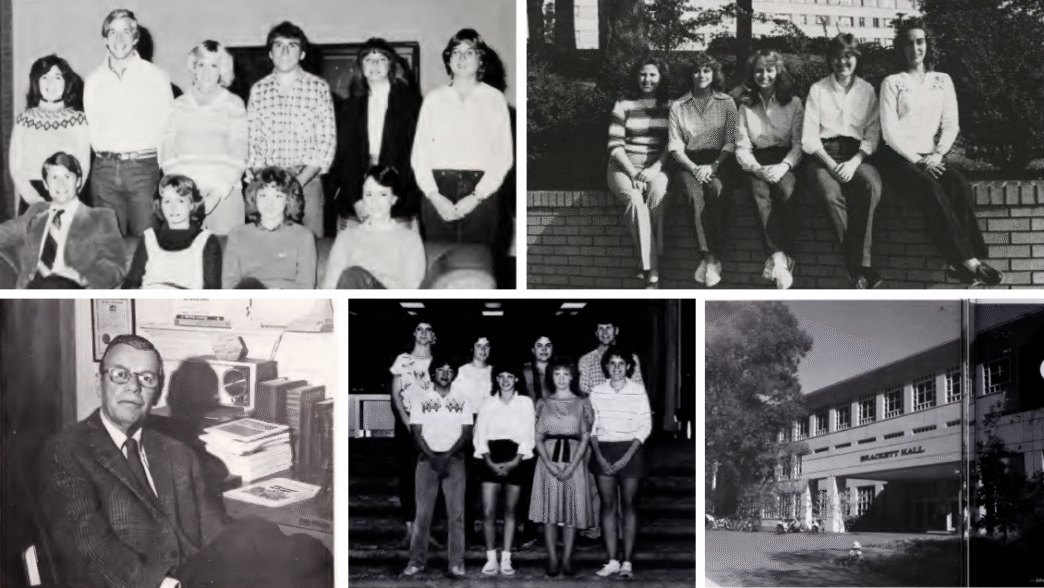
From as early as 1908, sociology courses have been part of the curriculum at Clemson University. In 1975, the department was formed, consisting of eight full-time and visiting faculty members and offering unique courses to explore and understand the social and structural causes and consequences of human behavior.
Since then, the Department has grown to include two additional disciplines, criminal justice and anthropology, with 637 undergraduate students and 38 full-time faculty and staff – three of which were included in Stanford University and Elsevier’s list of the top 2% most-cited scientists worldwide. In the last three years alone, it has received $10.8 million in external research awards and faculty members have published 181 peer-reviewed articles and eight books.
The Department offers two degree paths in sociology – a Bachelor of Arts (B.A.) and Bachelor of Science (B.S.), as well as a sociology minor – in addition to B.A., B.S. and minor pathways in anthropology and criminal justice.
According to Katy Weisensee, professor and department chair, sociology is an essential field of study because it examines human behavior and seeks to understand how individual lives are influenced by – and contribute to – larger societal structures such as communities, institutions and governments. As a STEM field, sociology is rooted in rigorous research methods and data analysis, and it deepens the understanding of how human experiences contribute to the world at large.
“Sociology blends STEM-based quantitative and analytical skills with important soft skills such as critical thinking, communication and cultural awareness — competencies that are difficult to automate,” said Weisensee. “Over the last 50 years, Clemson students have gained the tools necessary to interpret complex societal challenges, understand human behavior and inform policy and practice to strengthen communities across the state, nation and world.”
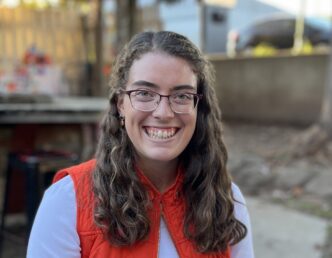
Catherine Mobley – a 1984 graduate of the Department of Sociology and emeritus professor who taught in the Department for 28 years – has witnessed the Department’s growth and transformation since her days as an undergraduate student. Now a research professor of sociology, she continues to explore questions of professional identity development and career pathways in the social sciences through research funded by the National Science Foundation (NSF).
“Sociology has the power to broaden our worldview and deepen our understanding of human behavior. I learned that as a student in the Department and carried it into my faculty career, helping to prepare the next generation of researchers and practitioners,” said Mobley. “I am excited about the Department’s next 50 years and its commitment to equipping students in all three of our majors with the skills and perspectives necessary to understand the human experience and contribute meaningfully to their communities.”
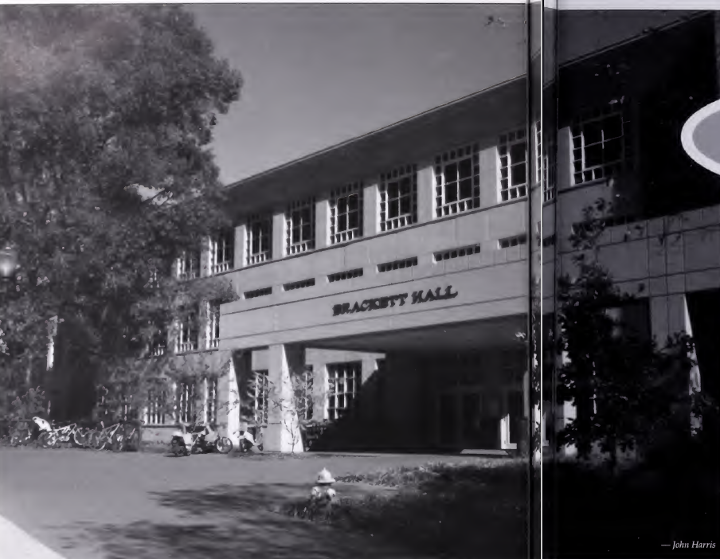
As part of the 50th anniversary celebration, Mobley will deliver a guest lecture for the Department’s Insights and Conversations Series on Friday, February 6, 2026, at 2:30 p.m. in 120 Brackett Hall.
During the lecture, “From Engineering to the Social Sciences: Exploring Professional and Science Identity Across Disciplines,” Mobley will explore what it means to be a professional and a scientist in the social sciences and how students and practitioners in these disciplines conceptualize their identities, not just to succeed in their fields, but to make meaningful contributions to society.
Department of Sociology, Anthropology and Criminal Justice – A Timeline
- 1908–1960s – Sociology courses were part of the curriculum during Clemson’s time as an agricultural and military college.
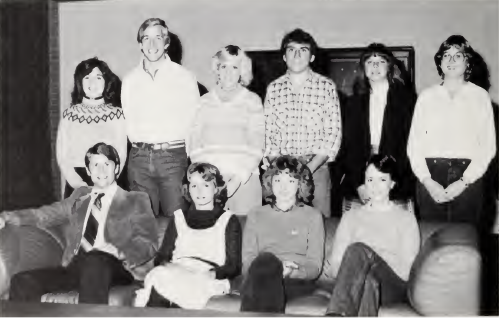
- 1975 – Inception of the Department of Sociology. Eight full-time faculty in the Department.
- 1991 – Addition of graduate program, Master of Science in Applied Sociology (now M.S. in Social Science).
- 2012 – Addition of anthropology discipline. Expansion to the Department of Sociology and Anthropology.
- 2012–2015 – Ellen Granberg, former associate provost at Clemson University and current president at George Washington University, served as department chair.
- 2017 – Addition of criminal justice discipline. Expansion to the Department of Sociology, Anthropology and Criminal Justice.
- 2017 – Katy Weisensee named department chair. 20 full-time faculty and staff in the Department.
- 2026 – 38 full-time faculty and staff in the Department.


The Department of Sociology, Anthropology and Criminal Justice is part of the University’s College of Behavioral, Social and Health Sciences (CBSHS). Established in July 2016, CBSHS is a 21st-century, land-grant college that combines work in seven disciplines – communication; nursing; parks, recreation and tourism management; political science; psychology; public health sciences; sociology, anthropology and criminal justice – to further its mission of “building people and communities” in South Carolina and beyond.