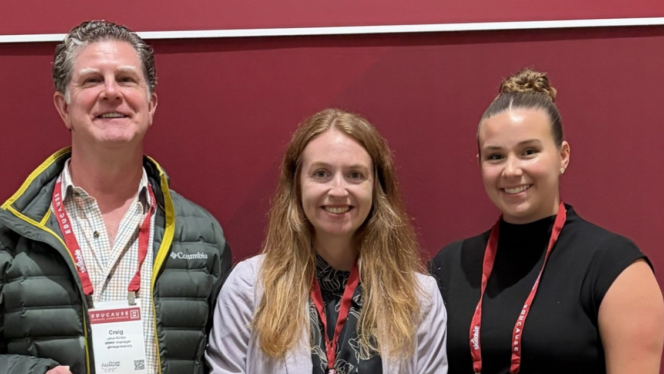

Holly Williams, a lecturer in the Department of Sociology, Anthropology and Criminal Justice, has completed a Fulbright Specialist Program where she taught an exchange course at Tampere University in Finland.

In partnership with the U.S. Department of State, Bureau of Educational and Cultural Affairs (ECA), the Fulbright Specialist Program pairs highly qualified faculty members with international host institutions for project-based collaborations and exchange programs.
The course, Crime and Justice, explored criminological theory in real-world scenarios and compared the rehabilitative prison systems of Europe to the punitive prison systems of the United States. Students completed a two-week intensive on criminology and examined case studies from prison events in the United States to determine ethical decision-making practices.
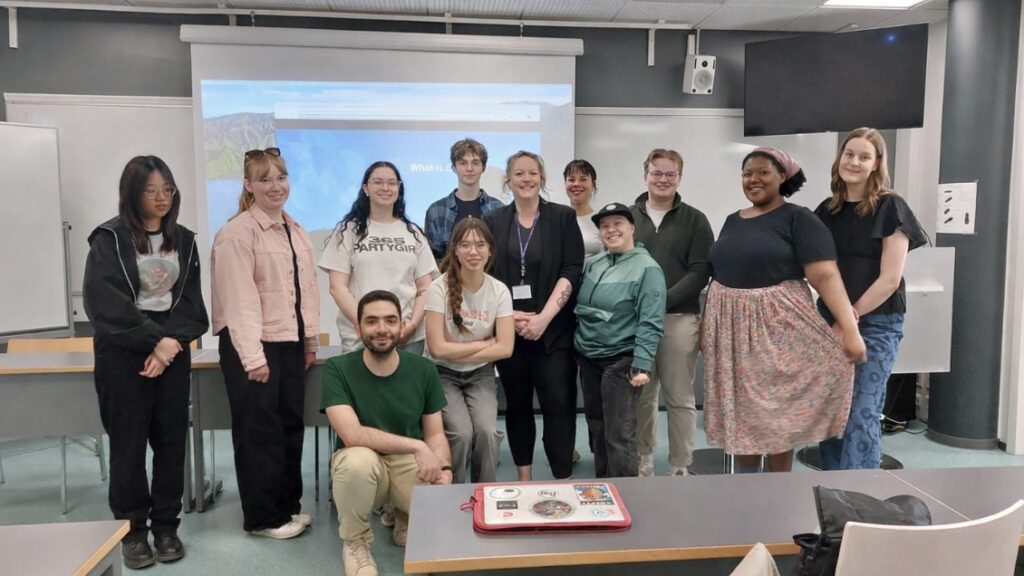
During her time in Finland, Williams traveled to a conference with Tampere’s first cohort of criminology doctoral graduates and visited Prison Island, a prison-themed adventure attraction, off the coast of Helsinki for simulated prison experiences and experiential learning opportunities.
“The Fulbright Specialist Program was an incredibly rewarding experience. Teaching in an exchange environment offers unique insight into international collaboration and cross-cultural learning. Through the experience, I developed global teaching strategies that I have implemented in my classes at Clemson, enriching student learning through a more global-minded perspective,” said Williams.
As the College of Behavioral, Social and Health Sciences (CBSHS) continues to prioritize global engagement opportunities for its students, the Department of Sociology, Anthropology and Criminal Justice offers two virtual, international exchange courses taught by Williams.
Comparative Criminal Justice Policy, offered in the fall in partnership with the University of Lincoln in England, is a collaborative course where students from the United States and United Kingdom evaluate criminal justice policies and conduct in-depth analyses of how policies might function across national contexts.
Comparative Criminal Justice, offered in the spring in partnership with Tampere University, explores gang crime and other criminal behaviors through theoretical frameworks. Students examine criminal activity, apply theory to explain the behaviors and compare how such behaviors are policed in the United States and Finland.
The Department of Sociology, Anthropology and Criminal Justice is part of the University’s College of Behavioral, Social and Health Sciences (CBSHS). Established in July 2016, CBSHS is a 21st-century, land-grant college that combines work in seven disciplines – communication; nursing; parks, recreation and tourism management; political science; psychology; public health sciences; sociology, anthropology and criminal justice – to further its mission of “building people and communities” in South Carolina and beyond.