Mass spectrometry is a powerful analytical tool that provides detailed molecular information with high sensitivity and specificity. It is essential to modern forensics, pharmaceutical analysis, space exploration and more.
A new exhibit highlighting the development of mass spectrometry commissioned by the American Society for Mass Spectrometry will be on display at Clemson University until next summer.
The exhibit features replica instrumentation that helped scientists discover the building blocks, atoms and elements that make up the world around us.
The exhibit is currently on display outside of Hunter Auditorium. Anyone with building access can view the exhibit during normal business hours.

The Clemson University Department of Chemistry has two mass spectrometrists on its faculty — Robert Adger Bowen Professor of Chemistry Ken Marcus and Assistant Professor Christopher Chouinard. In their research, they use mass spectrometry in a wide range of applications from environmental analysis to drug development and detection.
“Clemson is well-positioned nationally in mass spectrometry,” Chouinard said.
The exhibit opens with J.J. Thomson’s discharge tube, the instrument that led to the discovery of the electron. Next is Francis Aston’s first mass spectrograph, followed by James Chadwick’s neutron chamber, which made the discovery of the neutron possible. Together, these breakthroughs laid the foundation for modern mass spectrometry, which over the past century has allowed scientists to understand the structure of atoms and the variety of molecules they form.
Drug forensics
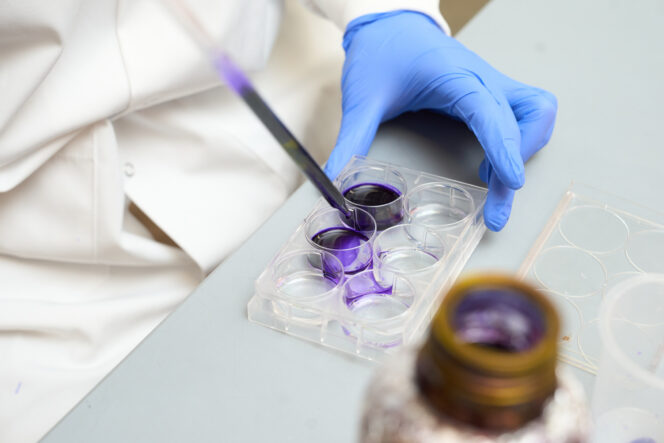
Chouinard’s lab works on drug forensics, such as illicit recreational drugs like fentanyl analogs and synthetic cannabinoids. The lab also investigates performance-enhancing drugs through a fund from the Partnership for Clean Competition, which is a United States anti-doping agency focused on research. The lab is researching new mass spectrometry methods to detect performance-enhancing drugs like anabolic steroids.
The lab has recently begun research with the Clemson University Eukaryotic Pathogens Innovation Center (EPIC), a collaboration that focuses on the development of mass spectrometry to better understand how pathogenic infections progress. Chouinard’s work alongside James Morris, professor in the Department of Biochemistry and Genetics, could lead to the development of a therapeutic for brain-eating amoeba infections.
Smaller scale
While Chouinard’s lab studies drugs or large biomolecules, Marcus’ lab focuses on individual atoms of the elements that make up a material and the subtle differences in their isotopes. Isotopes are atoms of an element that have the same number of protons but different numbers of neutrons.

The ratio of the isotopes serves as an elemental “fingerprint,” allowing Marcus’ team to identify where a material came from and how it was processed. That capability is especially valuable in the field of nuclear nonproliferation, where Marcus’ work is funded through the Department of Energy’s National Nuclear Security Agency through the Oak Ridge National Laboratory and the Consortium for Nuclear Forensics.
By reading isotopic patterns in uranium, plutonium and related elements, his team can help investigators determine whether nuclear material came from a legitimate facility or a “bad actor,” and whether a nation is living up to its promises related to the development of nuclear weapons. The method works for samples taken on-site by inspectors or even river water downstream from a suspected processing plant.
Highest resolution
“We have the capability of doing the highest resolution measurements of isotopes in the world with our instrument, which is one-of-a-kind,” Marcus said.
The lab started with a high-end commercial mass spectrometer originally built to determine the molecular weights of big biological molecules such as proteins and developed a way to break samples — solids, liquids or gases — down into individual atomic ions the instrument could determine. That custom ion source, which the group now licenses to laboratories in the United States, Canada and Europe, lets them distinguish ionic species that look identical on conventional machines.
Beyond national security, the same mass spectrometry techniques can be applied to food authentication, environmental studies and geological research. For instance, the technology can determine whether a bottle of wine truly came from France’s Bordeaux region or uses grapes grown halfway around the world by analyzing lead isotopes.
Marcus said that while he and Chouinard work at almost opposite ends of the chemical spectrum, they both train graduate students in the basic technology of mass spectrometry, a field that is in very high demand.