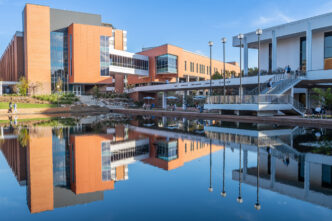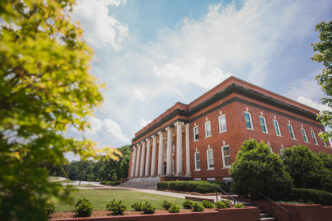

Clemson University’s Board of Trustees met on main campus Thursday for its summer quarterly meetings. The Trustees approved Tuition and Fees for the 2026-27 academic year, the FY27 University budget and honored former president Jim Clements.
FY27 University Budget
Clemson University’s FY27 budget reflects continued financial strength and a commitment to responsible stewardship as the higher education landscape evolves. The budget aligns projected revenue and expense growth while supporting strategic priorities across the University. Estimated revenues are expected to increase by approximately $82 million, driven by growth in part by increases in grants and contracts, support from state appropriations and auxiliary operations. Expenses are projected to increase by approximately $81 million, including investments in employee compensation, sponsored research activity, information technology and other operational needs.
The FY27 budget also reflects Clemson’s ongoing efforts to align resources with institutional priorities and position the University for long-term success. University leaders will continue monitoring budget performance throughout the fiscal year while advancing broader efforts to improve efficiency, support strategic investments and strengthen Clemson’s future.
In-State Tuition Freeze Continues for Seventh Consecutive Year
Clemson University will maintain its commitment to affordability by freezing undergraduate tuition and mandatory academic fees for South Carolina residents for a seventh consecutive year. Continued support from the State of South Carolina, including tuition mitigation funding, has helped offset inflationary pressures and allowed the University to avoid increasing costs for in-state students.
Clemson continues to provide strong value for students and families, with more than half of students graduating debt-free and retention and graduation rates significantly exceeding national averages. The tuition freeze reinforces the University’s focus on access, affordability and student success.
Educational Policy Committee
Provost Cole Smith provided the Board with updates on possible adjustments to the academic calendar, expanded programming for undergraduate online learning, the University’s artificial intelligence initiative and commencement processes.
The committee reviewed a revised academic calendar that could create a January intersession, improve the transition between Fall and Spring terms, move Summer II to begin in July and preserve current course scheduling blocks. The change, planned for no earlier than July 2027, is positioned as a way to expand experiential learning, reduce operational strain and create more flexible student opportunities.
The University is advancing a broad AI strategic plan built around five goals: preparing students for the workforce, strengthening Clemson’s research profile, expanding external partnerships, improving AI literacy and modernizing University operations. Early wins include the establishment of a Universitywide AI Council, AI-enabled research workflows and more efficient processes.
The Board also received an update on Clemson’s undergraduate online initiative moving toward a planned Fall 2027 launch. The financial model has been finalized, operational planning is underway, and the University is developing marketing, enrollment, quality, and student success strategies. Next steps include employer engagement, certificate opportunities for corporate partners, online course development and improved infrastructure for online applicants.
The University will also update its commencement participation policy. Under the change, students approved as graduation candidates could participate in commencement before final degree clearance is completed. Degrees would still be awarded only after students are cleared. The revised process aligns Clemson with peer institutions, more efficiently uses staff resources and creates a more positive commencement experience for students.
Clements Honored
The Board of Trustees recognized former president Jim Clements and named him President Emeritus. The Board also adopted a resolution honoring him for his transformative leadership and lasting impact on Clemson University. During his presidency, Clemson reached new heights in academic excellence, student success, research, fundraising and national prominence. First-year student applications more than tripled to nearly 65,000, the University achieved record in-state enrollment, and retention and graduation rates reached the highest levels in Clemson history.
Trustees also highlighted Clemson’s growth as a top-tier research institution, with research expenditures more than doubling to a record $338 million and annual research proposals surpassing $1 billion. During Clements’ tenure, Clemson awarded more than 80,000 degrees, achieved numerous academic firsts, secured more than $2.1 billion in private support, and significantly expanded the University’s endowment. The Board noted these accomplishments, along with sustained athletic success and enhanced national recognition, strengthened Clemson’s reputation and positioned the University for continued success.
Interim President Jones’ Term Extended
Clemson Interim President Robert H. (Bob) Jones agreed to, and the Board approved, an extension of his appointment as interim president during the transition to the tenure of President-Elect Kevin Guskiewicz. President-Elect Guskiewicz was in attendance for Thursday’s Board of Trustees meetings and will participate in the Board’s retreat on Friday and Saturday.
Updated July 6, 2026: The Board of Trustees was notified that Kevin Guskiewicz has chosen to remain at Michigan State University for personal reasons. The national search had a robust pool of candidates, and the Board will be meeting soon to determine next steps. More information will be shared as it becomes available.
Facilities Updates
The Board of Trustees also approved several facilities and capital planning initiatives designed to support Clemson’s long-term growth and infrastructure needs. Among the projects was the proposed replacement of Martin Hall, a major capital project that would modernize facilities supporting the University’s academic mission. Phase 1 of the project was approved, with construction anticipated to begin in 2027 and completion projected for 2030.