South Carolina okra growers face an unexpected challenge this season: a significant infestation of the two-spot leafhopper.
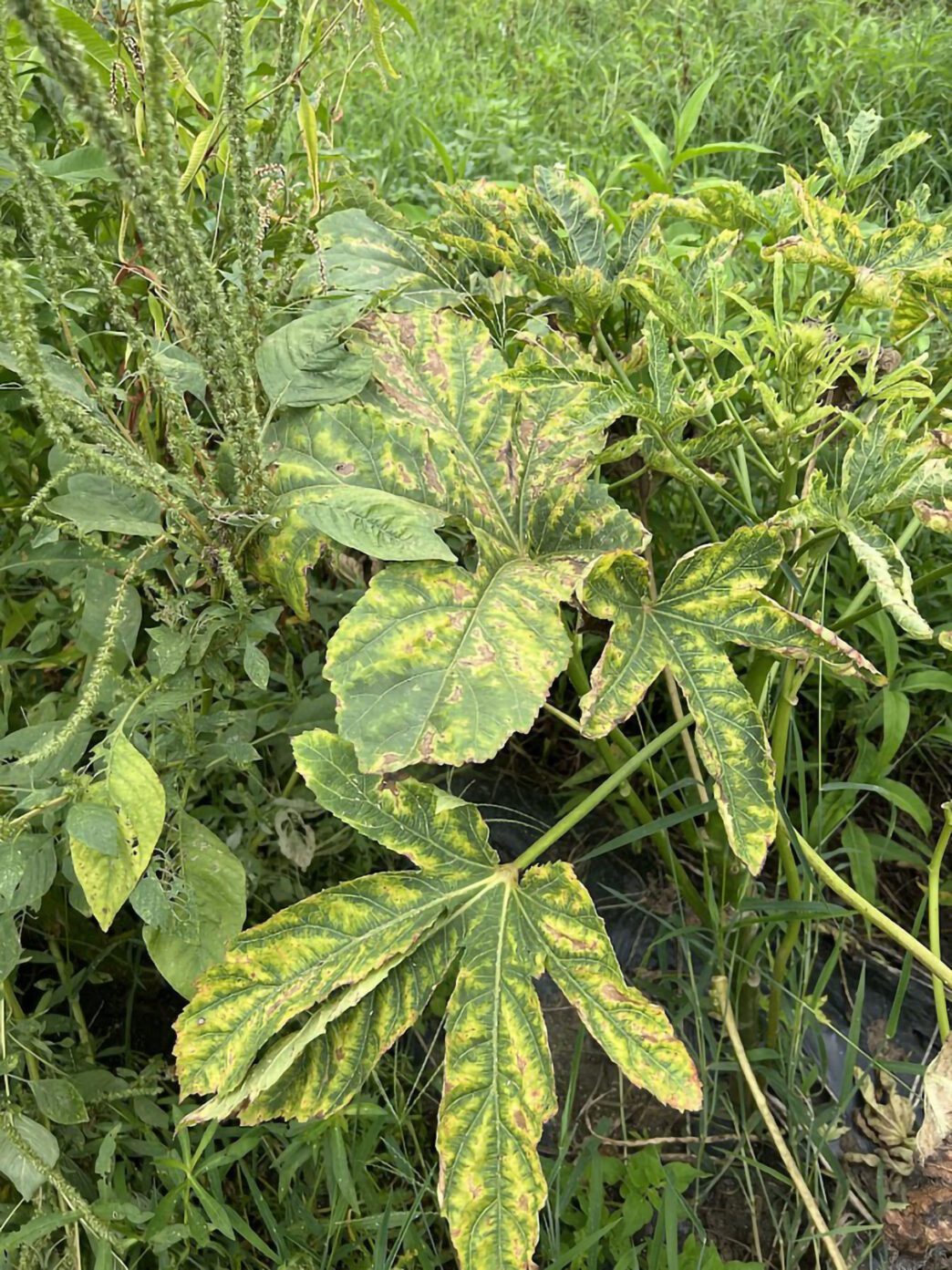
The outbreak affects farms across eastern counties, resulting in yellowing leaves, reduced yields and, in some cases, complete crop loss.
Zack Snipes, a Clemson Cooperative Extension Service area horticulture agent, notes that okra is typically resilient against pests.
“The insect has also been spotted on eggplant and sunflower crops, though the damage there has been less severe,” Snipes said.
Also referred to as the “cotton jassid,” the insect migrated north from Florida, where it was initially detected in the U.S. It affects multiple crops, including cotton, okra, sunflowers, eggplants and others.
We’re learning in real-time how to detect and control this insect.
Chris Sumter, okra grower
Chris Sumter, a seasoned okra grower from Sumter County, shares his firsthand experience.
“This is the first time I’ve seen anything like this,” he said. “We’re learning in real-time how to detect and control this insect.”
Sumter, who has grown okra for more than a decade, is preparing transplants for next season. He is considering greenhouse cultivation to protect young plants.
“I also plan to physically space plantings,” Sumter said. “I believe this may help slow the spread of the pest.”
Growers and Extension agents are currently using Beleaf, a Group 29 insecticide labeled for vegetables and effective against sucking and piercing insects.
However, concerns about resistance have prompted discussions about rotational partners and the active ingredients in Group 29 insecticides – a category of selective feeding blockers classified by the Insecticide Resistance Action Committee (IRAC). These insecticides prevent certain insects, particularly phloem-feeding ones like aphids and whiteflies, from feeding on plants.
Charleston County leads the state in okra production, followed by smaller operations in Sumter. As the season progresses, Clemson Extension experts are working closely with growers to gather data, monitor pest activity and explore management strategies.
Sumter is interested in using both chemical and holistic pest management strategies.
“This is where land-grant university research becomes critical,” Sumter said. “We need to understand this insect better to help us prepare for next year. Clemson provides the research, and Extension agents share this research with growers.”
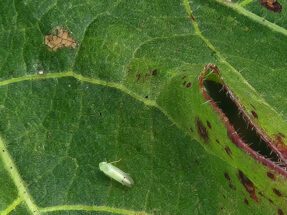
The two-spot leafhopper is a small, pale green insect with transparent wings that have a distinctive black spot near the tip of each forewing. Both adults and nymphs feed on plant leaves. The main symptom of okra is hopperburn, characterized by yellowing, reddening and eventually browning of the leaves, especially along the veins.
Affected leaves may also curl and eventually fall off, leading to reduced growth and yield.
Figures from 2024 indicate that okra was grown in 25 counties, with an estimated value exceeding $2.417 million in South Carolina. For more information on okra production and pest management strategies, visit Clemson FarmGate Reports.
-END-