Growing up in Raleigh, North Carolina, wildfires were the farthest thing from Chapman Warren’s mind. The only thing he knew about them was that they were commonplace in California.
One day, while visiting family friends in Colorado, Warren heard them talking about smoke jumpers and became curious.
“They were telling me how these guys will parachute out of a plane in the middle of the back country and they’ll hit the ground and go fight a fire,” Warren said. “I was like, ‘You’re telling me I don’t have to have a desk job.’ My interest just grew from there.”
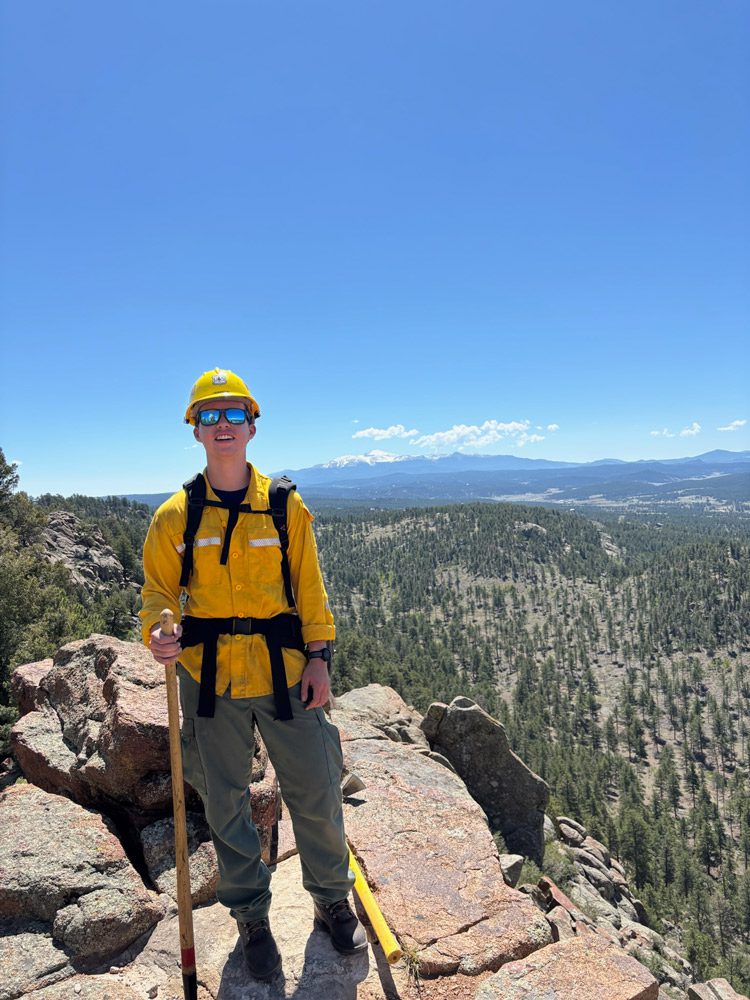
While Warren, a sophomore forest resource management major at Clemson University, has yet to experience the thrill of parachuting from a plane to fight fires, he spent this summer as a seasonal worker for the forest service at Pike-San Isabel National Forest in Colorado as a seasonal firefighter type 2, which is an entry-level wildland firefighter responsible for suppressing wildfires and performing fuel management tasks under supervision.
Warren’s duties included maintenance and upkeep at the station, thinning projects and burn unit preparations for prescribed burns.
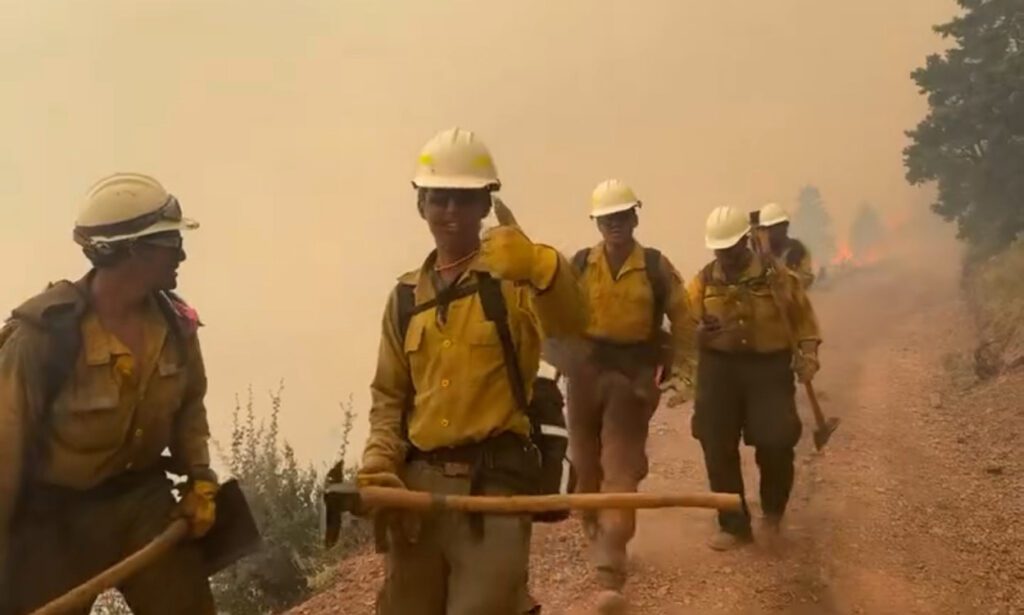
He was sent on assignment to Minnesota to assist with the Jenkins Creek fire in Minnesota that spanned more than 16,000 acres. But after two days, his crew was no longer needed and were sent to New Mexico where the Trout fire in Gila National Forest, which was caused by a lightning strike, burned more than 47,000 acres.
“When I got back, we went to three initial attack fires, which is what you call a fire when it just started,” Warren said. “You have it put out in a couple of days. Initial attacks are always fun because you’ll get to go out and the adrenaline is great. Usually, you knock it out pretty quick.”

Warren’s summer adventure also gave him a change to brush up on his chainsaw skills as well. He had previously taken some chainsaw classes and experienced cutting trees last summer while working in Nevada.
But one thing he quickly learned was how much bigger the trees were in Colorado.
“That made it a lot more real because when we were cutting the little, tiny juniper trees in Nevada, it’s like, ‘If this falls on me, it’ll hurt but I’ll be ok.’ In Colorado, you’re like ‘Whoa, that’s a big tree.’”
Warren also gained experienced working on prescribed burns, his first coming shortly after he arrived in Colorado.
“That was an interesting experience because I’ve only ever been on a prescribed burn when I was out East with the Fire Tigers. It’s totally different. We used these red drip torches that have like a 50:1 diesel to gas mix. You can drag them along with you. We dropped some fuel every 100 feet, spaced out from each other. We still had tree torches in drainages. It was getting so hot. It was pretty wild to witness.”
When he’s not learning how to fight fires, Warren spends time at a member of Clemson’s Watersports Club, specifically on the water ski team. It’s a skill he learned from his mom.
“By the time I was 6, I was in the water with a pair of skis on,” Warren said. “It stuck and I really enjoy it. I never competed until college. I saw they had a team and I thought it would be fun.”
In the meantime, Warren hopes to become qualified in as many areas as he can, such as being a helicopter crew member or a fire fighter 1, which would allow him to lead a squad of fighters, thus, opening a plethora of doors to his future firefighting career.