Angelica Solano’s research connects communities and conservation to reduce jaguar conflict
Earning a Ph.D. is often described as a marathon — a test of endurance, perseverance and sometimes sheer grit. For Angelica Solano, who completed her bachelor’s, master’s and doctoral degrees back-to-back-to-back, the experience was more like an ultra.
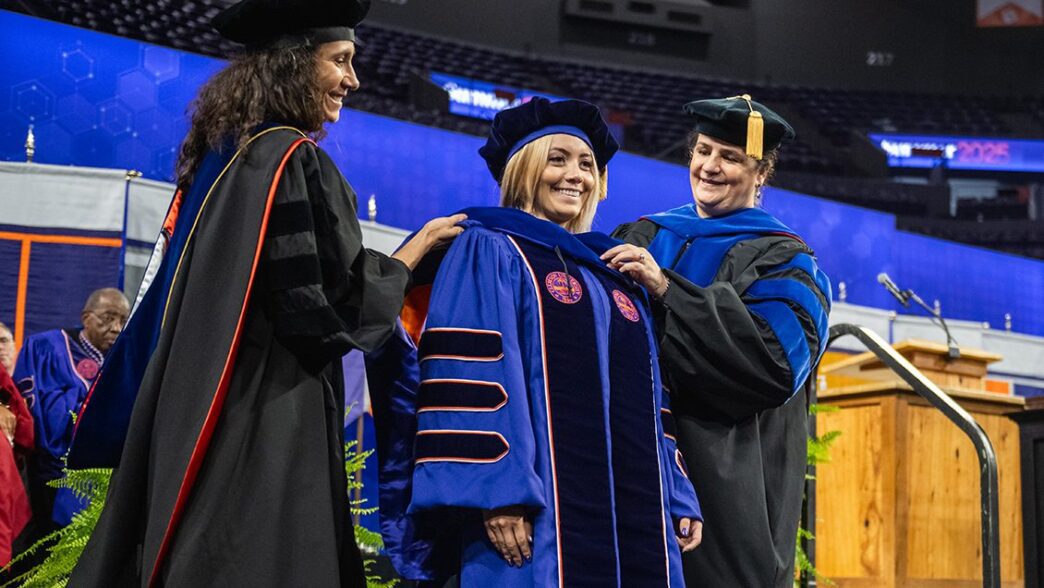
This summer, Solano crossed the finish line, earning her doctorate in wildlife and fisheries biology from Clemson University. Her dissertation focuses on human-jaguar conflict in her native Colombia, exploring ways to connect urban support for jaguar conservation with the challenges of rural communities living alongside big cats.
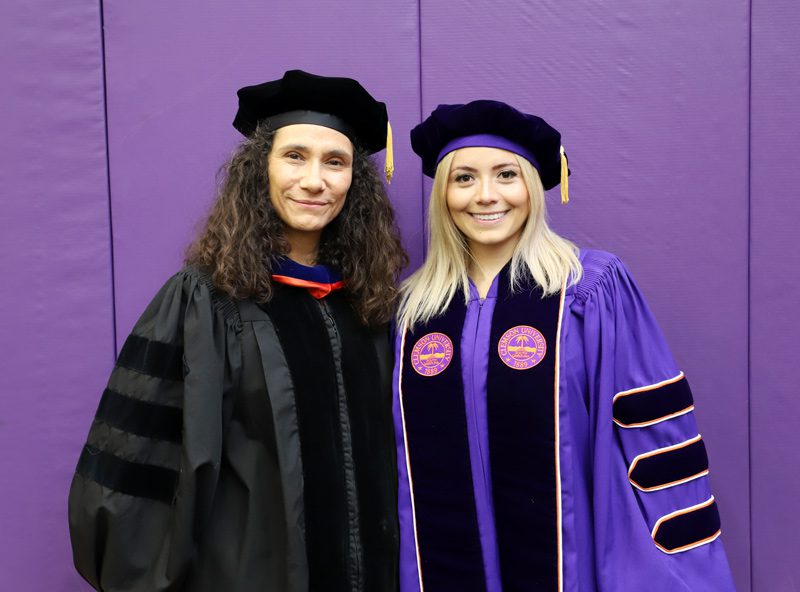
Solano’s accomplishment is cause for celebration, not only for her but also for her mentor. Shari Rodriguez, associate professor who leads Clemson’s Human Dimensions of Wildlife Lab, proudly counts Solano as the first doctoral student she has guided to graduation.
“Angelica has been such a wonderful person to work with — she’s not just a great student, but a remarkable human being,” Rodriguez said. “She’s brilliant, dedicated, emotionally mature and deeply passionate about conservation. I can’t imagine my professional life without her in it and I’m incredibly proud that she’s the first doctoral graduate from my lab.”
Solano’s path to Clemson began at Lincoln Memorial University in Tennessee, where she studied conservation biology. She began volunteering at a big cat sanctuary during her senior year — a formative experience that solidified her passion for carnivores. When she found a research position at Clemson in Rodriguez’s lab working on invasive forest pests through The Nature Conservancy’s Don’t Move Firewood campaign for her master’s, she saw a way to get her foot in the door.
Solano completed her master’s in wildlife and fisheries biology at Clemson, working on the invasive species project, co-advised by Rodriguez and David Coyle, an associate professor of forest health and invasive species. But she never lost sight of her first love: carnivores. Rodriguez, who similarly shares a passion for carnivores, encouraged her to pursue a side project focused on jaguars in South America. This project would eventually evolve into her doctorate dissertation.
“Angelica came in with a vision and when the pandemic derailed her initial jaguar research plans, she didn’t quit. She adapted,” Rodriguez said. “That resilience, that grit — that’s part of what defines her.”
The jaguar project began with the idea of conducting a camera trap study using a new method to determine population densities and pairing that with social science research associated with rural community experiences, attitudes and perceptions about jaguars. However, with limited funding and shifting timelines, Solano adjusted her methods. She partnered with three Colombian zoos to survey urban residents, zoo visitors and social media followers about attitudes and perceptions towards human-jaguar conflicts in Colombia. She also conducted in-person interviews at a national livestock fair and later secured a decade of data from Panthera Colombia, a leading conservation nonprofit, to evaluate the effectiveness of predator deterrence strategies used by ranchers.
Her dissertation research suggests that:
- Urban Colombians strongly support jaguar conservation and are willing to donate or advocate on behalf of big cats.
- Rural ranchers can coexist with jaguars and pumas when given effective tools and strategies to reduce livestock predation.
- There is untapped potential to bridge support between urban populations and the rural communities on the front lines of conservation.
“Adaptability has really been at the core of my Ph.D.,” Solano said. “My original plan didn’t develop exactly as we intended, so I had to adjust to changes and work with what was available. One of my biggest takeaways is learning how to make the best of the resources and opportunities you have.”
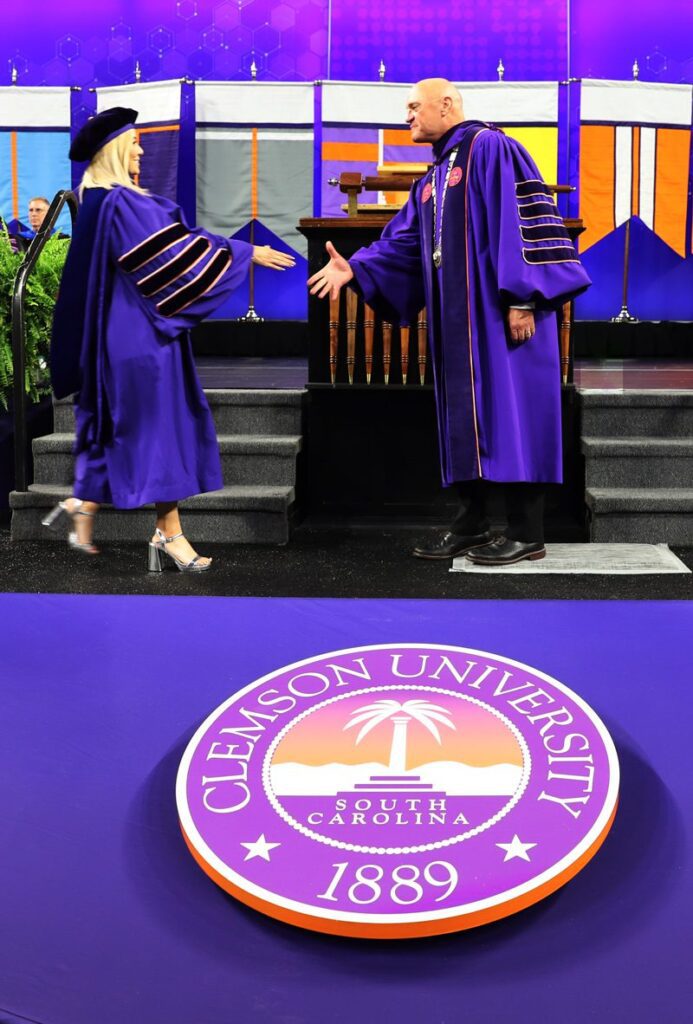
That adaptability — paired with mutual support — defined their six-year collaboration.
“I tell my students, earning a Ph.D. is no joke — it’s one of the hardest things you’ll ever do,” Rodriguez said. “You need someone in your corner. We leaned on each other when things got challenging and I think that’s why this experience was so special.”
Solano also gained extensive experience outside of her research. She taught labs and served as a teaching assistant for courses ranging from a wildlife identification course to a conservation social science course.
As she begins her job search, Solano is looking for postdoctoral or nonprofit roles focused on applied conservation, ideally involving carnivores.
“I just want to make an impact,” she said. “That’s been the goal from the start.”
Rodriguez believes she will.
“My hope for her is that she becomes one of the people who changes the face of jaguar conservation in her country,” Rodriguez said. “I think she has the potential to do exactly that.”
After six years, Solano may be moving on, but the bond remains.
“We’re peers now,” Rodriguez said. “She’s a jaguar expert. And I’m going to be calling her for advice.”