Deep in the lungs of a person with cystic fibrosis, a quiet microscopic war can unfold.

On one side, a fungus. On the other, a bacterium. Neither is trying to conquer the human body. They are fighting each other for space and nutrients, the same way they have for millions of years in environments like soil. But when the battlefield is a human lung, the collateral damage can be lethal.
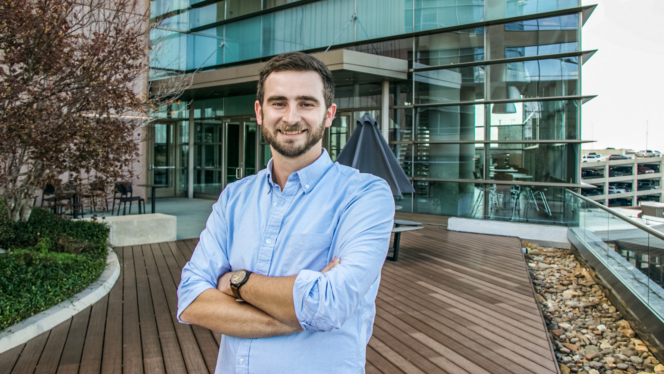
Stephen Dolan, an assistant professor in Clemson University’s Department of Genetics and Biochemistry and a member of the Clemson Eukaryotic Pathogens Innovation Center (EPIC), has built his career studying that fight.
His lab focuses on two organisms in particular: the fungus Aspergillus fumigatus and the bacterium Pseudomonas aeruginosa, both of which commonly turn up together in the thick, sticky mucus that builds up in the lungs of people with cystic fibrosis. The resulting infections are especially complicated and difficult to treat, persisting for years instead of resolving with a course of antimicrobial treatment. Dolan’s research aims to understand exactly how these two organisms behave when they are forced to share the same crowded environment.
In recognition of his work, Dolan was named a New Voice in Infection and Immunity by the American Society for Microbiology, an honor given to 22 researchers from around the world for their emerging track records in infection biology and immunology.
“Stephen is pushing the boundaries of our understanding of the relationship of pathogens in a clinically relevant model of co-infection in the lungs of patients with cystic fibrosis. The findings his team are making, while often unexpected, are shedding light on pathogen-specific biology that could lead to the development of new therapies for treatment of these challenging infections,” said James Morris, a founding member of EPIC. “Stephen serves as an example of the very bright new faculty that are populating our life sciences programs. They are driving the future of biomedical research at Clemson to very high levels, as Stephen’s recognition by ASM confirms.”

Dolan said bacteria and fungi have long competed with each other for resources.
“They’re not seeking out humans,” he said of A. fumigatus and P. aeruginosa. “It’s just another environment to them.”
What makes the cystic fibrosis lung such an important model to researchers like Dolan is precisely what makes it sodangerous people with CF: infections there can persist for years.
“Most infections are short-lived: They’re treated and cleared, or they become an acute medical crisis. People with CF can live with chronic infections for years,” he said.
Rare opportunity
That persistence gives scientists a rare opportunity to study how microbial communities change over time. Longitudinal clinical samples allow Dolan’s lab to track how the fungus and bacterium respond to one another and to changing conditions in the lung.
“Mutations in the CFTR gene cause cystic fibrosis, but chronic infections are among its most serious complications. They’re what threaten people’s lives,” he said.
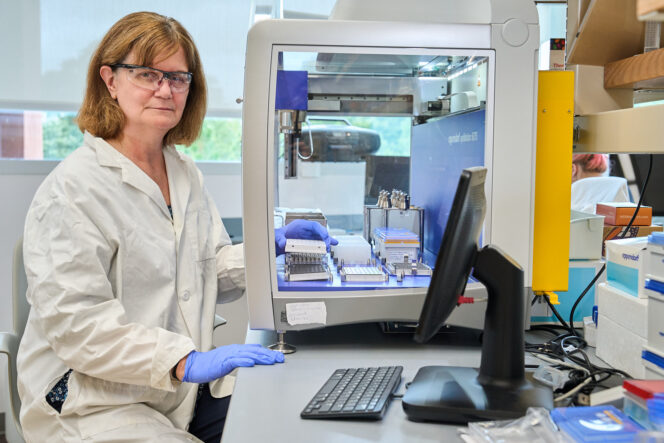
Recreating that environment in a lab dish is not easy. Dolan compares a living lung to “a city functioning during the day” with its constantly changing supply of nutrients, immune signals and airway mucus that’s nearly impossible to reproduce on a lab bench. His team addresses this by building controlled models that mimic key moments of infection and byworking closely with clinicians, comparing lab findings against real clinical samples.
That collaboration has already produced results.
New discoveries
Dolan and his team discovered that P. aeruginosa can detect and neutralize a toxin produced by A. fumigatus, using the same detoxifying mechanism the fungus itself relies on — a defense strategy that likely developed long before it ever encountered a human host. His lab has since identified a reciprocal interaction, and a manuscript describing those findings is currently under peer review.
Dolan said the research could have implications for chronic infections involving fungi and bacteria, including those associated with CF and diabetic foot wounds, as well as infections affecting transplant recipients and people undergoing chemotherapy.
“Cystic fibrosis is one of the best model systems for understanding chronic infection,” he said. “Chronic fungal-bacterial infections are becoming harder to treat as antimicrobial resistance increases and existing therapies become less effective. Even in the most developed societies, with access to the best therapies, some chronic infections remain uncontrollable. That’s terrifying.”
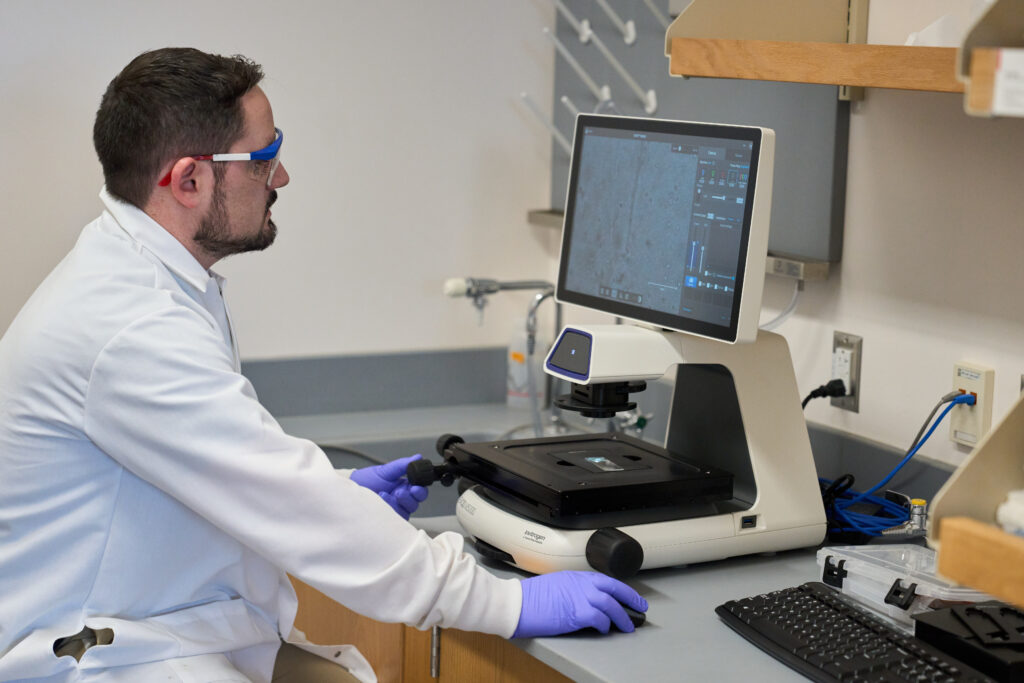
Dolan credits EPIC with fostering an interdisciplinary community where researchers can approach microbial disease from multiple perspectives. He also credits Clemson’s Creative Inquiry program with creating opportunities for talented, enthusiastic undergraduates to contribute to his lab’s research and acknowledges research support from the Cystic Fibrosis Foundation. That support has helped advance the lab’s work on chronic infections in people with CF.
“It provides a space to think more deeply about the questions you’re asking and to consider them from different perspectives,” Dolan said — a benefit he says has already shaped the direction of his research and the training of students in his lab.
The publication of a recent peer-reviewed article in mBio, led by Dolan’s Ph.D. student Lindsay Pauls in collaboration with Gustavo Goldman’s research group, coincided with the Centers for Disease Control and Prevention’s Fungal Disease Awareness Week. The article examines the implications of fungal-bacterial interactions in the respiratory tract.