
“Activity engagement purchases,” or purchases that fulfill competency, express values, make us happiest, according to researchers
For decades, the idea of “retail therapy” has shaped how many people think about spending. Whether it is buying a new outfit after a difficult week, picking up a small luxury to break up a stressful day or impulsively booking a weekend getaway, shopping is often used to boost mood or regain a sense of control. These purchases can provide a short-term lift, triggering the brain’s reward system and offering comfort in the moment.
But new research published in the European Journal of Marketing suggests that while retail therapy may temporarily ease stress, it may not be the most reliable path to lasting happiness.
In the study, Clemson University associate professor Anastasia Thyroff and research partner Matthew Hawkins of Université Bourgogne Europe challenge one of the most widely accepted ideas in consumer psychology — that experiences make people happier than material goods.
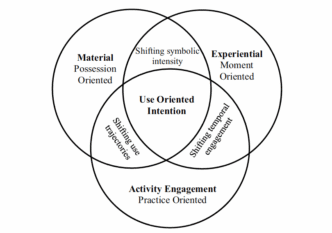
Instead of asking whether it is better “to have” or “to do,” the researchers introduce a third category of spending: activity engagement purchases.
“Traditionally, in marketing, we’ve really only looked at a distinction between something being a physical good versus a non-physical good,” Thyroff said. “And that distinction, even more so, has just been material objects versus an experience. So the advice for the last 30 years has been work toward that experiential advantage.”
That longstanding framework, she explained, has created a sharp divide between buying something for possession and buying something for a peak experience.
The new research reframes that dichotomy. Rather than categorizing purchases as tangible or intangible, the study defines them by intention. Activity engagement purchases are made to support ongoing, meaningful activities over time, such as buying a musical instrument to practice regularly, investing in running shoes to train for races or enrolling in a course to develop new skills.
“We reframe purchases away from that dichotomy of physicality, and instead, their intended use,” Thyroff said. “What’s someone’s intended use? Is it to buy a shoe for display? Or is it buy a race slot for this peak experience race at the Boston Marathon?”
She continued, “When we do this, we can add this third type of purchase, like an activity. Activity adds that temporal layer, where we’re extending time. It’s not just about that moment.”
Across six studies involving hundreds of participants from university and national samples, the researchers found that activity engagement purchases consistently produced higher levels of happiness than both traditional material goods and experiential purchases.
Participants were asked to recall purchases and rate the happiness they derived from them, while researchers controlled for factors such as price, timing and whether the purchase turned out well.
The results were consistent: purchases tied to ongoing activities generated the greatest satisfaction.
What makes these purchases different is not cost or category, but psychology. While retail therapy often provides a short-lived emotional boost, activity engagement purchases fulfill the human need for competency, the desire to grow, improve and master skills.
They also allow individuals to express their values and identity over time.
“And that’s how we add that second dimension of happiness as well,” Thyroff said. “It’s not just this fleeting moment, or this specific moment, but we’re looking at more of that fulfillment that comes with longer-term engagement with something.”
The research builds on decades of work highlighting the benefits of experiential spending.
“I love that experiential conversation,” Thyroff said. “I do think the discussion about the experiential advantage has been so beneficial, reminding people that even though you get that fleeting joy, those material purchases don’t make us happy.”
This new study, she said, simply takes the conversation one step further.
“Repeated engagement means that we’re buying things that help us repetitively. We’re using things over and over again,” she said.
For consumers, the findings suggest that discretionary spending may yield deeper and more lasting satisfaction when directed toward activities that promote growth and purpose. Buying a treat to improve a bad day may offer immediate comfort, but investing in a hobby, training program or creative pursuit may provide more enduring fulfillment. The research aligns with broader theories of well-being, which emphasize that happiness is rooted not only in pleasure but also in personal development and meaningful action.
The implications extend beyond individual spending habits. Rather than positioning products as endpoints, companies can frame their offerings as enablers of long-term activity and personal growth.
“Here’s an opportunity for brands to not just be a part of this fleeting moment or this little bit of hedonic happiness,” Thyroff said. “Here’s a way to embed into somebody’s fulfillment in their life, longer-term enjoyment and bigger sense of purpose.”
Together, the research reframes the conversation about consumer happiness. Shopping may soothe stress in the short term, but long-term well-being appears more closely tied to purchases that integrate into daily life and support meaningful activity. By shifting the focus from what consumers buy to how they use it, the study offers a new way to understand how spending decisions shape happiness in everyday life.
Q&A
Your research paper frames purchases through the lens of the “hedonic” and “eudaimonic,” ideas that trace back to Aristotle and the dawn of philosophical thinking. Explain those concepts and their relevance to this research.
Happiness is actually more philosophically complex than most people realize, and our research draws on that complexity. Broadly speaking, there are two types of happiness.
Hedonic happiness is the kind most of us intuitively recognize — pleasure and enjoyment. It’s the feeling you get when you bite into a great meal or experience joy at a live concert.
Eudaimonic happiness is deeper. It comes from living purposefully, developing your potential and pursuing meaningful goals. Aristotle called this eudaimonia, and he considered it the higher form of flourishing.
What’s interesting is that consumer and marketing research has historically focused heavily on the hedonic side — asking whether a purchase makes people feel good right now. Our research brings eudaimonic thinking into that conversation. When someone buys a guitar and commits to learning it, the happiness they derive isn’t just about the pleasure of owning a guitar. It’s about becoming someone who plays guitar. It’s about the satisfaction of mastering something difficult. That’s eudaimonic happiness, and we believe purchase typologies need to account for it.
What does this research tell us about how what we buy can help shape our identity?
There’s a long history in philosophy recognizing that purchases are part of how we construct and communicate who we are. In consumer research, this is referred to as the “extended self,” based on Russell Belk’s foundational 1988 work, which argues that possessions don’t just fulfill functional needs — they also serve as extensions of identity.
For example, a pickup truck isn’t just something someone owns functionally; it can represent who that person is. Originally, the extended self-focused on physical goods, but Belk later expanded the concept in 2013 to include digital objects — not just CDs, but even Spotify playlists as part of our identity.
What our research adds is a temporal dimension. Identity isn’t just expressed through what you own or even through experiences you’ve had. It’s enacted through what you do repeatedly over time.
Activity engagement purchases are particularly interesting from an identity perspective because the identity they support is always a work in progress. When you buy running shoes to train for a race, you’re not just buying shoes — you’re buying into the narrative of becoming a runner. The competency you develop, the values expressed through the activity and the community you connect with all accrue through sustained engagement. In that sense, these purchases don’t just reflect who you are; they help make you who you’re becoming.
What does this research mean for how consumers should think about their purchases?
The practical takeaway is to pay closer attention to the intention behind a purchase rather than just its category. We tend to think in terms of buying things or buying experiences. But there’s a third question worth asking: Does this purchase enable me to engage in something meaningful over time? Does it support a practice I care about?
A gym membership you actually use, a set of watercolors you commit to learning with or a cookbook that becomes a gateway into developing real culinary skill — these kinds of purchases seem to generate a more sustained form of happiness than either a new possession or a one-off experience.
Our research suggests that happiness is less about what you have or what you’ve done, and more about what you’re actively becoming.
What does this research suggest about how companies should market their products?
The key insight for marketers is to stop thinking of the product as the endpoint and start thinking of it as an enabler.
The most compelling brands in the activity engagement space — think Peloton, Duolingo or REI — aren’t selling objects or experiences in isolation. They’re selling participation in a practice. They’re helping consumers become cyclists, language learners or outdoor enthusiasts.
This reframing has concrete strategic implications. It suggests investing in post-purchase engagement, content, community and progression systems — not just focusing on the transaction itself. It suggests segmenting consumers not only by demographics but also by the practices they pursue and where they are in their development. And it suggests that marketing communications should connect the product to the consumer’s ongoing journey, not just to a moment of acquisition.
When a brand can genuinely say, “We help you get better at something you care about,” that’s a powerful position.
How can these findings help us redefine consumerism?
What excites me about this research is that it offers a different story about consumption — one that isn’t just about accumulation or novelty-seeking.
If we shift the cultural conversation toward purchases that enable sustained, meaningful activity, we open up a vision of consumerism that’s more intentional, more identity-coherent and arguably more ecologically responsible. When you’re buying to support a practice rather than to possess something or experience a one-time event, you tend to be more deliberate. You buy less, but better.
This isn’t about telling people to stop shopping. It’s about redirecting attention toward what purchases actually enable. There’s something hopeful in the finding that happiness comes not from having more or chasing novelty, but from engaging deeply and repeatedly in activities that are personally meaningful. That’s a vision of the good life Aristotle would recognize.
When was the last time you made a purchase while engaged in an activity?
Tennis shoes. I’m learning to play tennis again, and it’s become my favorite time of the week. My son plays at the same time, so I get a great workout, a challenge and meaningful time with a friend who agreed to learn with me.
Has your research changed how you shop for yourself and others?
I’ve always been somewhat uncomfortable with material purchases. Over time, I began noticing how unhappy they often made me — and many others around me when I was growing up. Even though it’s not always easy, I try to emphasize non-material purchases for my family and me.
This research reminds me that it’s not just about avoiding big one-off purchases; it’s about supporting sustained activities. It also gives me encouragement to support my children as they develop and discover activities they genuinely enjoy.