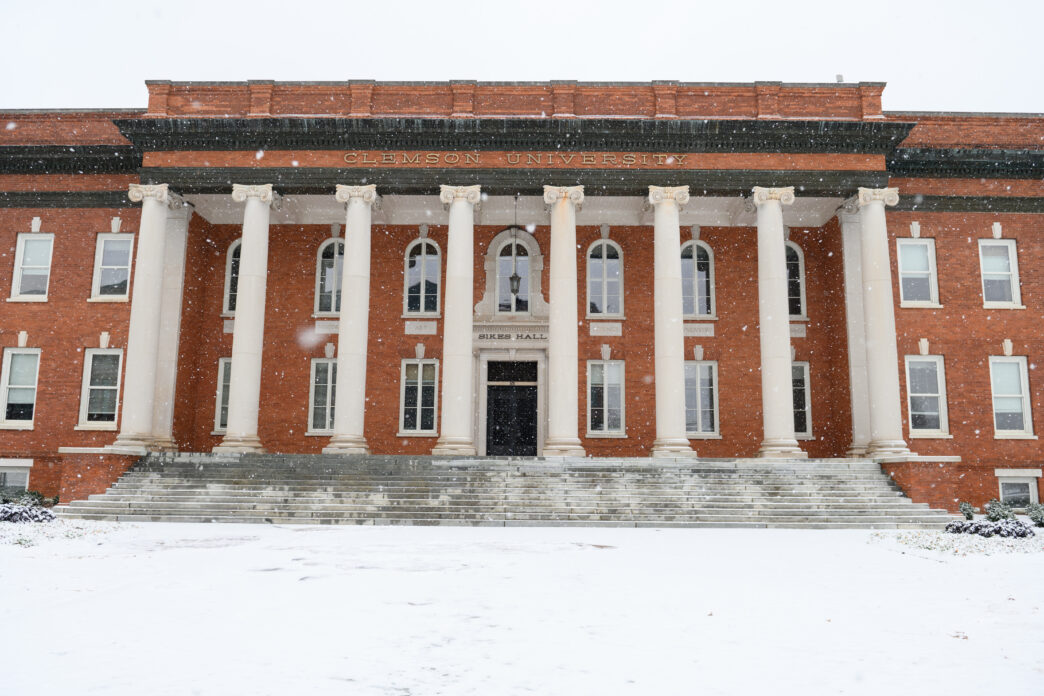
From clearing fallen tree limbs to restoring power, the Clemson University Facilities team ensures the University’s 1,400-acre main campus, research facilities across the state and Extension offices in every county continue to run smoothly in inclement weather.
Given their vast expertise, we turned to our Facilities team for practical tips on preparing for winter weather. Strategic Operations Manager Chris Miller offers the following information.
How to reduce the chances of pipes freezing/bursting
- Insulate exposed pipes: Protect hot and cold water lines in areas such as basements, crawlspaces, attics, garages and exterior walls.
- Yes — insulate hot water lines: Hot water lines will actually freeze quicker than cold lines.
- Keep water moving: Turn on the faucet farthest from your water heater and adjust the hot and cold water so it creates a slow stream. For a single-handle faucet, set the handle to the center position to allow hot and cold water to flow evenly.
- Let warm air circulate: Open cabinet doors where plumbing is inside exterior walls.
- Close crawlspace vents: Close any vents around the foundation of your home during the winter months and reopen them in the Spring.
- Protect outdoor faucets: Shut off the outside water lines and drain them. If you’re unable to locate a shutoff valve, use an insulating foan outdoor faucet cover.
- Use heat tape when needed: For mobile or modular homes, RVs, barns, etc., wrap water lines in heat tape for added protection against freezing.

What to do if a pipe freezes or bursts?
- Know your shutoff valves: Locate and test your main water shutoff and water heater shutoff before freezing temperatures arrive. Common places for a shutoff valve are near the foundation, at the water meter or directly above the water heater.
- Watch for warning signs: If water flow in the home suddenly stops, a pipe may be frozen. Turn on all faucets (hot and cold water) throughout the home to help move water and melt blockages.
- If no water flows out of the faucets: Your main water line may be frozen. Leave all faucets in the open position until temperatures rise.
- Burst pipes often show up after temperatures rise: You typically won’t become aware of a burst water line until temperatures rise above freezing.
- If a pipe bursts:
- Stay calm
- Shut off water at the main valve
- Open the lowest faucet in the home to drain water, such as a tub or utility sink
- Open a higher faucet to help with drainage
- If the burst pipe is a hot water line: You can turn the water off at the shutoff valve near your water heater and then turn the main water valve back on to the rest of your home. The pipe shouldn’t leak as long as the shutoff valve going into the water heater is off and any single-handle faucets in your home are set to cold only.
- Check for hidden leaks: If no water is running inside, check your water meter. If the small dial is spinning, water is still flowing somewhere, and it’s best to call a plumber.
- Call a licensed plumber: For repairs, it’s safer to call a professional, which helps reduce liability.

Staying warm during a power outage
- Consider a backup generator: Invest in one to power essentials like HVAC, water heater and kitchen appliances.
- Use natural gas as a backup: Some utility providers will install natural gas lines if you commit to using a gas appliance. This provides the option of natural gas fireplaces, water heaters and stoves that aren’t impacted by a power outage.
- For storm safety:
- Stay on lower levels if there’s a risk of falling trees or severe storms
- If warmth is the only concern, gather in a small or upstairs room to conserve body heat.
- Never use a gas stove to heat your home: Do NOT use a gas stove to heat an enclosed space. This is a leading cause of winter weather-related deaths.
- Have a backup plan: Join friends or family if you lose heat, know where the closest warming shelter is and check on neighbors.
To learn more about Clemson University Facilities, read more here.