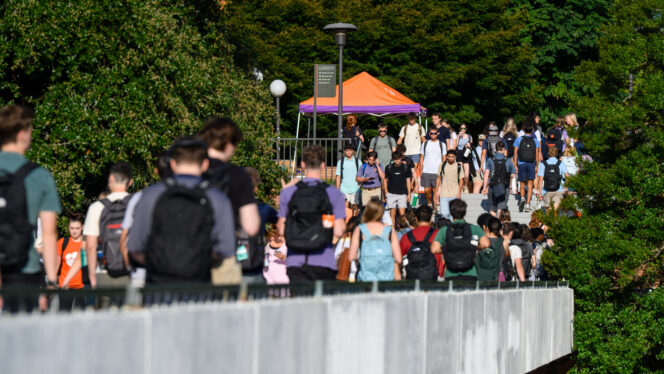
Seven Saturdays every year, Clemson University’s main campus becomes the fourth-largest city in South Carolina. As alumni, fans and visitors descend upon campus to watch the Tigers play football, Public Safety personnel must prepare accordingly to handle the large influx of people.
“Planning for Clemson football begins as early as January each year,” said Interim Clemson University Fire Chief Aaron Bunyea. “Each game requires a comprehensive, multi-faceted approach that takes into account crowd size, traffic management, public safety operations and emergency medical coverage. Our department collaborates closely with University leadership, Athletics, local law enforcement and emergency management partners to ensure every detail is addressed well before the season kicks off.”
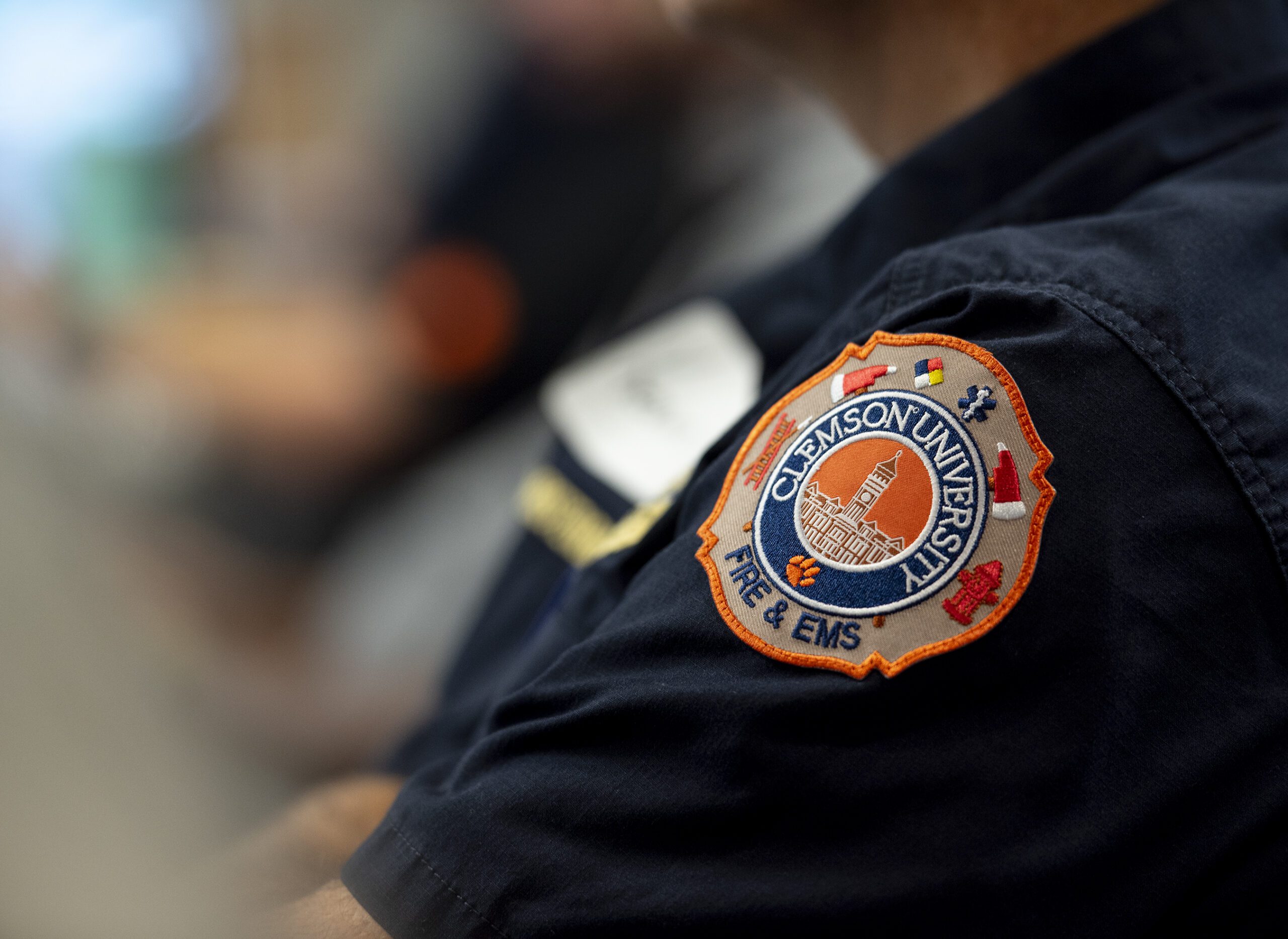
The Clemson University Fire & EMS Department (CUFD) provides emergency medical services for main campus, which is often a heavy lift on gamedays. It requires the efforts of a whole team of EMS personnel from all over the Upstate to fulfill the task of caring for such a large temporary population.
“A critical component of this planning is our partnership with Prisma Health, which provides vital support in coordinating and facilitating patient transports to local hospitals,” said Bunyea. “This level of preparation allows Clemson University Fire & EMS to deliver seamless service and maintain the highest standard of safety for students, alumni, fans and visitors throughout the season.”
Since 2022, Bunyea says CUFD has taken a deliberate and strategic approach to strengthening the services it provides during home football games. Following each season, the department conducts comprehensive reviews of its operations to identify gaps and implement targeted improvements to enhance efficiency, capability, and coordination.
This process led to discussions following the 2023 season between CUFD staff, CUFD Medical Director Dr. Sarah Fabiano, then Public Safety Associate Vice President Greg Mullen and staff from Clemson Athletics about identifying and developing a new approach to treating patients in the stadium with the goal of providing a better experience for both those needing emergency medical care on gameday and those providing the care.
“In past seasons, multiple groups were providing care for patrons with different expectations and very limited coordination,” said CUFD Lt. Jim Thackston. “The system, while successful when implemented, had been outgrown by the growth and stadium design changes that had occurred over many years.
“I witnessed many providers with amazing skills and intentions challenged to provide the best care possible due to the outdated system. This led to the idea of consolidating all medical providers into one group, with a single mission: to provide the best care possible within the stadium.”
As planning began for the 2024 season, agreements were made that allowed the department to hire board-certified Emergency Room Physicians and EMS Fellows from Prisma Health to serve in the in-stadium treatment rooms on game days. The goal was to provide not only a higher quality of care for patients but also to decrease medical transports to hospitals.
This new model was tested early in the 2024 season, as Clemson hosted NC State for a noon kickoff on Sept. 21. A hot day, with the temperature reaching a high of 91 degrees by midafternoon, resulted in an influx of patients with heat-related illnesses. Previously, anyone needing an IV would have to be transported to a hospital but with the new model, patients can often receive an IV on-site and potentially return to their seats or tailgate without a trip to the hospital.
With the new model in place, just six patients required transport to a hospital out of the 47 patients treated that day. Over the course of the 2024 season, CUFD saw a 20% decline in patient transports from the previous year, demonstrating the effectiveness of this new approach and underscoring the department’s commitment to delivering high-quality care.
“We provided in-depth training to all of the employees on the new system before the season,” Thackston said. “Many of the stadium employees were those who were already familiar with how we operated, but with new supplies and equipment, along with medical orders and physician oversight, we were able to provide better care and significantly reduce the number of patrons who needed to be transported to the hospital for care.”
CUFD saw similar results for the Sept. 20 home game against Syracuse this season, which had similar weather conditions to that 2024 NC State game. Only five patients were transported to a hospital out of 49 patients treated.
“All care provided in the stadium, including sutures, staples, dislocation replacement, IV therapy, etc., is at no cost to the patron,” said Thackston. “The only cost incurred would be if they received an ambulance transport. So providing that high level of care in the stadium is important because it can save patrons the cost of an ambulance ride and, in turn, improve the experience they have at Clemson.”
Building on the success of the 2024 season, CUFD and Prisma Health sought to expand their partnership for the 2025 season, aiming to create a similar model for individuals requiring medical attention outside the stadium. With a marquee matchup bringing even more fans to town and warm weather combining with high humidity to create conditions ripe for heat-related illnesses, the season opener against LSU provided a prime opportunity to try this new setup.

The Prisma Health team set up a mobile triage center on the Jervey Meadows Turf Field behind Doug Kingsmore Stadium with a capacity to treat up to 10 patients at a time. Additionally, this location could serve as an overflow area for patients needing treatment inside the stadium, if needed.
“With feedback from providers, we have continued to expand our capabilities, enabling us to provide more and better care for our patrons,” said Thackston. “Many patrons are now able to receive care and return to the game, or if they choose, return to their tailgate.”
Thanks to its focus on continual improvement and its partnership with Prisma Health, CUFD has significantly enhanced the level of care that visitors to Memorial Stadium receive. In the process, CUFD has become a leader in special event medical care, providing a model for others across the country to follow.
“We have continued to make measurable advancements in our ability to protect the health and safety of all attendees while supporting the overall success of the gameday experience,” said Bunyea. “Our continued focus remains on delivering the highest standard of service and ensuring that Clemson University remains a model for safe and well-managed collegiate sporting events.”