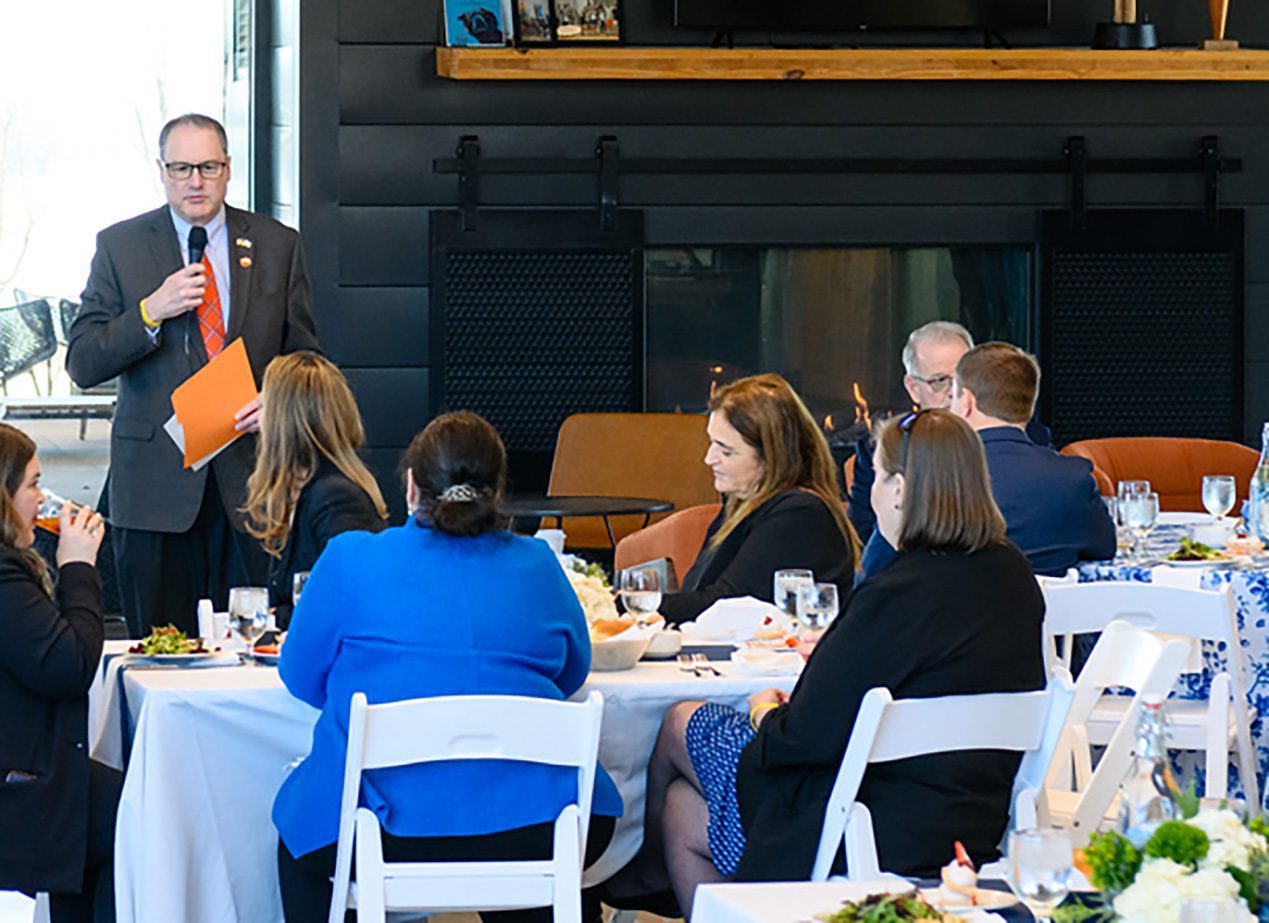
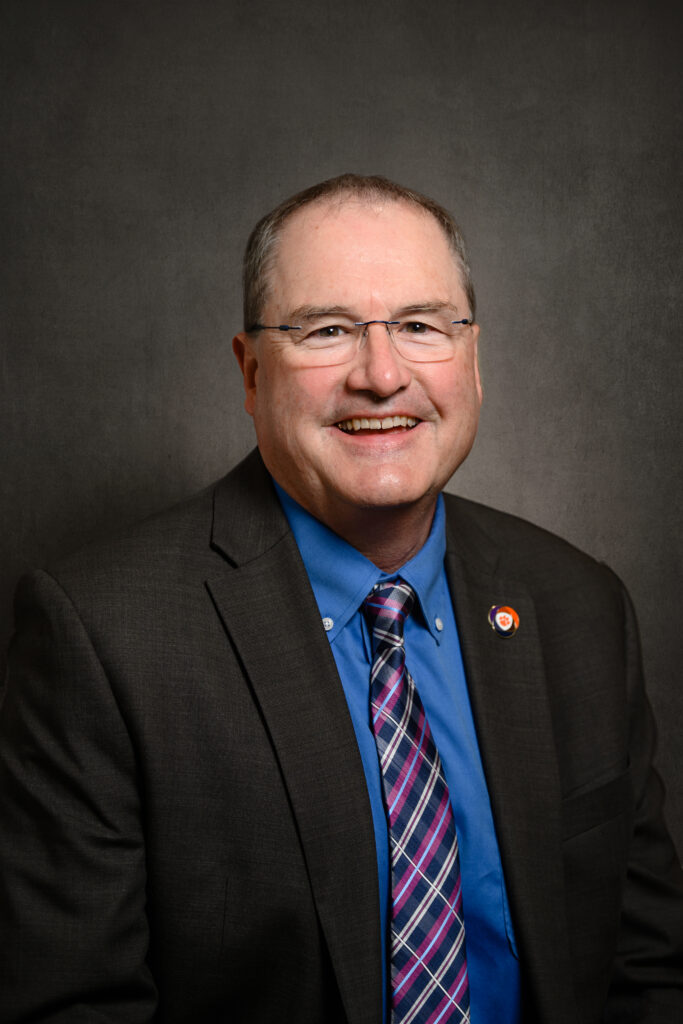
The monthly “Elevate Well-Being” blog series shares thoughts and reflections of Clemson Well-Being Council members and University faculty, staff and students. Our July 2026 blog is courtesy Matt Holt, dean for the College of Agriculture, Forestry and Life Sciences and vice president for Public Service and Agriculture.
Humans are amazingly resilient creatures. History has proven time and again we can be uprooted, lose our homes, have our very way of life and our surroundings destroyed, our families and friends ripped away from us, and yet, we manage to move forward. We find a way to rebuild, to love again, to find purpose again, to claim renewed hope.
Hope. That is what I want someone to feel. Not just think, but feel. Not false hope based on empty promises or wishful thinking. But rather, hope that springs from a deeper place, from an individual and shared sense of trust and purpose. From a firmly held belief in our own potential and that of each other. A belief that, no matter how flimsy or frail, all is not lost, that we can individually and collectively find a way forward to a better place. Not a perfect place, not one that is knowable ex ante, but a better place. While it is often said hope is not a strategy, I would argue any strategy without hope is a doomed plan from the start. Hope is as central to the human condition as breathing and eating. It might best be described as that illusory liminal space where hope transitions into something more profound, into what we might simply label as faith. I have hope. It is what leads me to get out of bed and go to work every day and to do the things I do. I also have faith. I have faith in you. I have faith in us. I have faith in our leaders. Most of all, I have faith in that overarching imperative we all know as our shared land-grant mission.
What might any of this have to do with me — Matt Holt, not the dean, but the person, the man? Like many of you, I have known loss. Not abstractly, but directly. I lost a parent at a young age. Later, I lost a son. I have had to rebuild — most of my personal life, at times, nearly from the ground up — and I could not have done it without the help of others, including the kind of professional counsel I would encourage any of you to seek without hesitation or shame. But, I will tell you this. Each and every time I have been confronted by one of life’s turning points, I ultimately grapple with one primary question: Do I want to move forward and do something positive? Or do I want to become overcome by circumstance? I suspect you know what my answer was. But in every instance, my answer is based on two things: faith and hope. I am convinced that resilience, both individually and collectively, is built on nothing more than that foundation.
In the two years since becoming dean of the College of Agriculture, Forestry and Life Sciences, I have been touring the state to visit South Carolinians where they live and work, especially at our Research and Education Centers (RECs) and our 46 county Extension offices. Along with others and building on our Boundless Impact strategic plan, I continue to promote more broadly a bold vision for how our college can be a leading land-grant college, adhering to honesty and integrity in all facets of our mission in the 21st century. I have hope for these things because, underlying it all, I know our University is filled from top to bottom with terrific scholars, educators and students of the highest caliber.
I first read “Jayber Crow” by Wendell Berry over 25 years ago on a long, quiet winter weekend alone. My wife was abroad, the house was still, and so I read. I came to it as a farm boy from Indiana who had grown up watching families, like my own, struggle to reconcile the ancient promise of good stewardship with the immediate imperative of staying solvent — a tension Berry repeatedly captures throughout much of his work.
“If you could do it, I suppose, it would be a good idea to live your life in a straight line. But that is not the way I have done it, so far. I am a pilgrim, but my pilgrimage has been wandering and unmarked. I have had my share of desires and goals, but my life has come to me or I have gone to it mainly by way of mistakes and surprises. Often I have received better than I deserved. Often my fairest hopes have rested on bad mistakes. I am an ignorant pilgrim, crossing a dark valley. And yet for a long time, looking back, I have been unable to shake off the feeling that I have been led — make of that what you will.”
If you are in place where you are wondering what else could possibly be thrown at you, I encourage you to think about faith and hope. As Berry describes, this is just one part of a much bigger journey. The book found me when I needed it. I suspect that is how most good books work.
Make of that what you will,
Matt Holt
Dean, College of Agriculture, Forestry, and Life Sciences
Vice President, Public Service and Agriculture