Dear Faculty, Staff, Alumni and Friends,
Last week was filled with the kind of activity that makes me so proud of our College.
Lectures in Law and Humanities
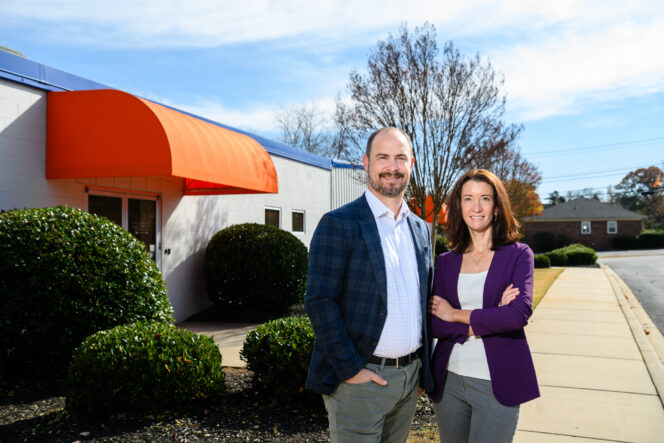
First was the fifth annual Lectures in Law and Humanities series, funded by Chris Loebsack and his law firm, Loebsack and Brownlee. Each year features a week-long series of events dedicated to a specific theme. This year, it was the First Amendment and the freedoms of speech, religion and the press. It could not be more timely! The keynote address was given by Vernon Burton, our nationally prominent and widely-published professor of history, who just retired this past January. The spellbound audience was enthralled by his wide-ranging talk and hung on his every word, followed by a lively Q&A conversation: just the kind of exchange about important questions I think we need so much more of in the College and beyond.

Philosophy of Science
The same day as the Law and Humanities keynote also saw the launch of what will hopefully be an enduring new series of talks and events resulting from a collaboration between our Department of Philosophy and Religion and the Department of Physics and Astronomy. For those of you into Classics, you will know that the intellectual links between physics and philosophy run deep – yes, I am thinking of Lucretius. After all, both philosophers and physicists (especially astrophysicists) are concerned with exploring the ultimate questions of existence. More recently, the emerging field called “philosophy of science” engages with the assumptions and limits of scientific methods and thinking. Michael Stölzner, from the University of South Carolina, was the first speaker of this series, and he began his talk with a helpful overview of how Einstein’s theories of relativity pushed the then limits of physics, which, in turn, necessitated a merging with philosophical thinking. I am thrilled at the collaboration between physics and philosophy and hope it continues and thrives.
Shakespeare at the Brooks Center for the Performing Arts

The icing on the cake was the performance of Shakespeare’s Twelfth Night by the Clemson Players. The sets designed by Professor Shannon Robert were the most beautiful I have seen at the Brooks Center, and the production was conceived and expertly directed by Kerrie Seymour, Associate Professor of Theater. The audience was enthralled and amused as the complex strands of the drama tightened and drew to their inevitable conclusion. Shakespeare’s best comedies are remarkable for their ability to treat serious topics with the lightest touch. Perhaps most remarkable of all is the way in which the play explores fundamental questions of biological sex and the performance of gender — questions so deeply relevant today. And all with Shakespeare’s uncommon command of the English language.
Twelfth Night embodies what defines great art and why we continue to study enduring works. Their relevance and significance only increase with time and with every generation that encounters them anew, often grasping yet one more layer of meaning.
Our culture is future-obsessed. While we can and must dream about and plan for the future, we must also make sure to nurture our roots and to pay attention to those who came before us. Their experiences and insights surely provide an anchor as we speed ahead.
Take time to pause, Tigers!
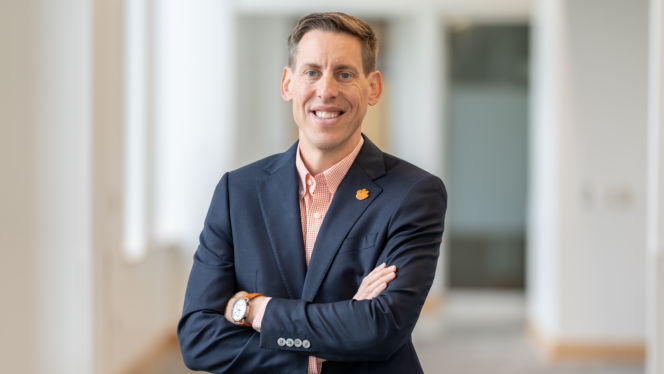
Nicholas Vazsonyi, Dean