Scientists at Clemson University are part of a multi-institution effort using advanced genomic tools to accelerate restoration of the American chestnut.
This once-dominant tree started disappearing from Eastern U.S. forests more than a century ago and was nearly eliminated by the 1950s.
Researchers from Clemson, Virginia Tech and The American Chestnut Foundation (TACF) are using genomic selection to shorten breeding cycles and speed the development of trees capable of surviving chestnut blight and Phytophthora root rot.
Genomic selection is a method that predicts disease resistance using DNA.
In previous years, TACF used the traditional backcross breeding method to develop blight-resistant trees. That method proved unsuccessful because the scientists learned that many genes were involved in blight resistance.
“Backcross breeding works best when there are only a few genes involved,” said Steve Jeffers, Clemson plant pathologist in the Department of Plant and Environmental Sciences.
Instead of traditional breeding, the new method uses genetic data to guide decisions. Scientists repeatedly analyze DNA to find the exact genes linked to resistance. They use that information to breed individual trees with those helpful genes.
Scientists say this approach could also serve as a model for restoring other threatened tree species worldwide.
The fall of the American chestnut
The American chestnut was once a dominant tree in Eastern forests, extending from Maine into Georgia, Alabama and Mississippi. In South Carolina, it was prevalent in the mountains and also grew in some areas of the Piedmont Region.
The towering trees were a major source of food and income for wildlife and people in the Appalachian Mountains and South Carolina Upstate. People living in the area used the trees’ rot-resistant wood for lumber, fencing and furniture.
By the 1950s, blight and root rot had eliminated most mature trees, leaving a lasting ecological gap. Both diseases are caused by introduced exotic microorganisms. Chestnut blight is caused by a fungus with airborne spores that attacks the above-ground portion of the tree.
Root rot is caused by a fungus-like oomycete, or microorganism, that lives in soil and attacks chestnut tree roots. These plant pathogens have become established in many eastern forests.
This new research shows that genomic tools can identify blight-resistant trees without waiting years for field testing. Scientists analyzing DNA from thousands of hybrid chestnut trees found that future generations could double current levels of blight resistance while retaining roughly 75% of American chestnut ancestry. This is an important factor in preserving the tree’s natural characteristics.
“These trees are expected to begin producing large quantities of seed for restoration within the next decade,” said Jared Westbrook, TACF director of science.
Recurrent genomic selection is at the center of this research. This method has driven dramatic gains in crops, livestock and forestry in terms of disease resistance, productivity, growth rates and even taste.
It involves using a computer model to associate a tree’s DNA profile with field-measured responses to disease, such as canker formation by the blight fungus. This allows scientists to predict a tree’s resistance using DNA profiles accurately, provided the tree is related to those already evaluated in the field.
“Recurrent genomic selection lets us predict which trees will perform best before they reach maturity,” Westbrook said. “That shortens breeding cycles and increases precision. It’s a method proven in agriculture and forestry. Applying it to conservation allows restoration to operate at a scale and efficiency we’ve never had before.”
Clemson’s role
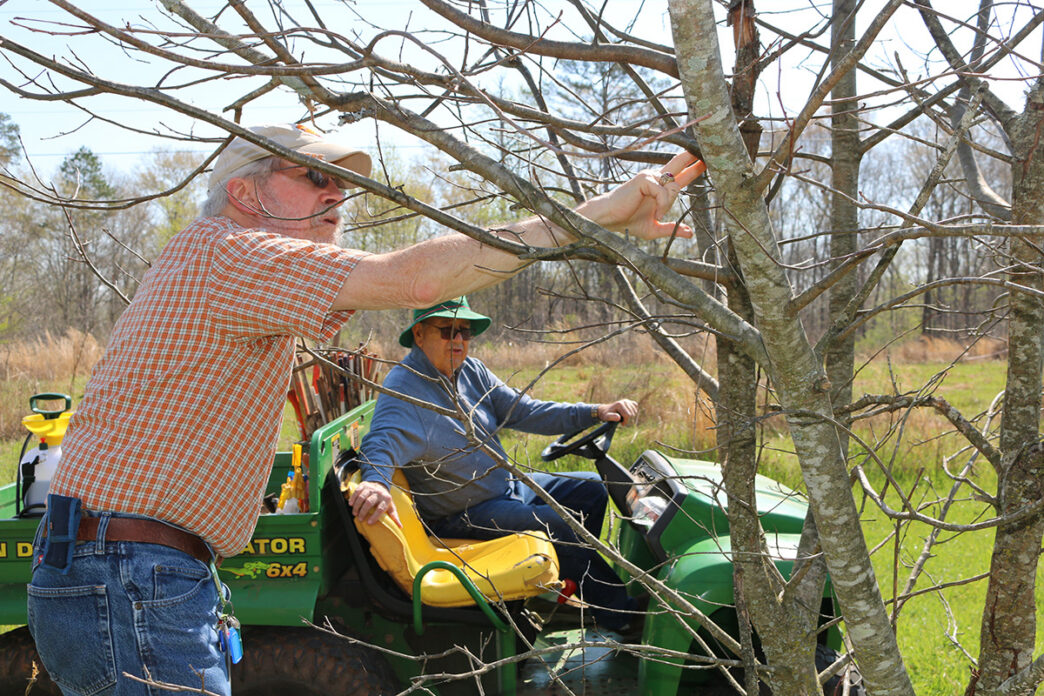
Jeffers has played a key role in studying Phytophthora root rot, particularly through long-term testing of hybrid chestnut seedlings in South Carolina. Since 2004, he and TACF researchers, along with Seneca, South Carolina, resident Dr. Joe James, have been evaluating hybrid seedlings for root rot resistance.
“This type of breeding effort has been a collaboration among many institutions over many years,” Jeffers said. “Different research teams each contribute their own expertise. Clemson has primarily advanced the root rot side of the work.”
Eventually, trees from local American chestnut populations will be bred with resistant trees to help them better adapt to local conditions.
Scientists say the Upstate mountain region, where chestnuts have historically thrived, is expected to be a priority area for future restoration plantings once resistant trees are ready. Conservation groups are collecting seeds from surviving wild chestnut trees in the Southeast to preserve regional genetics for future breeding.
Not a quick fix
Researchers caution that the restoration will take time because disease resistance involves multiple genes and must be strengthened across generations.
“Chestnut restoration is a long-term compounding process,” said Michael Goergen, TACF president and chief executive officer. “Each generation becomes stronger and better adapted.”
James said restoring the species will benefit both ecosystems and communities.
“It’s about improving the ecology of our planet,” he said. “At one time, chestnuts were an important food source for people and wildlife. All forms of wildlife eat chestnuts. People in Appalachia depended on chestnuts as a big cash crop. When blight hit, they had to leave the mountains and find jobs elsewhere.
“The chestnut is a magnificent tree. Much greater than any tree we’ve ever had. We need to do what we can to restore it.”
The scientists said this work offers a model not only for the American chestnut but for threatened tree species worldwide.
For more information, read Genomic approaches to accelerate American chestnut restoration in the journal Science.

-END-
Estimated reading time: 5 minutes